
Almost every page written about Amazon rainforest animals opens with a jaguar. This one opens with a footprint, because on the Rio Negro above Manaus a footprint in the mud is what you actually find, and your guide will be considerably more excited about it than you are until they explain how fresh it is.
Quick answer: In four days on the river you can reasonably expect pink river dolphins, caiman after dark, monkeys, sloths and more birds than you will be able to name. Jaguars, anacondas and the other headline animals live here and almost nobody sees them. What moves your odds is not luck. It is the water level, the hour of the day, how quietly you can sit in a canoe, and whether the guide reading the forest is reading it for you or for fourteen other people.
What animals will you actually see in the Amazon?
The honest list is shorter than the internet's and every animal on it is one our guests genuinely came home talking about. In rough order of how likely you are to meet them on a four or five day trip from Manaus:
- Pink river dolphins. Common in the dark water of the Rio Negro, and on the right day you can get in and swim near them. For most guests this ends up being the memory of the whole trip.
- Caiman. These belong to the night. A night safari is the standard evening outing precisely because that is when they come out and when a torch beam finds their eyes across the water.
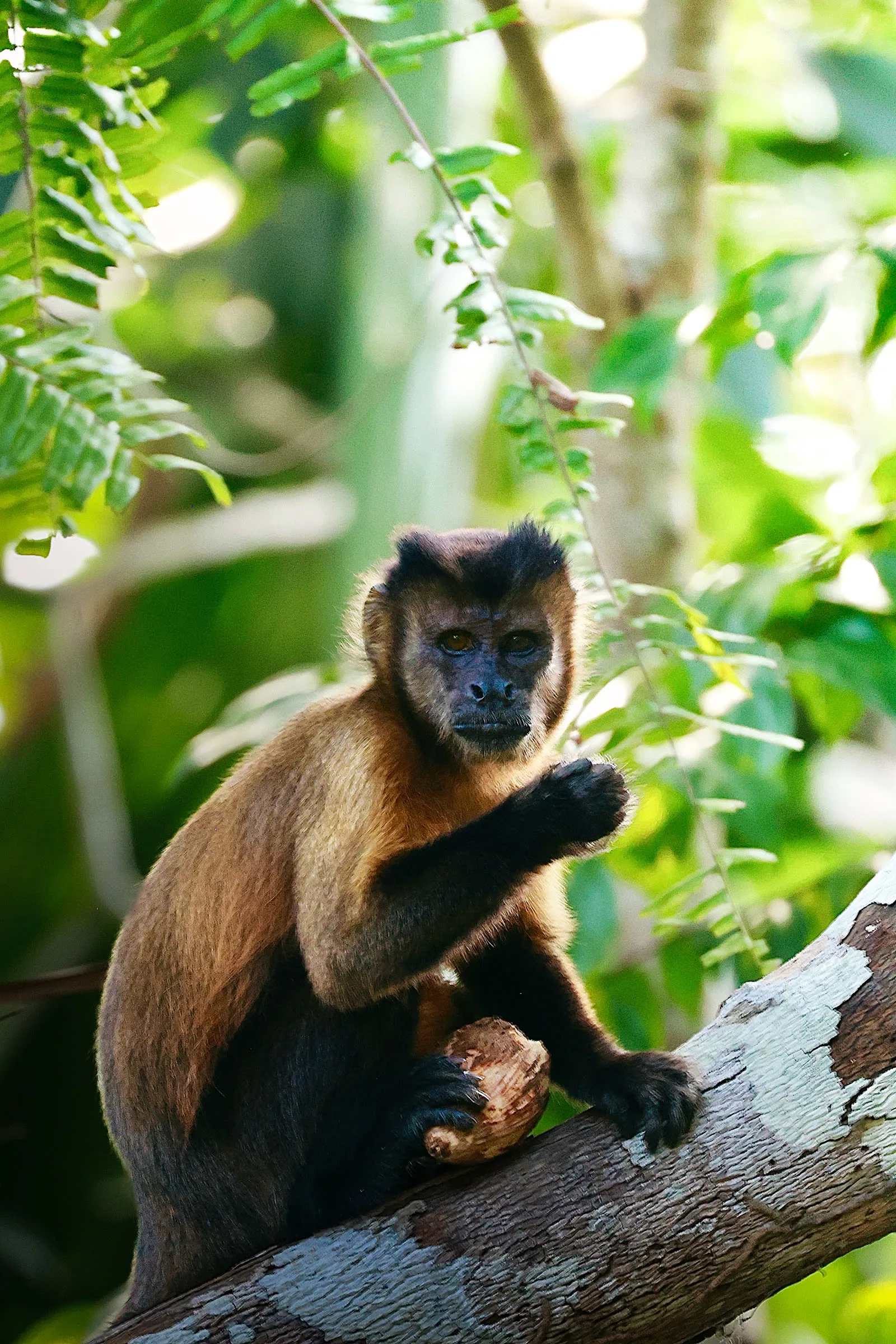
- Monkeys. Troops overhead on the forest walks and, in the high-water months, at eye level from the canoe, which is a very different experience from squinting up at them.
- Sloths. Your guide will point at a branch and tell you a sloth has not moved since yesterday. Look long enough and you will realise two things: it is true, and it is the same sloth.
- Birds, in numbers. More species than you will identify and some in colours that do not look plausible. This is also the reason your first alarm clock is not a clock.
- Piranha. You will meet these the way most people do, on the end of a line and later on a plate. They have a much worse reputation than their actual career deserves.
We are deliberately not printing a list of forty species with photographs. Those pages rank well and plan nothing, and a list you cannot act on is just decoration. What follows is the part that changes what you see.
What about jaguars, anacondas and the animals on the lists?
They are here, and you will very probably not see them. That is the sentence most Amazon pages will not write, so here it is plainly: the Amazon is dense, the animals are shy, and the forest hides at arm’s length what an open plain would show you from a kilometre away.
If a jaguar is the actual point of your trip, we would rather send you to the right place than sell you the wrong one. Go to the Pantanal in the dry season, roughly June to October, where the wetland is open, the water is retreating and the cats come to the riverbanks. Our Pantanal jaguar safari is a different trip with a different promise, and we will happily talk you out of the Amazon for that one purpose.
What the Amazon gives you instead is scale and density: a forest that closes over the boat, a river that behaves like a sea, and wildlife that arrives without being announced. Nobody has ever guaranteed a sighting to a guest of ours, and nobody ever will.
How the water level decides what you see
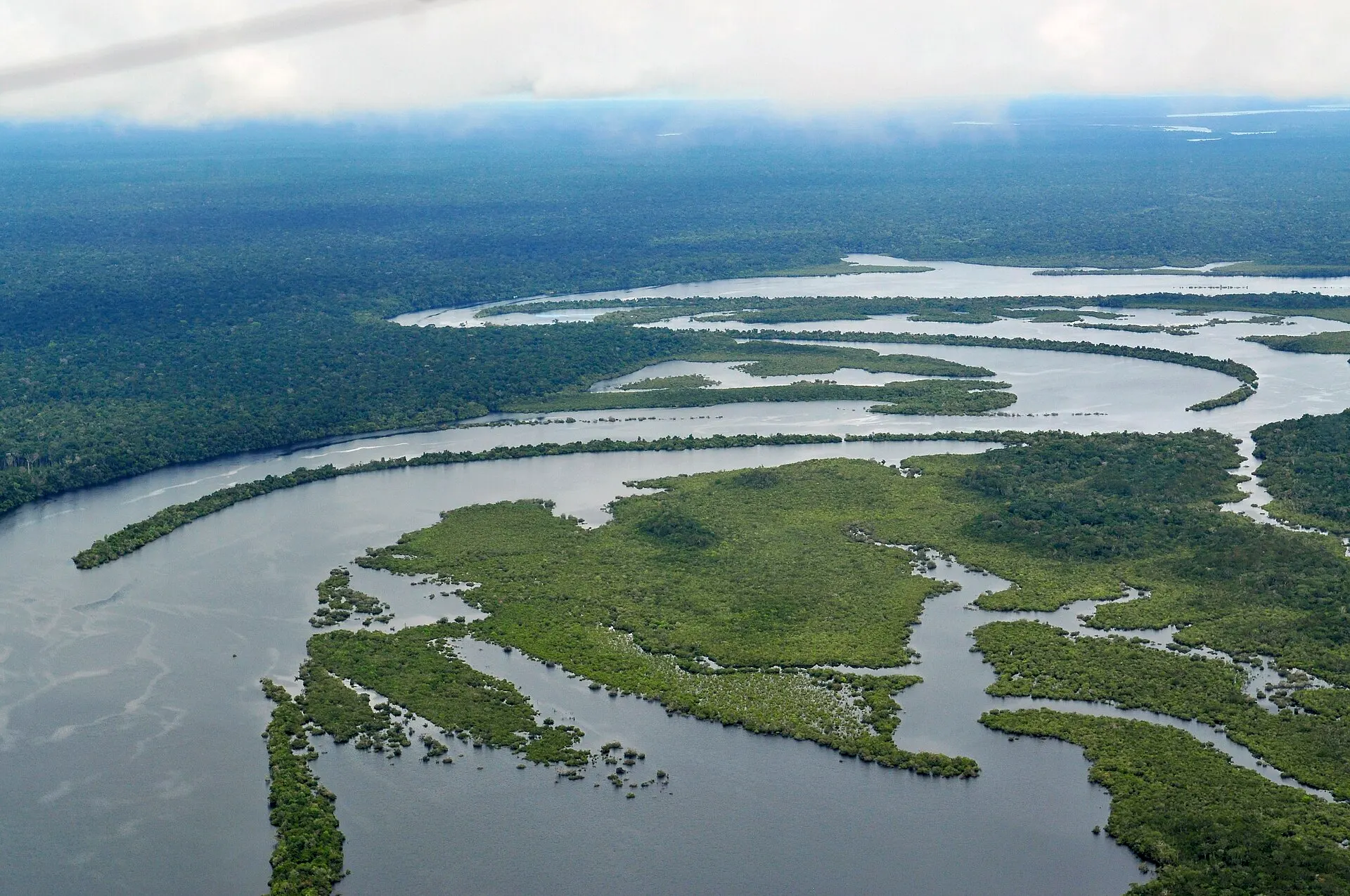
The Amazon has two seasons and they are not wet and dry, they are high and low, and they change the wildlife more than the weather does.
High water, roughly January to June. The forest floods and you paddle a canoe between the treetops. Because you are lifted to canopy height, monkeys, sloths and birds sit at your eye level instead of somewhere far above it. This is the season for the flooded forest and the quiet channels.
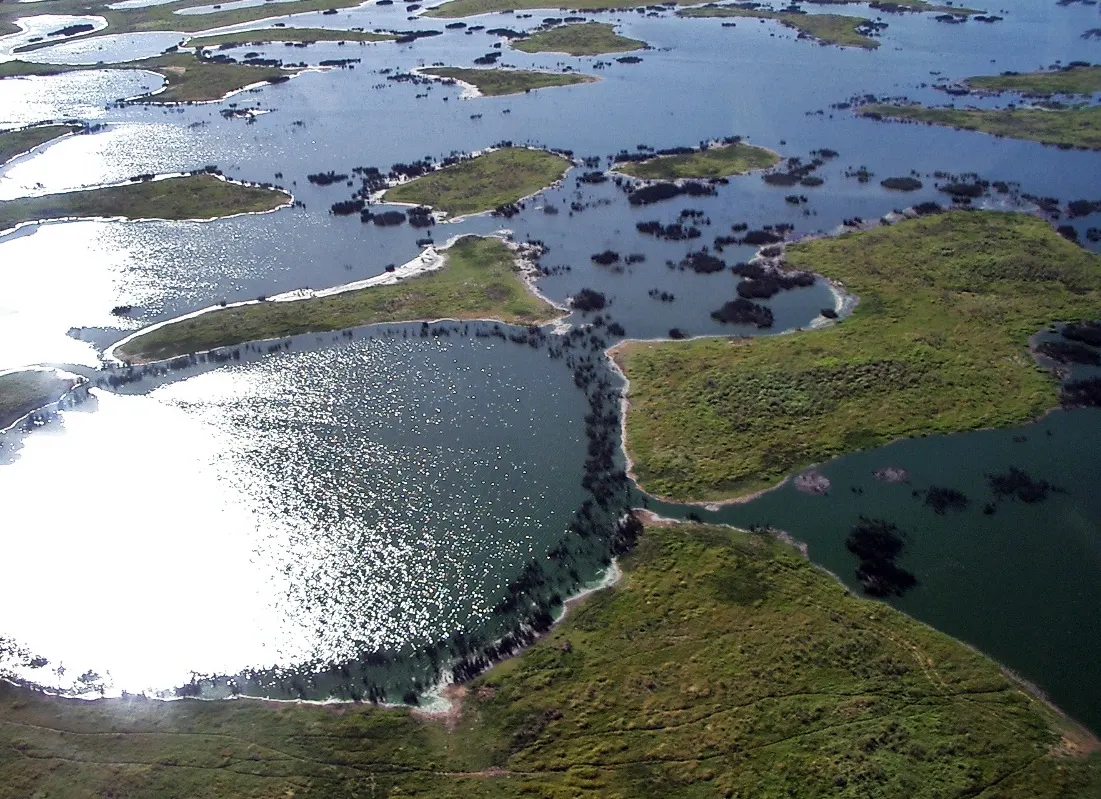
Low water, roughly July to December. River beaches appear, forest trails open up, walking becomes a real option, and the wildlife concentrates around the shrinking channels because that is where the water is. Fishing is better. So is your chance of seeing something drink.
Neither one is the good season, which is why our guide to the best time to visit the Amazon exists rather than a single recommended month. We match the season to what you most want to do, in that order and not the other way round.
The pink river dolphins are the one nobody forgets
If there is a single animal that justifies the journey, it is this one. The boto lives in the black water of the Rio Negro, it is genuinely pink, and it is curious about boats in a way most wild animals are not.
On many trips there is a chance to get into the warm water near them. We will not promise it for a given day, because it depends on the water, the weather and the animals, and a promise we cannot keep is worse than a maybe we can. What we can say is that guests who did not expect much from this part of the itinerary are the ones who bring it up first afterwards.
What about piranhas, caimans and mosquitoes?
All three are real and none of them is the problem you have been told to expect.
Piranha fishing is a normal afternoon activity, done from a boat with a line and a piece of meat, and the fish usually ends up as dinner rather than the other way round. Caiman are watched from a boat after dark with a guide who knows exactly how close is close enough, which is the entire safety procedure. Mosquitoes are the surprise: the Rio Negro is a blackwater river, naturally acidic, and mosquitoes want very little to do with it, so the swarms most people brace for do not arrive.
Everything genuinely medical, vaccinations included, is a question for your doctor or a travel clinic and not for a travel company. We do not give that advice and you should be wary of anyone in our business who does.
How to see more, and what it actually takes
Four things, in the order they matter.
- Go at dawn and at dusk. The forest has an opening and a closing, and the middle of the day is when almost nothing moves. Every good outing on the river happens in the first or last two hours of light.
- Be quiet, and stay quiet. Wildlife spotting is mostly the discipline of doing nothing for longer than feels reasonable. A canoe with the paddle out of the water sees things an engine never gets near.
- Take a guide who is reading the forest for you alone. This is the single biggest lever and it is why we plan privately. A guide watching one canoe stops for the print, the branch, the flick of movement in the leaves. A guide managing a group keeps the group moving. There is no minimum number of travellers on our trips, so a single traveller gets the same guide as a family of six.
- Give it a day more than you planned. Three days is the shortest stay that justifies the journey. Four or five is where the trip stops being a visit and starts being a rhythm, and the extra day is usually the one where something unrepeatable happens.
How many days do you need, and what does it cost?
Three days is the minimum worth flying for, four or five is better. Manaus is the starting gate, not the destination: from the airport it is two to four hours by road and boat out to a lodge or a riverboat on the Rio Negro, away from the city and its noise.
Our Amazon stays start from US$950 for four days per person, privately guided, with accommodation and transfers included. What moves that number is the season, the standard of lodge or boat and how many of you there are, which is why the real figure comes back in a proposal rather than off a page. If you are still deciding between a lodge and a boat, our guide to Amazon jungle tours from Manaus sets the two side by side. If you would rather see it inside a finished route, our wildlife and nature journey shows where it sits.
Summary FAQ
What animals will I see in the Amazon rainforest? On a four or five day trip from Manaus, realistically: pink river dolphins, caiman on a night outing, several kinds of monkey, sloths, a great many birds and the piranha you catch. Jaguars and anacondas live in the same forest and are seen by very few visitors.
Will I see a jaguar in the Amazon? Almost certainly not. The forest is too dense and the cats are too shy. If a jaguar is the point of your trip, the Pantanal in the dry season, roughly June to October, is the right destination, and we will tell you so rather than sell you an Amazon trip that cannot deliver it.
What is the best time of year for Amazon wildlife? Both seasons work and they show you different things. High water, roughly January to June, lifts your canoe to canopy height in the flooded forest. Low water, roughly July to December, opens forest trails and concentrates animals around the remaining channels.
Can you swim with the pink river dolphins? Often, yes, and it is the highlight of the trip for many guests. It depends on the day, the water and the animals, so we never promise it for a fixed date. The dolphins live in the warm black water of the Rio Negro and are unusually curious about boats.
Are there a lot of mosquitoes in the Amazon? Fewer than you expect on the Rio Negro. It is a blackwater river and naturally acidic, and mosquitoes largely avoid it. Anything about vaccinations or medication is a question for a doctor or a travel clinic, not for us.
Do I need a private guide to see wildlife? You do not need one, but it is the biggest single difference in what you actually see. A guide reading the forest for one canoe stops for the things a guide moving a group has to walk past. We plan every trip privately and there is no minimum group size, so this is not an upgrade you have to buy separately.
Tell us when you can travel and what you most want to see, and we will build the Amazon around that rather than around a fixed departure: the season, the lodge or the boat, the guide and the pace. You will have a personal, non-binding proposal within 24 hours.
Official sources
The rules and figures in this article come from the official bodies below. They change, so check them for your own dates.
- SACE, the federal river level monitoring service for the Amazon basin · Serviço Geológico do Brasil
- Parque Nacional de Anavilhanas, the river archipelago above Manaus · ICMBio, Governo Federal do Brasil
- INMET, the national meteorological institute · Governo Federal do Brasil
- Amazon
- Wildlife
- Destination guide
Turn it into your own Brazil trip
Tell Robin your dates and what caught your eye, or pick the destinations and experiences you love and send us your own route to plan.
Non-binding, a personal reply within 24 hours, in English or German.