

The thing that surprises people about moving around Brazil is not the distance. It is that "just up the coast" regularly means four hours, and that is the short version. Getting this wrong does not cost you an afternoon, it costs you a day of a two-week trip, and it is usually decided before you book anything.
Quick answer: You move around Brazil four ways: domestic flights for anything between regions, private transfers for the legs an airport does not reach, long-distance buses where the road is good and the trip is short enough, and boats, which are not optional on the Costa Verde, in the Amazon or in the Lençóis Maranhenses. Fly into and out of the same hub, usually São Paulo, and treat the internal hops as the skeleton of the route. Buses are genuinely fine on some legs, and we put one inside a published price, which is the honest version of this argument.
The four ways you actually move around Brazil
- Domestic flights. The backbone. Between regions there is no realistic alternative, and the whole itinerary is built around them.
- Private transfers. For everything an airport does not reach, which is more of the good stuff than you would expect: Paraty has no airport, nor does the island next to it, nor does the Pantanal lodge.
- Long-distance buses. Better than their reputation on the right routes, and cheaper. More below, because this is the part nobody writes honestly.
- Boats. Not a scenic extra. On the Costa Verde, in the Amazon and in the Lençóis Maranhenses, the boat is the road.
Domestic flights, and why the hub decides everything
Almost every long-haul flight into Brazil lands at Guarulhos in São Paulo, which is the country's busiest international gateway. From there the rest of the country is a short domestic hop: Rio de Janeiro, Foz do Iguaçu, the Pantanal, the Amazon, the Northeast.
That has one practical consequence worth deciding early. Flying into and out of the same hub usually keeps the intercontinental ticket cheaper and simpler than an open-jaw routing that lands in one city and leaves from another. So the hub choice comes before the destination list, not after it, and it is the reason so many of our routes start and end in São Paulo even when nobody asked to go there. Our two-week itinerary is built on exactly that shape.
Foz do Iguaçu is the clearest illustration of why this matters: it has its own airport and is a quick internal flight from almost anywhere in Brazil, which is why the falls slot into a longer route rather than demanding one of their own.
Are long-distance buses in Brazil any good?
Better than you have been told, and we will say something here that operators generally do not: on some routes the bus is the sensible choice and we build it into the trip.
The worked example is Salvador to Lençóis, the gateway town of the Chapada Diamantina. A private transfer takes about six hours. The guided bus takes about seven and a half. That is ninety minutes of difference, and if ninety minutes is all you are buying, take the bus. So we do: the bus is what our published Chapada starting price includes, and the private drive is an upgrade on top of it rather than the baseline.
It is also not what "bus" makes you picture. Your guide collects you at your hotel in Salvador, takes you to the terminal, walks you through it and puts you on the right bus to Lençóis. The bit that goes wrong with buses in a foreign country is almost never the bus. It is the terminal.
The same logic runs at Bonito, where leaving for Campo Grande airport is either a private transfer timed to your flight or a cheaper shuttle bus on its own fixed departures, which we match to the flight as closely as its schedule allows. We tell you which one is in your quote, because the difference is real.
What a private transfer actually buys
Not a faster road. A transfer does not shorten the drive from Salvador to Lençóis and it does not make the Costa Verde any less winding. What it buys is the connection.
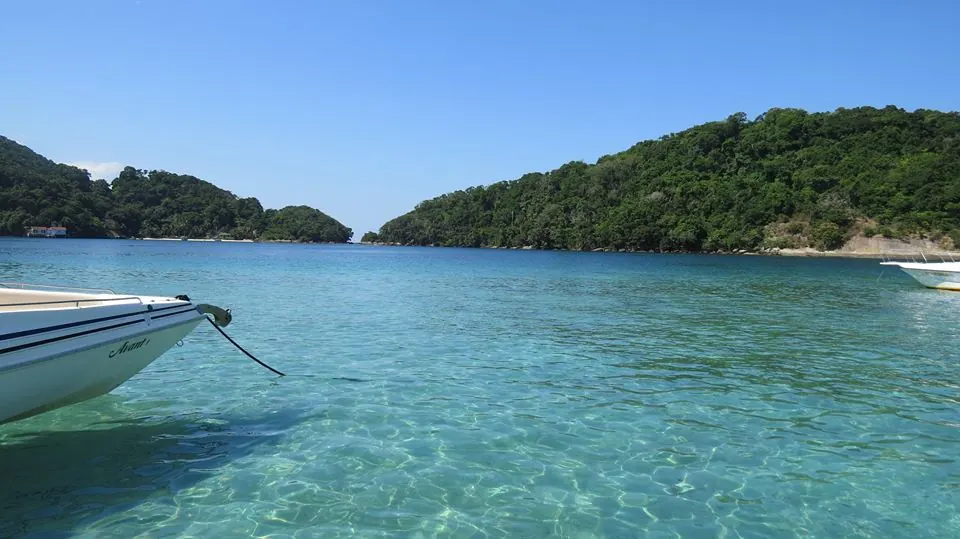
The clearest case is Ilha Grande. Getting there is a road leg from Rio, São Paulo or Paraty, then a mainland port such as Conceição de Jacareí or Angra dos Reis, then a speedboat crossing of about twenty minutes to the village. Three legs, three separate timings, and none of them has heard of the other two. Booked to fit each other it is a pleasant morning. Booked separately it is a day of waiting in places nobody wants to wait in.
The second thing it buys is the day itself. On the southern Pantanal to Bonito run, about two and a half hours by road, the driver is your own guide, so the gap between two regions becomes part of the trip rather than dead time in the middle of it.
The legs where there is no choice
Some of the best places we send people to cannot be reached any other way, and it is worth knowing before you picture a hire car.
- The Amazon. From Manaus airport it is two to four hours by road and boat out to a lodge or a riverboat on the Rio Negro. Manaus is the starting gate, not the destination.
- Ilha Grande. Car-free. There are no roads on the island at all, only forest trails and boats.
- Paraty's historic centre. Also car-free, and paved in large uneven stones, so you are dropped at the edge.
- The Lençóis Maranhenses. Everything moves by 4x4 and boat. There is no version of this with a saloon car in it.
- The Argentine side of Iguazu. A border crossing, so your passport comes along for the day and your guide handles the formalities.
What it costs, and where a bus is already in the price
We are not going to publish a fare table, because bus and flight prices move constantly and a stale number is worse than none. What we can show you is where a bus already sits inside a price we publish:
- Chapada Diamantina, 3 days: from US$800 per person, privately guided, with accommodation and the guided bus transfer from Salvador included. The six hour private transfer is an upgrade on that.
That is the whole argument in one line. We are not against buses, we use them where they make sense and we price them in. What we will not do is leave you to work out which terminal, which departure and which of the three legs to the island connects to which, because that is the part that eats days. It sits inside our sixteen-day highlights journey if you want the whole route at once.
Summary FAQ
How do you get around Brazil as a tourist? Domestic flights between regions, private transfers for the places no airport reaches, long-distance buses on shorter road legs, and boats where the boat is the only road, which is the case on the Costa Verde, in the Amazon and in the Lençóis Maranhenses.
Are long-distance buses in Brazil safe and comfortable? They are better than their reputation on the routes we use, which is why we include a guided bus in our published Chapada Diamantina price rather than quoting the private drive by default. The difficult part is rarely the journey, it is navigating an unfamiliar terminal, so our guide takes you there and puts you on the right one.
Should I fly or take the bus between Brazilian cities? Fly between regions, because the distances make anything else a waste of trip days. Consider the bus on shorter road legs like Salvador to Lençóis, where a private transfer saves about ninety minutes over a guided bus and costs considerably more.
Do you need a hire car in Brazil? For the trips we run, no. Several of our destinations cannot be driven to at all: Ilha Grande has no roads, Paraty's old town is car-free, the Lençóis move by 4x4 and boat, and the Amazon lodges are reached by boat.
Why do so many Brazil itineraries start in São Paulo? Because Guarulhos is the country's busiest international gateway, flying in and out of the same hub usually beats an open-jaw ticket, and every region is a short domestic flight from there. The hub choice sensibly comes before the destination list.
How long is the transfer from Rio to Paraty? About four hours along the coast, or five to six from São Paulo. Paraty has no airport, so the road is the only way in, and the historic centre is car-free once you arrive.
Tell us the places you want and we will tell you honestly which legs need a flight, which are better on a bus and which are a boat whether you like it or not. You will have a personal, non-binding proposal within 24 hours.
Official sources
The rules and figures in this article come from the official bodies below. They change, so check them for your own dates.
- ANAC air traffic and passenger statistics · Agência Nacional de Aviação Civil
- Brazilian Ministry of Tourism · Governo Federal do Brasil
- ICMBio, the federal agency for Brazil’s national parks · Governo Federal do Brasil
- Trip planning
- Transport
- Practical
Turn it into your own Brazil trip
Tell Robin your dates and what caught your eye, or pick the destinations and experiences you love and send us your own route to plan.
Non-binding, a personal reply within 24 hours, in English or German.