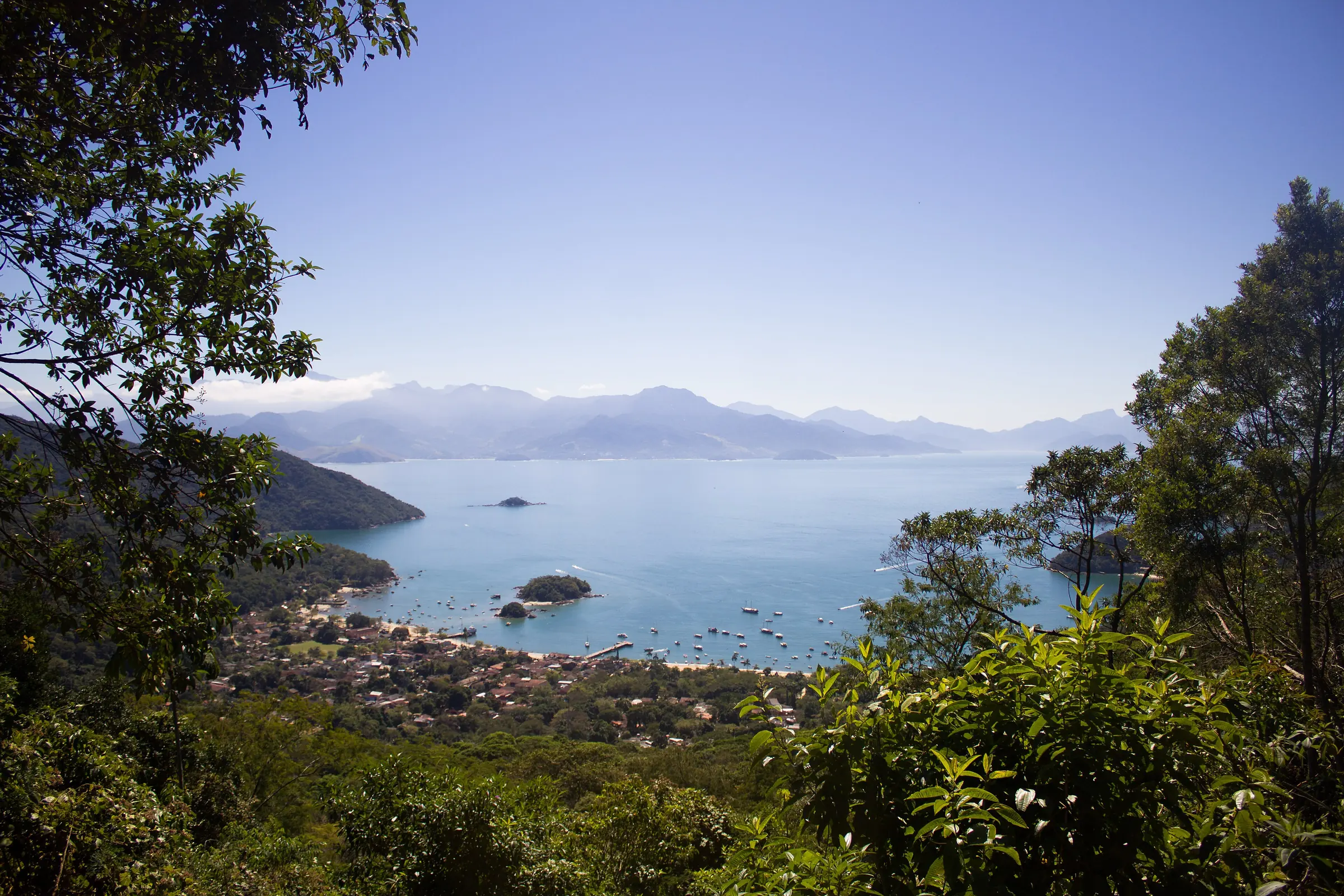

There are no cars on Ilha Grande. That gets written up as a charming detail, usually somewhere near the bottom of a list of beaches, and it is actually the whole planning problem. Every decision you make about this island is downstream of it: how you arrive, how you reach a beach, why a distance that looks short on the map takes two hours, and why there is no version of Ilha Grande where you sort it out when you get there.
Quick answer: Ilha Grande is a car-free rainforest island off the Costa Verde, a stretch of coast road from Rio de Janeiro plus a speedboat crossing of about twenty minutes. Two to three nights is right. You get around on foot or by boat and nothing else, so a good day is usually one boat ride, one short walk and a lot of sitting still. April to October is the drier half with calmer, clearer water. It pairs almost automatically with Paraty and Rio into one coastal route.
Is Ilha Grande worth visiting, and why is it so empty?
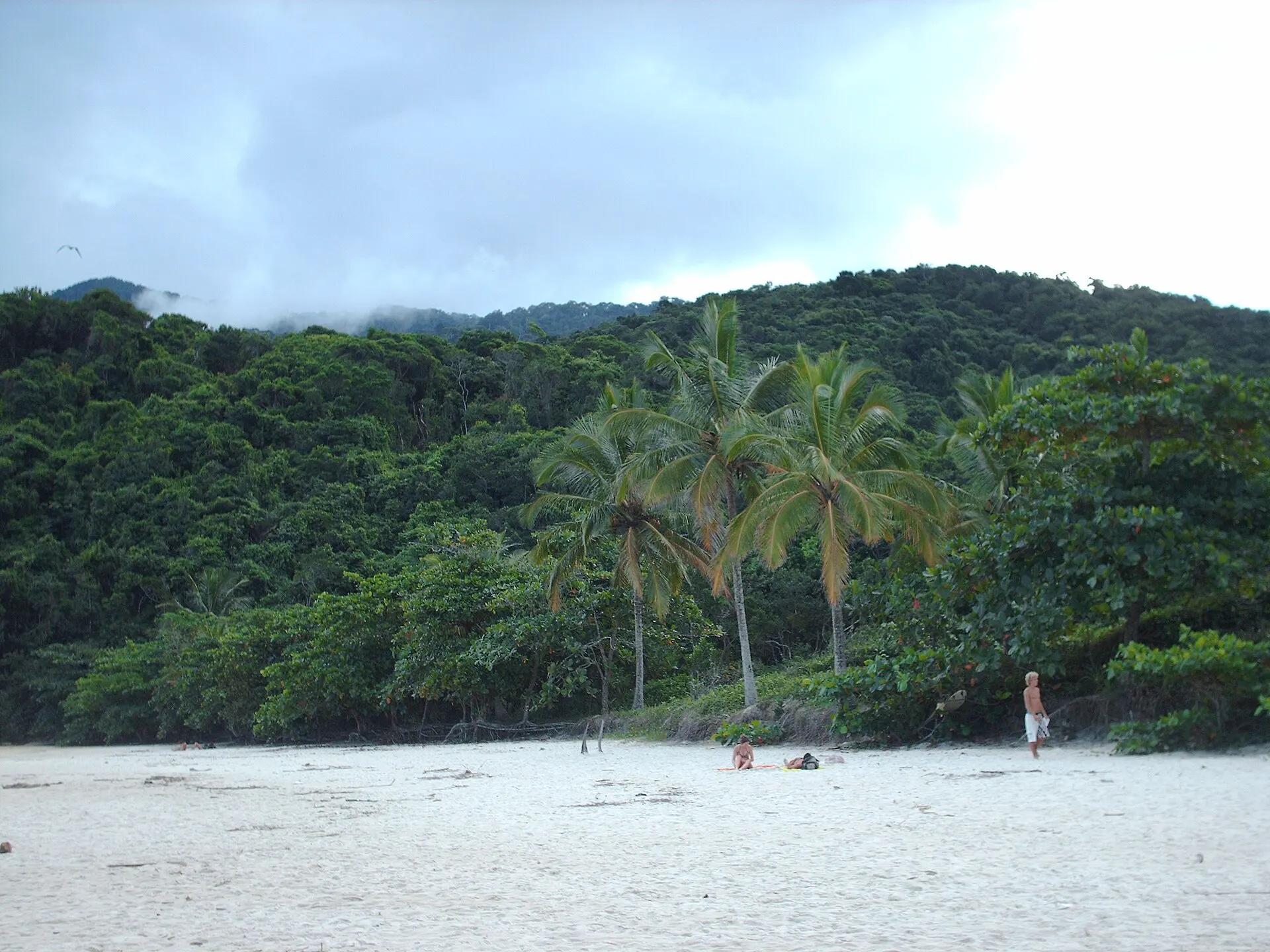
Yes, if you want the barefoot chapter of a Brazil trip rather than another town to walk around. It has more than a hundred beaches, most of them undeveloped, an Atlantic rainforest that runs straight down into the sea, and one small village.
If your idea of an island involves a resort, a swim-up bar and a road to the airport, this is not it, and we would rather say so now than three days in.
The reason it is this empty is not conservation policy. It is that for most of the last century Ilha Grande was somewhere you were sent, not somewhere you visited. It held a quarantine station, a leper colony and, for decades, one of the most feared prisons in Brazil. Development stayed away because nobody wanted to build a hotel next to that, and when the Cândido Mendes penitentiary was finally torn down in 1994, what was left was an island that had simply missed the twentieth century. The dark history is the exact reason the nature survived.
You can still go and look at it. Dois Rios, on the far side, is a couple of hours on a forest trail or a boat ride away, and the prison ruins sit there beside a beautiful empty double beach with a small museum telling the long story of the island as a place of quarantine and imprisonment. Closer to the village, the crumbling Lazareto aqueduct covers the earlier chapter. It is a strange half-day and the most memorable one here.
How do you get to Ilha Grande?
By boat, because there is no other way.
We bring you to the Costa Verde coast by private transfer or shuttle from Rio de Janeiro, São Paulo or Paraty, and a speedboat takes you across from a mainland port such as Conceição de Jacareí or Angra dos Reis to the village of Vila do Abraão, in as little as about twenty minutes.
The part worth understanding is that this is a chain, not a journey: a road leg, a port, a boat, and a walk up a sandy lane at the other end. Each link has its own timing and the whole thing only works if the links are booked to fit each other. That is most of what we are doing on this leg, and it is also why your bag spends part of the day on a speedboat, which is worth a thought while you pack.
How many days do you need on Ilha Grande?
Two to three nights. One day for a boat circuit around the sheltered coast, one for a beach or a walk, and a slow morning before the boat back.
Three nights is the version where you also get a day that goes nowhere at all, which on this island is not a wasted day but the point of it.
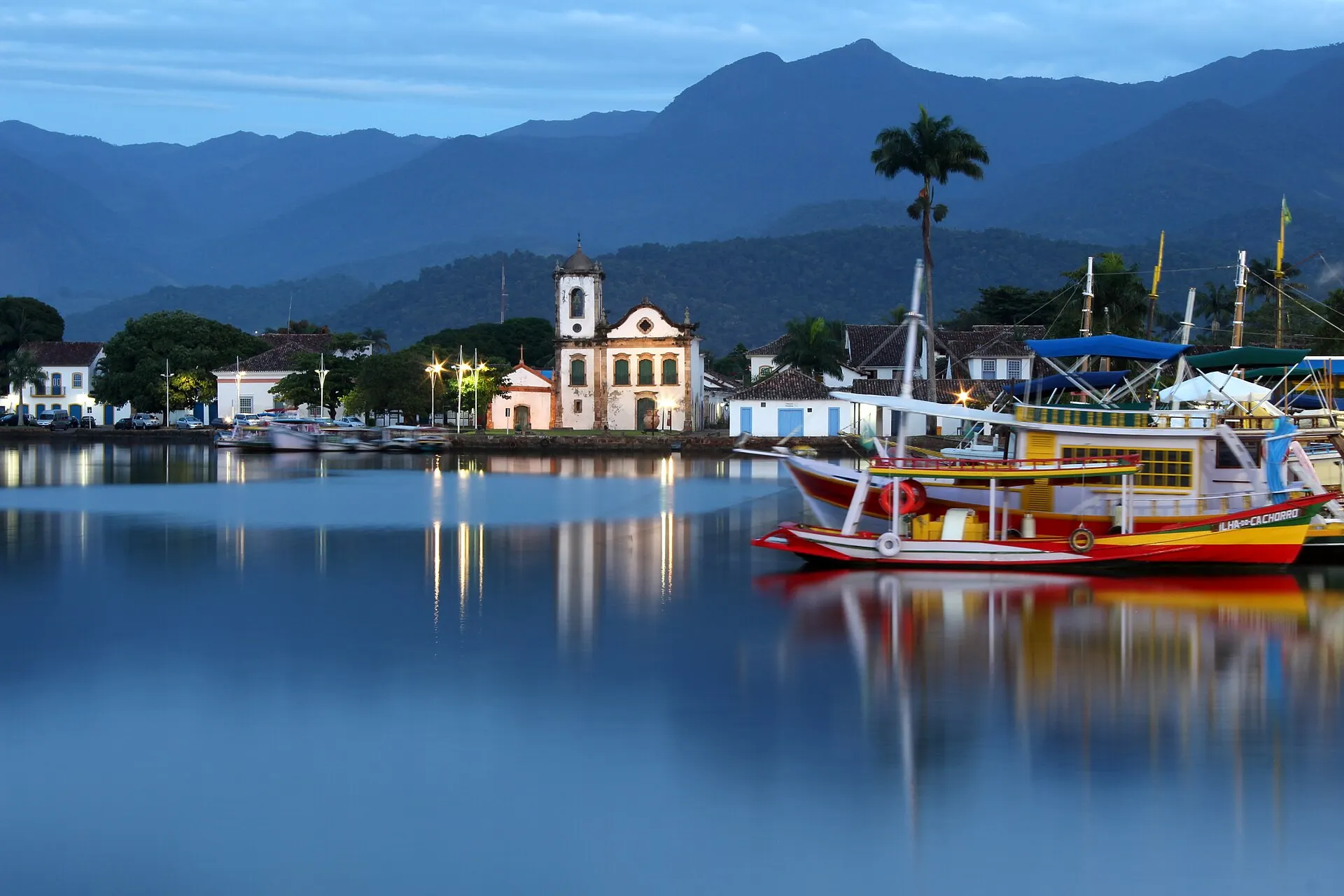
Almost everybody pairs it with Paraty, the colonial town along the same coast, which wants about two nights of its own. Rio sits at the other end of the same road. Those three make a Costa Verde route that needs no internal flights and very little driving, which is rare in Brazil and is the reason we suggest it so often.
Getting around: on foot or by boat, and nothing in between
There are no cars to hire and no coastal road to drive, so every beach and viewpoint is reached one of two ways.
On foot. A network of numbered trails runs through the rainforest, linking the beaches and climbing to the peaks and old lighthouses. Some are twenty-minute strolls over a headland. Others are serious half-day hikes through dense jungle. Walking is how you reach the emptiest corners and how you see the forest rather than just the coastline. Take proper shoes and water, and treat map distances with suspicion, because short and steep beats long and flat every time.
By boat. Water taxis run between beaches, private boats go where you like on your own schedule, and traditional wooden schooners make relaxed day loops with swim and snorkel stops. For the far beaches a boat turns a punishing trek into half an hour of breeze.
Most good days here mix the two: a boat out, a short walk in through the trees, and a boat home. That is also the honest answer to the fitness question, which we are asked a lot. The famous beaches and the Blue Lagoon are reachable by boat with only short walks, so no real fitness is needed. The long trails are entirely optional.
Which beaches are worth a whole day?
- Lopes Mendes. The famous one, and it earns it: a straight kilometre of fine white sand that squeaks underfoot, backed by nothing but forest, fronted by clear green water. No building is allowed behind it, so it looks much as it always has. Most people take a boat to the neighbouring beach and walk fifteen or twenty minutes over a forested headland, and that reveal through the trees is half of it. There are no kiosks and little shade, so bring water and give it the whole afternoon.
- The Blue Lagoon. A shallow, protected patch of glass-clear turquoise where you slide off the boat and snorkel among shoals of fish in water as calm as a bath. It is the anchor of the classic schooner circuit, usually strung together with the Green Lagoon and a slow pass through the Bay of Stars.
- Aventureiro and the outer beaches. The ocean-facing side is a different island: surf, wind and a handful of remote beaches that see a fraction of the visitors. The wind-bent palm leaning low over the water at Aventureiro is the postcard, and it sits inside a protected community reserve. These take a long boat ride or a serious hike to reach, which is exactly why they stay empty.
Should you climb Pico do Papagaio?
Only if you actually like this sort of thing, and then absolutely.
The Parrot's Peak is a granite dome at 982 metres, and the classic way up is to set off in the dark a few hours before dawn and climb through the rainforest by headlamp to reach the top as the sun comes up.
There is a scramble near the summit. On a clear day the view reaches all the way to Rio.
Everyone who has done it will tell you it was worth every step. They tell you this at about eleven in the morning, not at four.
If that is not your holiday, skip it without regret. Nothing else on the island depends on it, and the day you spend horizontal instead is a perfectly respectable use of Ilha Grande.
When is the best time to visit, and what will it cost?
It is warm all year. April to October is the drier stretch, with calmer, clearer seas, which matters more here than the temperature does because so much of the island is only reachable by boat.
December to March is hotter, greener and busier, with warm water and more frequent heavy showers. The shoulder months on either side of winter give you the best water and the fewest people.
On cost we are not going to print a figure for Ilha Grande, and the reason is simple: nobody buys the island on its own. It is a two or three night chapter inside a Costa Verde route, and what it adds depends on the pousada, the boats and the season. Our two-week Brazil itinerary carries the real per-region starting prices, and a proposal carries the one for your dates.
Two more honest notes. Planning and coordination with us run in your own language throughout, and we confirm which language your guide on the island speaks before you book rather than after. And what will go wrong: the sea will be rough on one of your days and a boat will not go. The good version of that day is a forest trail and a long lunch in the village. The bad version is the one where the boat was the only plan. If you would rather see it inside a finished route, our beaches and islands route shows where it sits.
Summary FAQ
How do you get to Ilha Grande? By boat, since the island is car-free. A private transfer or shuttle takes you from Rio de Janeiro, São Paulo or Paraty to a mainland port such as Conceição de Jacareí or Angra dos Reis, then a speedboat crosses to Vila do Abraão in as little as about twenty minutes.
How many days do you need on Ilha Grande? Two to three nights. One boat day around the sheltered coast, one beach or walking day, and a slow morning before the crossing back. Three nights buys you the day that goes nowhere, which is the one people remember.
Is Ilha Grande worth visiting? Yes, if you want a car-free island with more than a hundred mostly undeveloped beaches and a rainforest running into the sea. It is not a resort destination and it never became one, because for most of the last century the island held a quarantine station and a prison rather than hotels.
Do you need to be fit for Ilha Grande? No. The famous beaches and the Blue Lagoon are reached by boat with only short walks. The long forest trails and the Pico do Papagaio climb are proper hikes and completely optional, so the island works at whatever pace you set.
Ilha Grande or Paraty? Both, and in either order. Paraty is the colonial town, the history and the Gold Trail. Ilha Grande is the car-free island, the beaches and the forest. They sit a short hop apart on the same coast and most of our guests take them as one Costa Verde leg with Rio at the end of it.
Is Ilha Grande safe? It is a small, laid-back island community and one of the more relaxed places on the Brazilian coast, with little of the vigilance a big city asks for. What genuinely deserves respect here is natural: the sun, the open sea on the ocean side, and the trails. Walk with water and decent shoes, and take boats with experienced local skippers.
Tell us your dates and how active you want the island half to be, and we will fold Ilha Grande into your Costa Verde days alongside Paraty and Rio, with the road leg, the port and the crossing booked to fit each other. You will have a personal, non-binding proposal within 24 hours. If you want the island laid out in full first, our Ilha Grande destination guide does that.
Official sources
The rules and figures in this article come from the official bodies below. They change, so check them for your own dates.
- Paraty and Ilha Grande, Culture and Biodiversity, World Heritage List · UNESCO
- ICMBio, the federal agency for Brazil’s national parks · Governo Federal do Brasil
- INMET, the national meteorological institute · Governo Federal do Brasil
- Ilha Grande
- Costa Verde
- Islands
Turn it into your own Brazil trip
Tell Robin your dates and what caught your eye, or pick the destinations and experiences you love and send us your own route to plan.
Non-binding, a personal reply within 24 hours, in English or German.