
Two and a half hours of road separate the best wildlife density in the Americas from the clearest fresh water in Brazil. No flight, no connection, one airport at each end of the whole thing. It is the tidiest pairing in Brazilian travel and almost nobody arrives knowing it exists.
Quick answer: The southern Pantanal and Bonito sit two and a half hours apart by road, both reached from Campo Grande, so the two join into one trip with no internal flight between them. Give the wetland three to five days and Bonito two to three. Come in the dry season, roughly June to October, when the animals concentrate and the water is at its clearest. Do the Pantanal first and Bonito second.
Why these two go together
Because they are opposites that share an airport.
The Pantanal is open wetland seen from a horse, a jeep and a boat, at dawn and dusk, with animals coming to you. Bonito is fresh water seen from inside it, in the middle of the day, drifting a spring-fed river above schools of fish. One is looking outward across a plain, the other is looking straight down through water you can read the riverbed through. Doing both in a week is not repetition, it is contrast.
The practical half of the argument matters more. Everything else in Brazil that is worth combining costs you a domestic flight and half a travel day. This costs you a drive, and our guide to getting around Brazil explains why that is worth more than it sounds on a two-week route.
What each half actually gives you
One is animals coming to you. The other is water you get into.
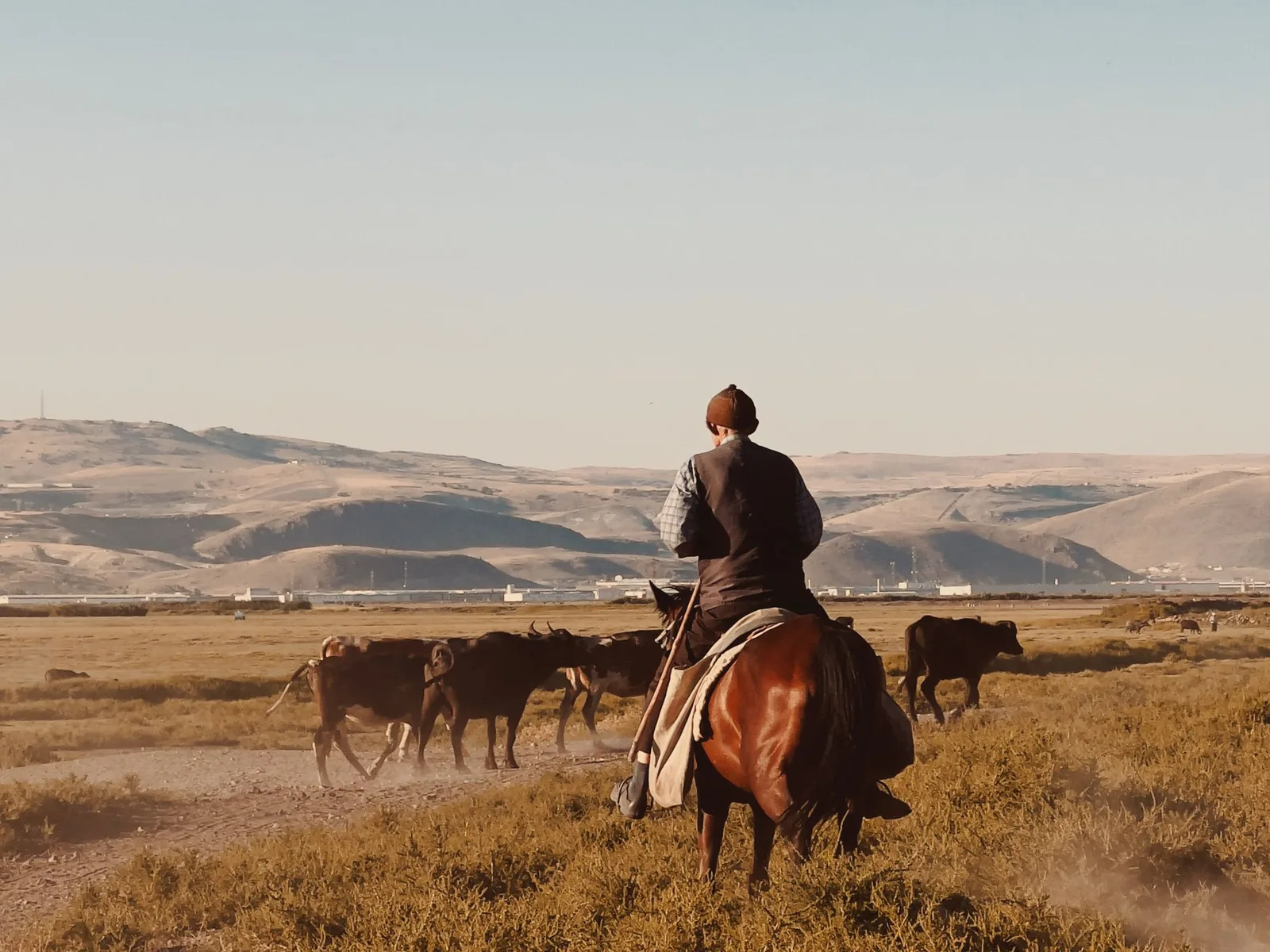
The southern Pantanal. A working cattle fazenda, morning and late-afternoon outings, and a spotlit drive after dark. Capybaras past the veranda, caimans along the ditches, giant otters fishing in family groups on the slow rivers, and birdlife that stops being remarkable by the third day. Our fazenda post covers what that stay is actually like.
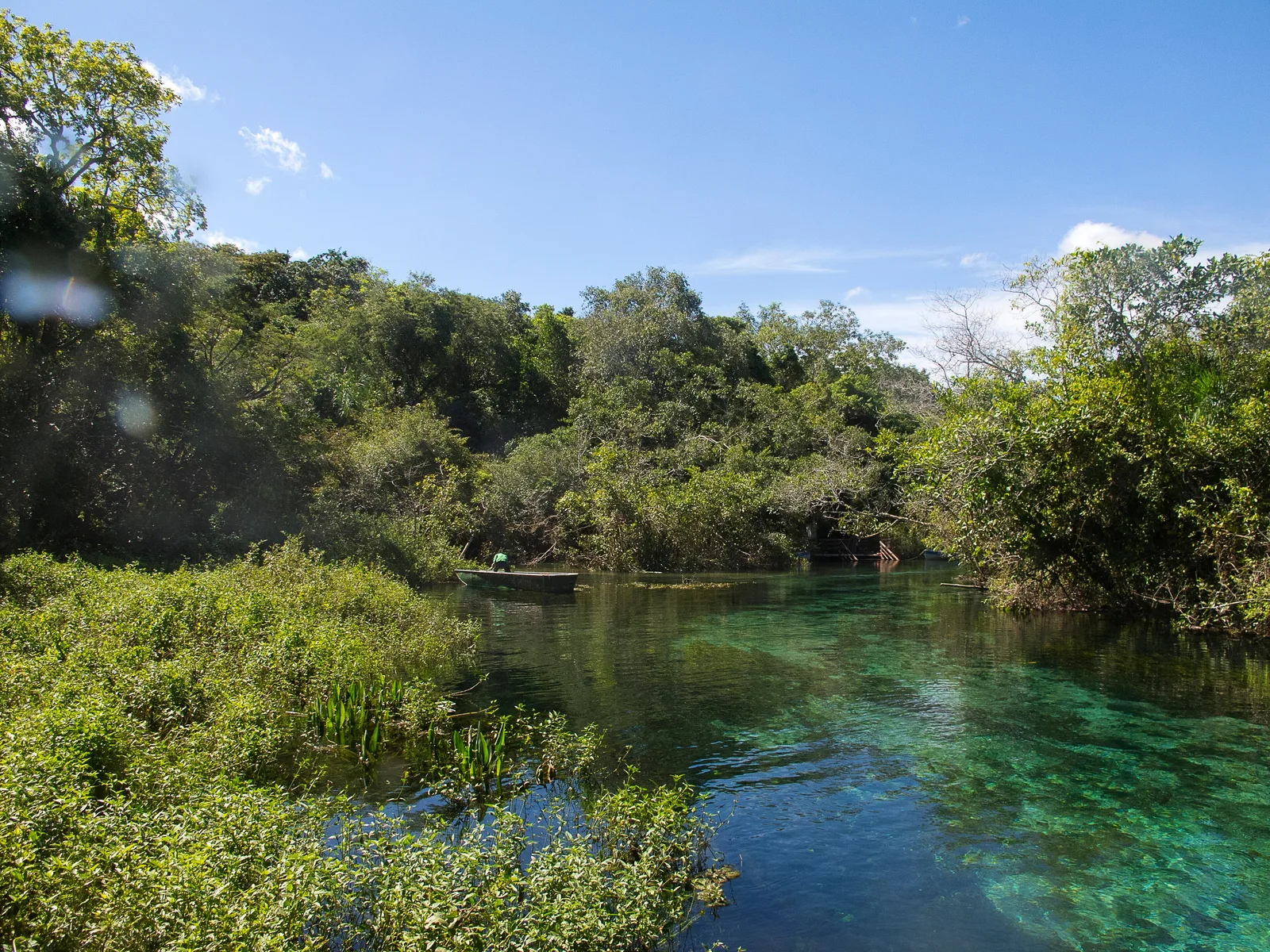
Bonito. Spring-fed rivers clear enough to read the riverbed from the surface, a flooded cave you can snorkel, and a waterfall circuit. Wetsuits and masks provided. Every site runs timed entry with a daily visitor cap, which is why the itinerary is fixed weeks ahead and why the water is still clear. Our Bonito guide has the detail.
What neither is: Bonito is not a wildlife destination and the Pantanal is not a swimming one. That is the point of doing both.
How the logistics actually work
You fly into Campo Grande and you fly out of Campo Grande.
From there it is a road transfer to the fazenda, two to four hours depending on which one, then two and a half hours across to Bonito when the wetland part is done, then a shorter run back to the airport. Every leg is a drive with your own guide, and it is the same guide across both halves, from the airport pickup to the last morning in Bonito. The day between two regions is part of the trip rather than a gap in it.
The one timing detail worth knowing: the last stretch to the far fazendas is unsealed track across open floodplain, so a late arrival into Campo Grande means a night in the city and a drive in after breakfast. We settle which version applies once your flights are booked.
How many days, and in which order
Five to eight nights for the pair. Three to five in the Pantanal, two to three in Bonito.
Order matters and the answer is Pantanal first. The wetland runs on early starts and it is the part that rewards being fresh; Bonito is timed entry and gentle drifting and makes a better ending than a beginning. It also means the drive between them lands in the middle of the trip rather than on the day you are trying to get to an airport.
Eight nights is the version we would build if you have them: four on the fazenda, three in Bonito, one for the joins. Five is the shortest that does not feel like a raid.
When to come
The dry season, roughly June to October, and for once both halves agree.
Falling water pulls the Pantanal's animals together and keeps the tracks open. Bonito's clearest water is May to August, because no rain is stirring sediment. The overlap of June to August is as close to a perfect window as this pairing gets, with the caveat that July is the Brazilian school holiday month and the priciest stretch of the year nationwide. June and early October are the quiet value months.
One thing to pack that nobody expects: a warm layer. Bonito's water sits at 21 to 23 degrees all year, but the nights between May and August can drop below 15, and the Pantanal's dawn boat is colder than the afternoon suggests. Our packing list argues this at more length.
What it costs
Both halves now have a published starting price, which they did not until this month.
- The southern Pantanal, 5 days: from US$1,350 per person, privately guided, with accommodation and transfers included.
- Bonito, 3 days: from US$700 per person, with the day trips and a private guide.
That Bonito figure does not cover the transfers in and out, which on this route means the drive over from the wetland and the run back to Campo Grande airport. There is also a conservation charge of 15 BRL per visitor per day, paid locally at the sites, which we name up front rather than letting it appear at a desk.
Two honest notes on those. They are not the same shape, because the Bonito figure leaves out the transfers in and out while the Pantanal figure includes them, so adding them naively overstates one and understates the other. And Bonito carries a conservation charge of 15 BRL per visitor per day, paid locally at the sites, which we name up front rather than letting it appear at a desk.
The southern figure is also worth reading against the other one you will meet on our pages. From US$1,800 for five days is the northern Pantanal, the jaguar operation out of Cuiabá, and it is the more expensive half. The south is cheaper, and it gives up exactly one thing to the north: the reliability of a jaguar sighting. On everything else it is at least the equal of the northern wetland. Where you land above the starting figure depends on the fazenda, the season and whether the boat and guide are yours alone, and the written proposal states the exact total before anything is confirmed.
Who should not do both
Anybody whose trip is really about the jaguar.
Reliable jaguar watching is boat-based and happens in the northern Pantanal out of Cuiabá, which is a different airport and a different trip, and Bonito is not two and a half hours from it. Pick the north and drop Bonito, or pick this pairing and accept that the cat is a bonus rather than a plan.
And anybody who will not get in the water. Half of this trip is snorkelling. If that is not you, spend the days in the wetland instead and go home rested.
Summary FAQ
Can you combine the Pantanal and Bonito? Yes, and it is the easiest combination in Brazil. They sit two and a half hours apart by road and share one airport at Campo Grande, so the two join into a single trip with no internal flight between them.
How many days do you need for both? Five to eight nights. Three to five in the southern Pantanal and two to three in Bonito. Eight is the comfortable version: four on the fazenda, three in Bonito and one for the drives.
Should you do the Pantanal or Bonito first? The Pantanal first. It runs on early starts and rewards being fresh, while Bonito's timed-entry drifting makes a better finish. It also puts the long drive in the middle of the trip rather than on a departure day.
When is the best time to do both? June to August. The Pantanal's dry season runs roughly June to October and Bonito's clearest water is May to August, so the overlap is the window. July is the Brazilian school holiday month and the priciest, which makes June the value pick.
How far is Bonito from the Pantanal? Two and a half hours by road from the southern Pantanal, driven as a private transfer with your own guide. From the northern Pantanal, out of Cuiabá, it is not a sensible pairing at all.
What does the combination cost? The southern Pantanal starts at US$1,350 per person for five days, privately guided, with accommodation and transfers included. Bonito starts at US$700 for three days with the day trips, though not the transfers in and out, plus a 15 BRL daily conservation charge paid locally. The south is cheaper than the northern Pantanal, which is where the US$1,800 starting price on our other pages belongs.
Tell us your dates and how many nights you can give the pair, and we will build it out of Campo Grande with the drive in the middle where it belongs. You will have a personal, non-binding proposal within 24 hours. If you would rather see the finished shape first, our fazenda days in the southern Pantanal is the wetland half of it.
Official sources
The rules and figures in this article come from the official bodies below. They change, so check them for your own dates.
- Pantanal Conservation Area, World Heritage List · UNESCO
- ICMBio, the federal agency for Brazil’s national parks · Governo Federal do Brasil
- INMET, the national meteorological institute · Governo Federal do Brasil
- Pantanal
- Bonito
- Routes
Turn it into your own Brazil trip
Tell Robin your dates and what caught your eye, or pick the destinations and experiences you love and send us your own route to plan.
Non-binding, a personal reply within 24 hours, in English or German.