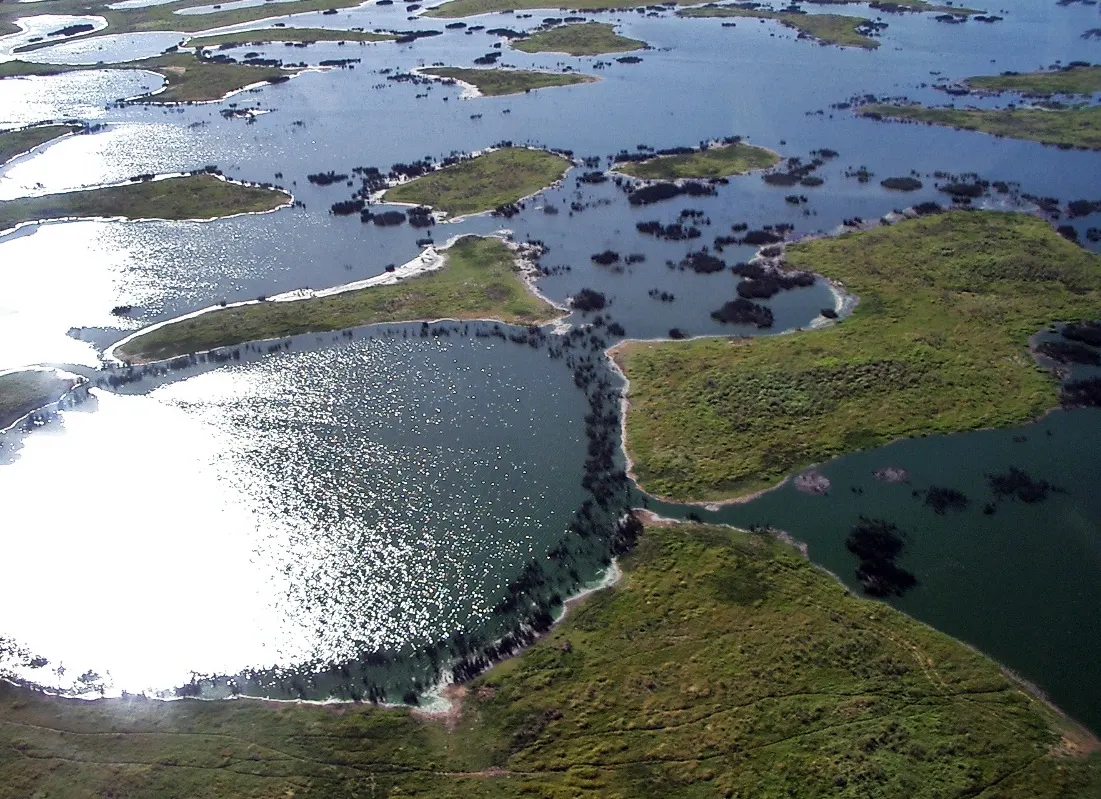

A fazenda is a farm with guests, not a lodge with cattle. That one sentence decides whether you will love the southern Pantanal or spend four days waiting for someone to bring you a towel, and almost nothing written about the region says it out loud.
Quick answer: A Pantanal fazenda stay means living on a working cattle ranch in Mato Grosso do Sul for three to five days, reached by road from Campo Grande. Days split into a morning outing, a hot middle left alone, a late afternoon outing and a spotlit drive after dinner. You ride, you take a boat after giant otters, and the capybaras graze past the veranda regardless of what anybody had planned.
What is a Pantanal fazenda, exactly?
A cattle operation that takes a handful of guests because the wetland brought them.
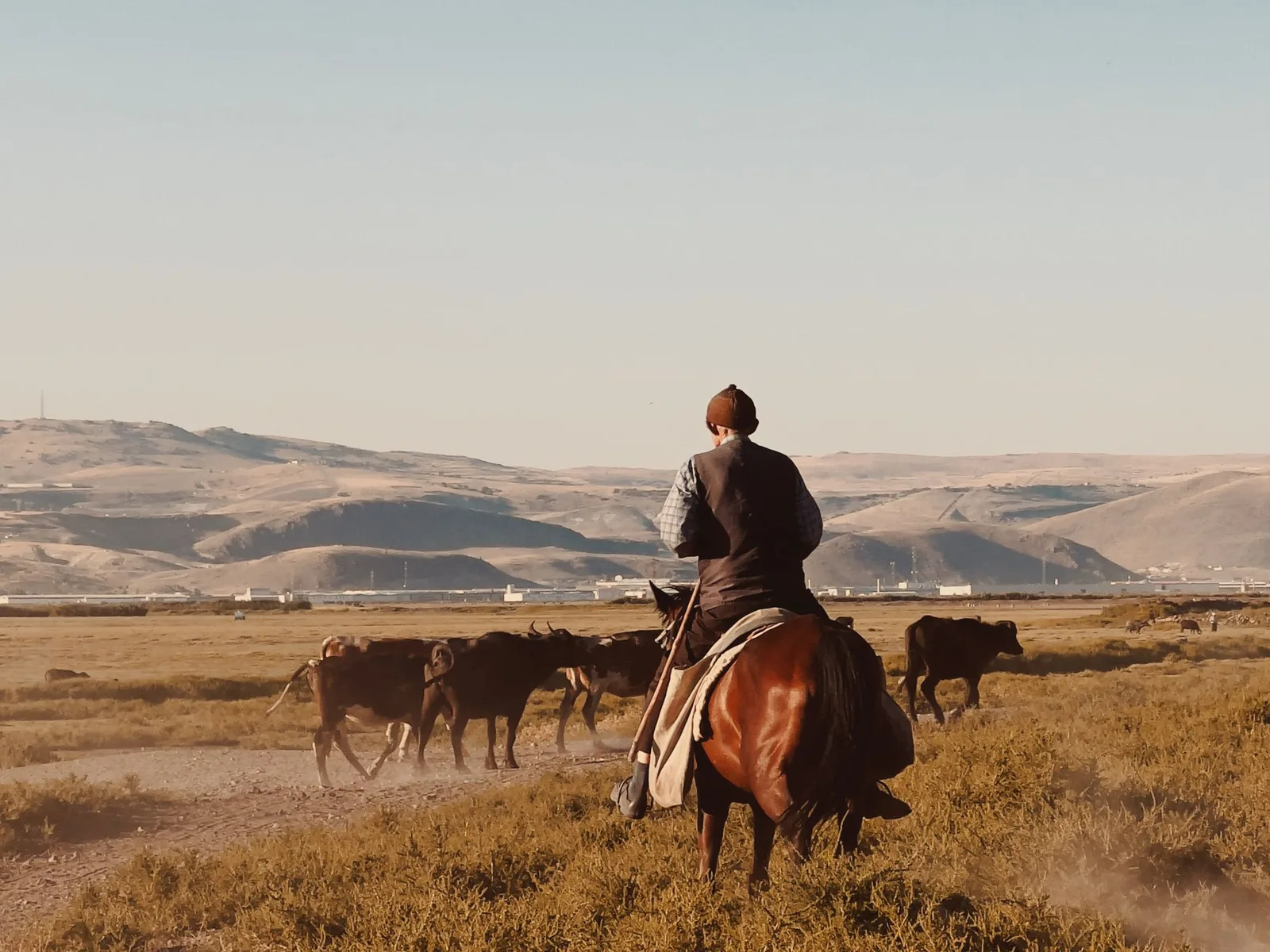
These are working ranches, often in the same family for generations, with six or eight rooms rather than a wing. Nobody built a resort here and nobody is pretending to run one. What you get instead is a veranda, a table, a routine, and an animal population that treats the buildings as scenery. If you want hotel service, this is the wrong product and we would rather say so now.
What a day actually looks like
The wetland moves at the edges of the day, so that is when you go out.
Morning is usually the saddle or a boat. The middle of the day belongs to the shade and a long lunch, because the heat flattens everything including the animals. Late afternoon is a photographic drive or a trail on foot. After dinner comes the spotlit safari, and the wetland turns into several hundred pairs of eyes coming back at you out of the dark.
What the outing actually is gets decided that morning, with your guide, against the water level and the light. Nothing is compulsory and nothing runs to a timetable, which takes most guests about a day to believe.
The boat morning is the one to protect. The slow rivers of the south are where giant otters fish in family groups, noisily, in the open and completely unbothered by an engine at idle. That is the sighting guests describe when they get home, far more often than the cat they came for.
Do you need to be able to ride?
No, and this is the question we are asked most.
The horses are Pantaneiro working stock, small, calm and entirely used to people who have never sat on one, and the riding is at a walk across flat open country rather than anything technical. If you would rather not ride at all, the same ground is covered by vehicle and on foot, and nobody will mention it again.
The part worth reading the small print on
The guiding included in a fazenda rate is in Portuguese.
That is not a criticism of the ranches, it is what they are: farms that take guests, staffed by the people who work the land. It does mean that the difference between a pleasant stay and a good one is usually the guide you bring with you, which is why we plan these privately with our own guide alongside you throughout, and why the fazenda route is built that way rather than sold as a room.
Worth being concrete about what that guide is, because every operator uses the phrase. Yours collects you at the airport or your hotel, stays with you through the whole of the fazenda days rather than appearing for outings, and knows the wetland itself: which bird that is, why it is here this month, what the falling water is doing to everything else. That is the difference between being driven around a wetland and having it read to you.
The other piece of small print is the arrival. Your guide meets you inside the terminal at Campo Grande rather than at a taxi rank outside, and the drive in is two to four hours depending on the ranch, the far ones ending on unsealed track across open floodplain. Land late and you sleep in Campo Grande and drive in after breakfast, because that last stretch is not a road to meet in the dark. Which version applies is settled once your flights are booked.
When should you go?
The dry season, roughly June to October, when falling water pulls the animals together and the tracks stay open.
July to October is the busiest and priciest part of it, July doubly so because of the Brazilian school holidays, which quietly makes June and early October the value months. The wet season floods the plain and scatters the wildlife, though the birding stays excellent throughout. Our Pantanal seasons guide works through the water year properly.
Who this is not for
Two groups, and we would rather lose both than disappoint them.
Anybody whose single goal is a jaguar. The cats live throughout the wetland, but the boat-based watching that makes them reliable happens in the north, out of Cuiabá, and if that is the reason you are coming to Brazil we will send you there instead even though this is the cheaper trip. Our jaguar safari post is that trip.
And anybody expecting a hotel. A fazenda is a farm with guests. The rooms are comfortable and the food is good and the wifi is what it is.
How many nights, and what does it cost?
Three at the very least, four is what we build, and it is the number we argue for. Two nights gives you one full day, which is a long way to travel for one full day, and the wetland takes about a day to slow you down.
Privately guided, a fazenda stay in the southern Pantanal starts at US$1,350 per person for five days, with the accommodation and the transfers included. Where you land above that comes down to the ranch you choose, the season, and whether the boat and the guide are yours alone. Flights are never part of it, and the written proposal states the exact total before anything is confirmed.
Summary FAQ
What is a fazenda stay in the Pantanal? Living on a working cattle ranch in the southern Pantanal for three to five days, reached by road from Campo Grande. The ranches take a handful of guests rather than running as hotels, and days divide into a morning outing, a hot middle, a late afternoon outing and a spotlit drive after dark.
Do you need to be able to ride a horse? No. The Pantaneiro working horses are small, calm and used to complete beginners, and the riding is at a walk across flat country. If you would rather not ride, the same ground is covered by vehicle and on foot.
How many nights should you stay on a fazenda? Four is what we build and three is the minimum worth travelling for. Two nights gives you a single full day, and the wetland takes about a day to slow you down before it starts giving anything back.
Will you see a jaguar on a fazenda stay? Probably not, and it is not what the trip is for. Reliable jaguar watching is boat-based and happens in the northern Pantanal out of Cuiabá. If the cat is your reason for coming, go north instead.
Is the guiding in English? The guiding included in a fazenda rate is in Portuguese. We plan these trips privately with our own guide alongside you throughout, which is the single biggest difference between a pleasant stay and a good one.
When is the best time for a fazenda stay? The dry season, roughly June to October. July to October is busiest and priciest, July especially because of the Brazilian school holidays, so June and early October are the value months.
Tell us your dates and whether the animals or the ranch life is the draw, and we will match you to a fazenda rather than to a brochure. You will have a personal, non-binding proposal within 24 hours.
Official sources
The rules and figures in this article come from the official bodies below. They change, so check them for your own dates.
- Pantanal Conservation Area, World Heritage List · UNESCO
- INMET, the national meteorological institute · Governo Federal do Brasil
- Brazilian Ministry of Tourism · Governo Federal do Brasil
- Pantanal
- Fazenda
- Wildlife
Turn it into your own Brazil trip
Tell Robin your dates and what caught your eye, or pick the destinations and experiences you love and send us your own route to plan.
Non-binding, a personal reply within 24 hours, in English or German.