
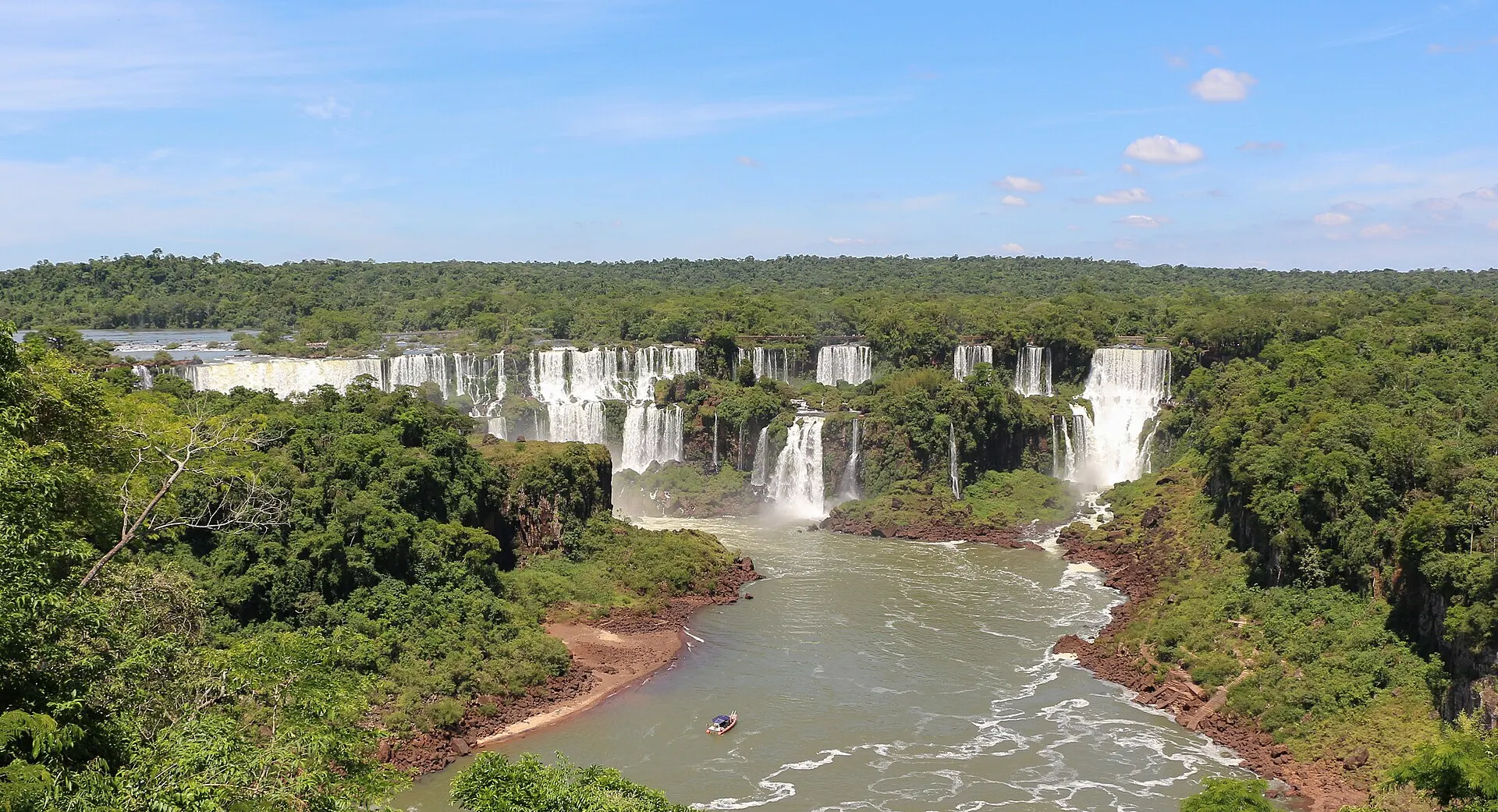

Iguazu is the rarest thing in Brazilian trip planning: a destination with no wrong month. The Lençóis lagoons empty, the Pantanal floods and disperses its wildlife, the Amazon swaps one season for a completely different one. The falls just keep falling. What changes is how much water is coming over, how hot you are while you watch it, and how many people are standing next to you.
Quick answer: Any month works at Iguazu. The falls run fullest after the summer rains, so roughly April, and they are typically strong again through the winter, with July a reliable month for volume. April, May and September to November are the sweet spots, because they pair good water with mild air and thinner crowds. Avoid the three demand peaks rather than any weather: Carnival, the July school holidays and the New Year period. Two to three days covers both sides of the falls whenever you come.
When is the best time to visit Iguazu Falls?
April, May, and September through November. That is the short answer and it holds for most travellers, because those months collect the three things that actually matter here at the same time: enough water, air you can walk in, and fewer people on the catwalks.
Here is what each stretch of the year is doing.
January to March, high summer. Hot and humid with frequent afternoon storms. Those storms are what fills the river, so the falls build through this period, but you pay for it in heat, in crowds and in Carnival, which is the biggest price and demand surge in the country. March is the quieter end of it, once Carnival has passed.
April and May, autumn. This is the window we would pick. The falls are typically running full after the summer rains, the air has cooled into something pleasant, and the crowds have thinned. If somebody asks us for one month for Iguazu and nothing else, it is April.
June to August, winter. Cold, genuinely so at night and inland, and the falls are typically strong. July is the catch: it is the nationwide domestic school holiday peak, so the park, the flights and the hotels all fill. A July trip is a good trip that needs to be booked much earlier than a May one.
September to November, spring. Warming, greener, and the falls still carrying. November in particular is warm and pleasant and sits just before the December rush, which makes it one of the better-value months of the whole year here.
December. Summer beginning, hot, and busy toward the end of the month as the New Year period arrives. Fine in the first half, expensive in the second.
Are the falls fuller in the wet season or the dry season?
Fuller after the rains, which is not quite the same as during them. The summer storms from January to March feed the river, and the volume shows up in the months that follow, which is why April is the month most often described as the falls running full. Winter keeps them strong.
The useful thing to understand is that this is a matter of degree rather than of presence. Iguazu is not one waterfall but roughly 275 of them, strung in a horseshoe across nearly three kilometres of rainforest, and there is no month in which that stops being impressive. If a photograph of a thin trickle over a cliff is what you are worried about, worry about something else.
What high water does change is the character of the thing. More volume means more spray, which means more rainbows, more noise, and a Devil's Throat that is genuinely hard to see into. Less volume means clearer views into the gorge and more visible individual falls. Neither is the good version.
Which months are busiest at Iguazu?
Three windows, and they are demand rather than weather.
- Carnival, movable and usually in February, is the single biggest price and demand surge in the Brazilian calendar. Our Carnival planning guide explains what it does nationwide, including to destinations with no parade in them.
- The July school holidays fill the country with Brazilian families. The park is busier, domestic flights are fuller and hotels are pricier. It is still a good month to see the falls, it is simply the month with the least flexibility in it.
- The New Year period, from around Christmas into early January, is the second big surge, and it reaches inland as well as to the coast.
Outside those three, Iguazu is comfortable. Even in the busier months, most of the crowding is concentrated in the middle of the day, which is why we walk the Brazilian panorama trail in the late afternoon when the light softens and the tour buses thin out.
Does rain ruin a day at Iguazu?
Not in the way you fear, and the honest answer is that you are going to get wet regardless. The Brazilian side ends on a catwalk that juts into the spray below the Devil's Throat, and the boat ride under the cascades exists specifically to soak you through.
Rain does change the plan, though, and this is where having your own days rather than a fixed schedule earns its keep. We move the boat and the Argentine catwalks around the forecast rather than marching through a downpour because the itinerary said so. The standing advice is to bring a poncho, and you should, while knowing that the Devil's Throat regards it as a formality.
How many days, and what does it cost?
Two to three days, whatever the month.
That is what it takes to see both sides properly, the Brazilian panorama in half a day and the larger Argentine park in a full one, and our guide to Foz do Iguaçu works through which side to do first and what else the town holds.
Our Iguaçu stays start here:
- Foz do Iguaçu, 3 days: from US$800 per person, privately guided, with accommodation and transfers included.
The season moves that number the same way it moves everything else in Brazil, so the real figure comes back in a proposal for your dates. What it does not move much is the experience, which is the point of this whole piece: unlike the Pantanal or the Lençóis Maranhenses, where the month decides whether the trip works at all, Iguazu simply asks you to pick your trade-off. For the route it belongs to, see our sixteen-day highlights journey.
Summary FAQ
When is the best time to visit Iguazu Falls? April and May, or September to November. Those months combine full or near-full falls with mild air and thinner crowds. April is the single month we would pick if forced to choose one.
Are Iguazu Falls fuller in summer or winter? They run fullest after the summer rains, so roughly April, and are typically strong again through the winter, including July. The volume varies by degree rather than disappearing, so no month leaves you looking at a trickle.
What is the worst time to visit Iguazu Falls? There is no bad month for the falls themselves. What to plan around is demand: Carnival, usually in February, the July school holidays, and the Christmas to New Year period. All three mean higher prices and fuller parks rather than worse waterfalls.
Is Iguazu worth visiting in the rainy season? Yes. The summer rains are what fill the river, and you will get wet at the falls in any season anyway, between the spray on the catwalks and the boat that goes under them. We shape the days around the daily forecast rather than the month.
How many days do you need at Iguazu Falls? Two to three, in any season. The Brazilian side gives you the panorama in half a day, the Argentine side is a full day of catwalks ending at the Devil's Throat, and a third day leaves room for the boat, the bird park or the three-border point.
Is it cold at Iguazu in winter? It can be. June to August is winter here and cold spells are possible, particularly at night and inland. Bring a warm layer, which is the single most forgotten item in a bag packed for the tropics, as our Brazil packing list says at some length.
Tell us your month and we will tell you honestly what it gets you at Iguazu, then build the two or three days around the light and the forecast rather than around a fixed programme. You will have a personal, non-binding proposal within 24 hours.
Official sources
The rules and figures in this article come from the official bodies below. They change, so check them for your own dates.
- ICMBio, the federal agency for Brazil’s national parks · Governo Federal do Brasil
- INMET, the national meteorological institute · Governo Federal do Brasil
- Brazilian Ministry of Tourism · Governo Federal do Brasil
- Iguazu Falls
- Seasons
- Foz do Iguaçu
Turn it into your own Brazil trip
Tell Robin your dates and what caught your eye, or pick the destinations and experiences you love and send us your own route to plan.
Non-binding, a personal reply within 24 hours, in English or German.