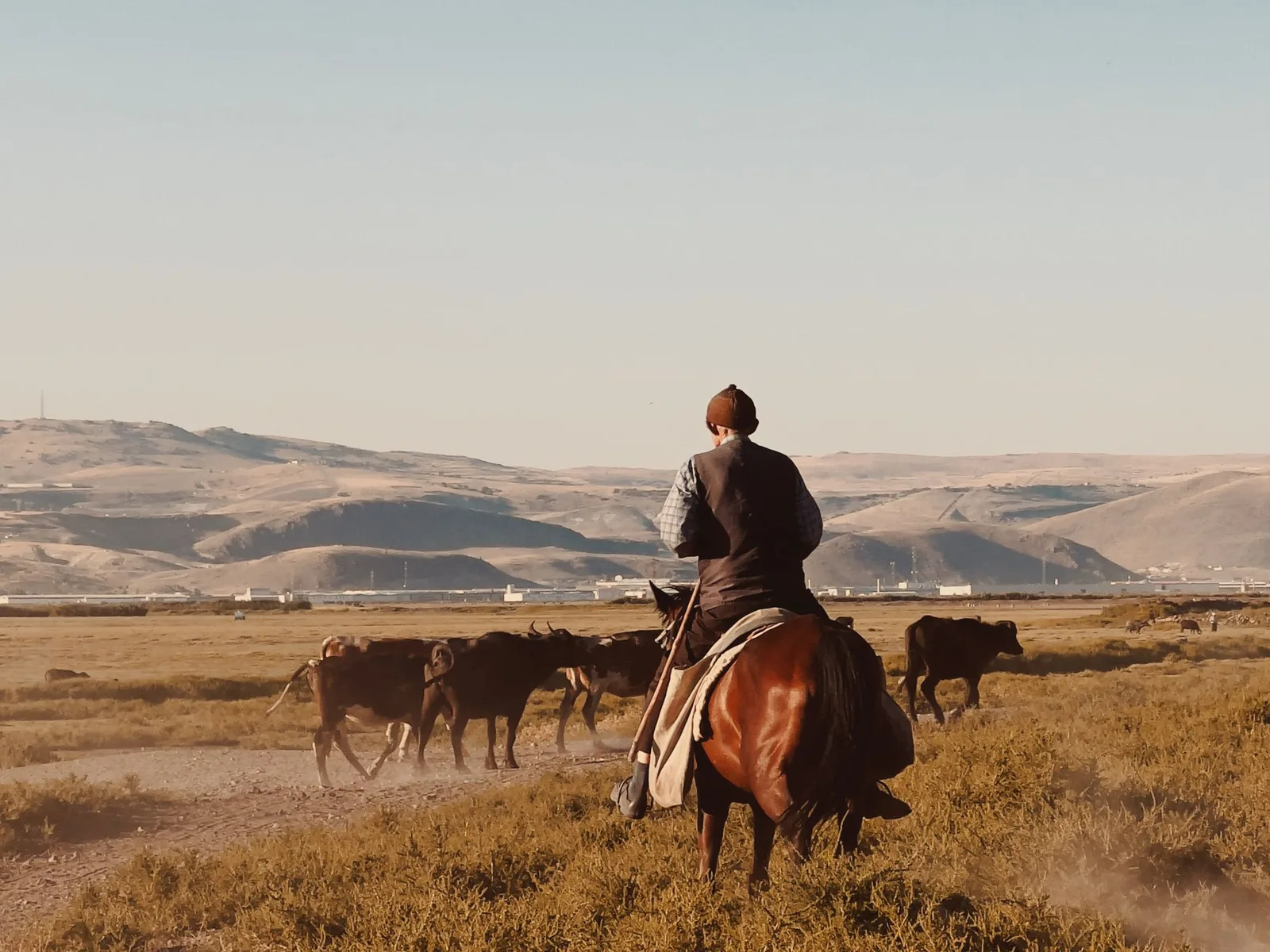
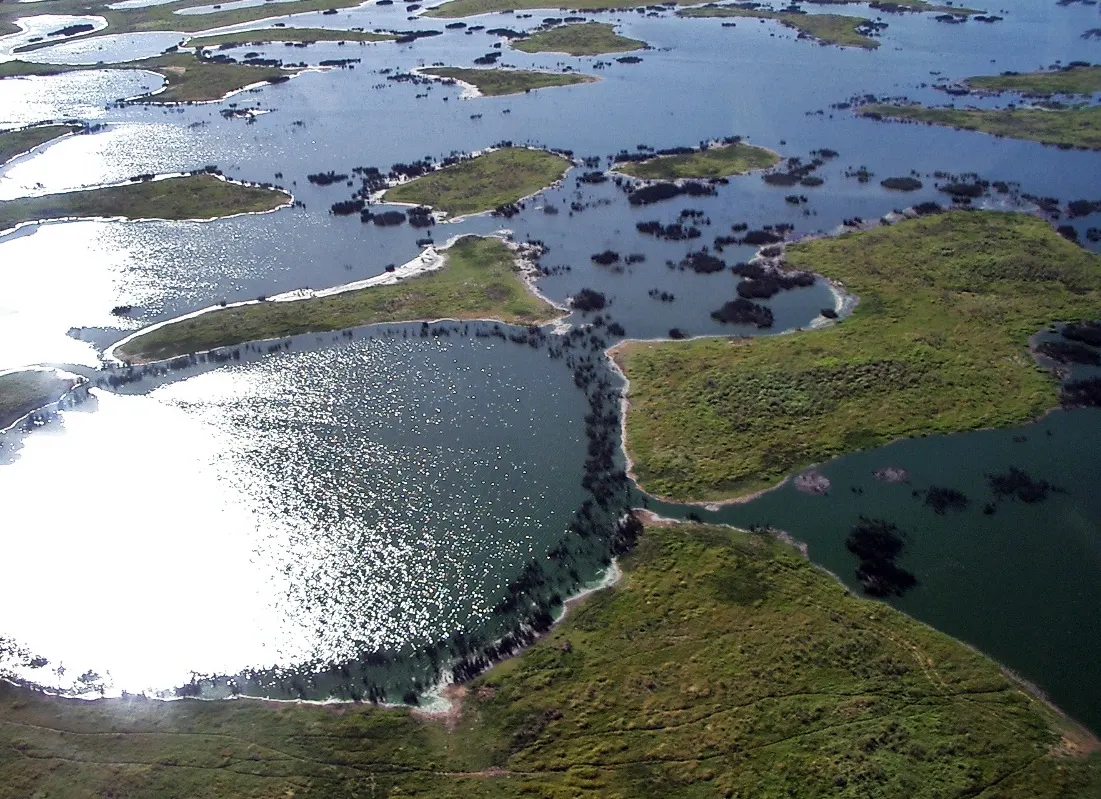

Most people plan the Pantanal around the weather. The animals plan it around the water, and the water is the only calendar that matters here.
Quick answer: For jaguars and big wildlife, come in the dry season, roughly June to October, and the strongest stretch is July to September. August is the month we recommend most often: the same animals as July, without the Brazilian school holidays that make July the busiest and priciest month of the year. September and October are hotter, and late September is when the fire season can put haze in the air. From December to March the wetland floods, access gets harder and the wildlife spreads out, which makes a fine trip for birds and skies and a poor one for jaguars. Some of our guide are telling us that this is actually their favorite season in the Pantanal, since the rainy season is showing the real face of the Pantanal.
So when is the dry season, exactly?
The Pantanal is the largest tropical wetland on Earth and it runs on one variable. From roughly December to March it floods, the heat sits on it, and the animals have water in every direction, so they spread out across a plain the size of a country.
From May the water starts draining back into the rivers and channels. By June the wildlife is gathering around what is left, and by July there is not much left.
That is the whole mechanism, and it is worth understanding rather than memorising a list of months. Nothing about July makes a jaguar less shy. It gives it fewer places to drink.
April and November are the hinge months, one season ending, the other starting.
Which months are best for jaguars?
July and August are the peak. Those are the two months of deepest dry season, when sightings are at their strongest and the riverbanks are busy with everything else as well: capybaras, caimans by the hundred, giant otters, hyacinth macaws, and the jabiru storks that are the emblem of the place.
If you gave us a free hand we would send you in August. July is just as good for wildlife, but it is also the Brazilian school holiday month, a nationwide domestic travel peak that makes lodges fuller and rates higher across the country, the Pantanal included.
August is calmer and usually better value for the same animals.
September and October still work. They are hotter, and from late September the fire season can bring haze that flattens the light, which matters if you came to photograph rather than just to see. October has a quiet advantage: the water is at its lowest, the wildlife is still concentrated, and the first rains of the new wet season may break before the month is out.
We will not promise you a jaguar, and nobody honest will. What the dry season buys you is the best probability that exists anywhere.
Is the wet season a waste of a trip?
No, and it would be easier for us to say yes. The green season, December to March, is the wetland at its most alive. The birdlife is spectacular, the skies after an afternoon storm are something the dry months never give you, and you will have the place close to yourself.
What you will not reliably have is a cat. The water is everywhere, so the animals are everywhere, the roads and channels are harder to work, and the boat days that deliver in August do not deliver the same way in February. If your trip has one purpose and that purpose has spots, a February plan should look different from a July one, and we would rather rebuild your route than defend a catalogue page.
So take the green season seriously if you are a birder, or a photographer who wants water and sky more than a jaguar on a sandbank.
Month by month, briefly
- December to March. Wet, flooded and hot. Low season for jaguar-focused trips, strong season for birds and dramatic skies.
- April. The wet season ends and the transition begins. Still green, access still awkward, improving week by week.
- May. Early dry. The water is receding and wildlife is starting to concentrate, so viewing improves as the month goes on.
- June. Properly dry. The animals gather around the water that is left and the good season is underway.
- July. Peak dry season and strong jaguar sightings. Also the school holidays, so busier and more expensive. Book well ahead.
- August. Peak dry season, prime wildlife, calmer than July. Our usual recommendation.
- September. Still dry and still strong. Hotter, and hazy late in the month once the fire season starts.
- October. End of the dry season. Hot, wildlife still concentrated, first rains possible.
- November. The wet season begins and the animals start to disperse again.
Does it matter whether you go north or south?
Not for the timing. They are two doors into the same wetland and the same water drives both.
The northern Pantanal is reached through Cuiabá, and from there the legendary Transpantaneira, a raised dirt road over hundreds of small wooden bridges, leads toward Porto Jofre and the jaguars of the Encontro das Águas, where they live at one of the highest densities anywhere. The southern Pantanal is reached through Campo Grande. West of Cuiabá, past Cáceres, lies roadless country and the strictly protected Taiamã reserve, which is some of the finest jaguar watching on the planet and the reason our six-day western Pantanal safari is built around boats rather than roads.
What changes between them is the character of the days, road and lodge in the north, water and channel in the west. What does not change is the calendar.
The price does change. Privately guided, five days in the northern Pantanal start from US$1,800 per person and five days in the southern Pantanal from US$1,350, both with accommodation and transfers included. The south gives up exactly one thing to the north, the reliability of a jaguar sighting.
If you are travelling alone, will the trip still run?
Yes, and it is worth saying plainly because a lot of wildlife trips cannot. We plan privately, so there is no group to join and no minimum number of travellers. Nothing gets cancelled three weeks out because a fourth booking never came in.
The honest catch is the single supplement. Hotels and lodges charge one, roughly 20 to 50 percent depending on the property and the season, and we put that number in your proposal instead of leaving you to discover it at the end. A private guide for one person also costs what a private guide for one person costs. We are not the cheapest way into the Pantanal and we do not pretend to be.
What you get for it is a day shaped around you rather than around a minibus: a dawn start when you want one, as long as you like in one channel if the light is working, and nobody else's lunch deciding when the boat turns around.
When should you book?
Earlier than you would for the rest of Brazil. The dry season is a five-month window, the lodges and boats we use are small, and July and August fill first. If your dates are fixed and they land in the peak, the lodge is the thing to lock down before anything else.
If your dates are flexible, say so. It is the most useful sentence you can send us, because it lets us move you from July into August and save you money on identical animals.
One more piece of timing. If you are combining the Pantanal with the Amazon, the dry months line up: Amazon low water runs roughly June to November, which means river beaches, easier walking and wildlife along the exposed banks. Our region-by-region guide to the best time to visit Brazil covers the rest of the country.
Summary FAQ
When is the best time to visit the Pantanal? The dry season, roughly June to October, with July to September the strongest stretch. August is the month we recommend most often: the same animals as July, without the Brazilian school holidays that make July the busiest and priciest month of the year.
Why does the dry season matter so much? Because the animals plan the year around water rather than weather. From December to March the wetland floods and the animals spread out across a plain the size of a country. From May the water drains back into the rivers, and by July there is not much left to drink from. Nothing makes a jaguar less shy; the dry season simply gives it fewer places to go.
Is the wet season a waste of a trip? No, it is a different trip. December to March is lusher, the skies are dramatic and the birdlife is superb, but the animals are dispersed and jaguar sightings drop. It is a good month for a birder and the wrong month for somebody whose one goal is the cat.
Which are the hinge months? April and November, one season ending and the other starting. September and October still work well, though from late September the fire season can bring haze that flattens the light, which matters more to photographers than to anybody else.
Does it matter whether you go north or south? Not for the timing, because the same water drives both. What changes is the character of the days: road and lodge in the north through Cuiabá, water and channel in the west past Cáceres.
How far ahead should you book? Earlier than for the rest of Brazil. The dry season is only a five-month window, the lodges and boats we use are small, and July and August fill first. If your dates are flexible, say so, because that is what lets us move you from July into August and save you money on identical animals.
The Pantanal is the one Brazilian destination where the month decides the trip, so start there. Tell us your dates and what you most want to see and you will have a personal, non-binding proposal within 24 hours. If you would rather read further first, our wildlife and nature journeys show how the Pantanal fits into a longer route.
Official sources
The rules and figures in this article come from the official bodies below. They change, so check them for your own dates.
- Pantanal Conservation Area, World Heritage List · UNESCO
- INMET, the national meteorological institute · Governo Federal do Brasil
- ICMBio, the federal agency for Brazil’s national parks · Governo Federal do Brasil
- Pantanal
- Wildlife
- When to go
Turn it into your own Brazil trip
Tell Robin your dates and what caught your eye, or pick the destinations and experiences you love and send us your own route to plan.
Non-binding, a personal reply within 24 hours, in English or German.