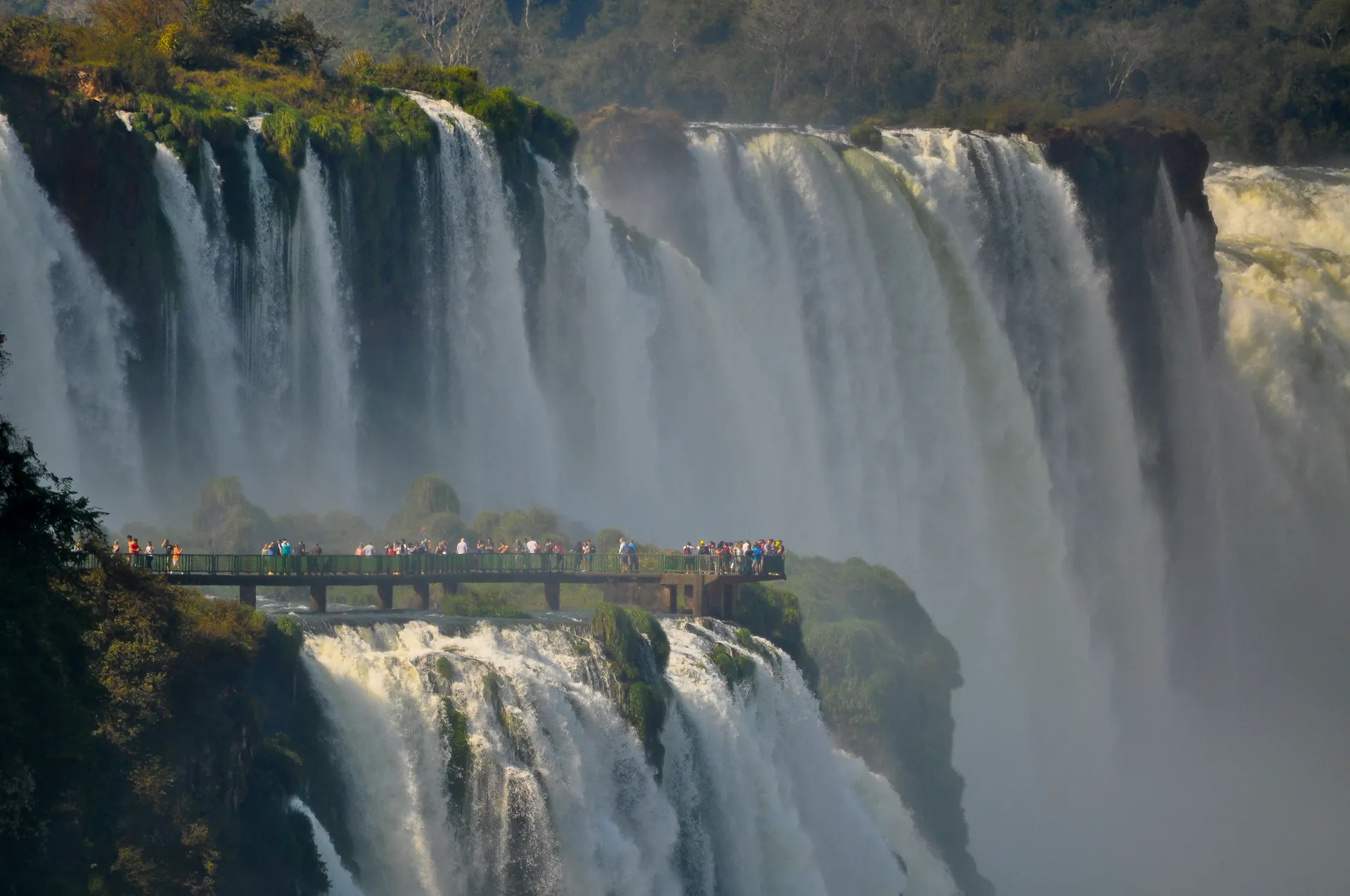
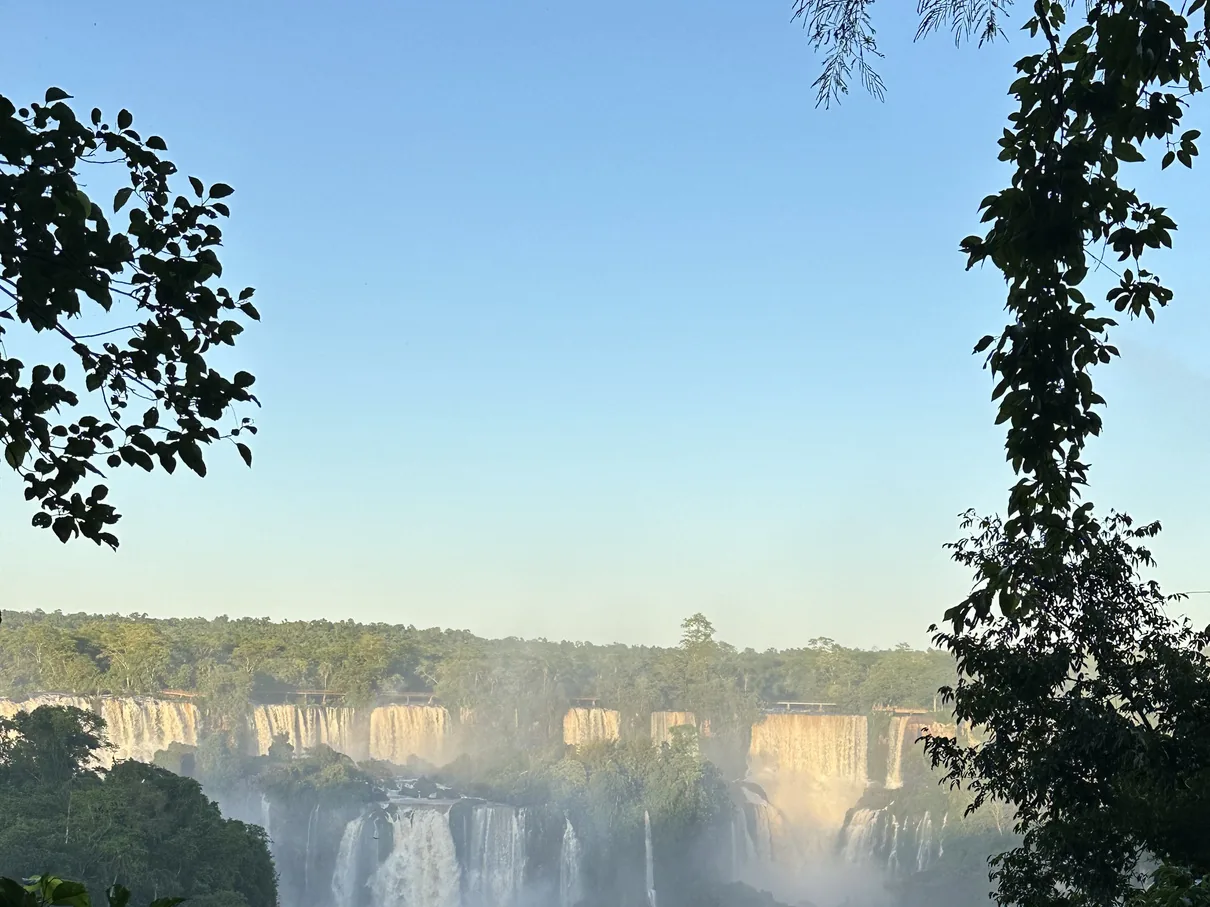
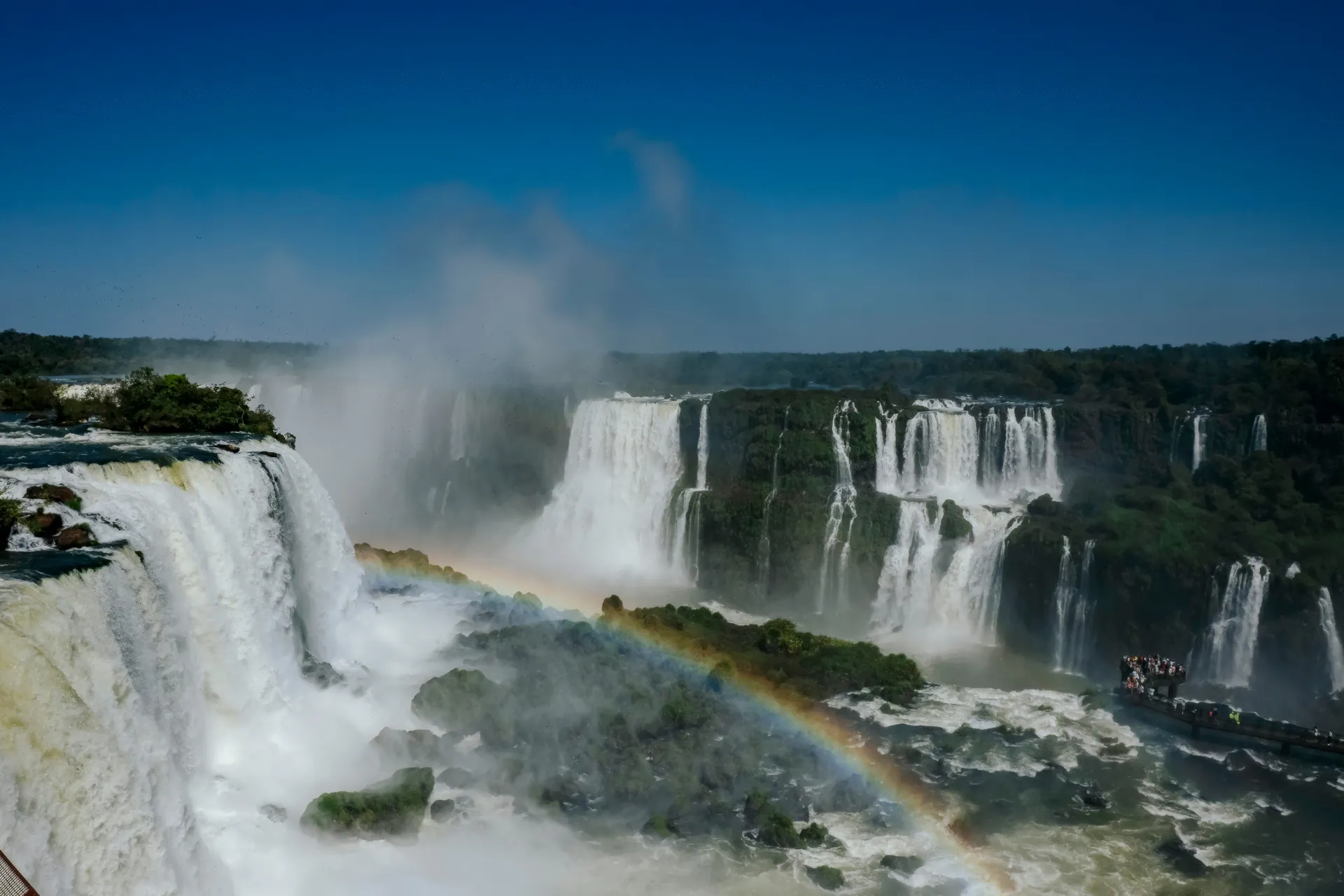
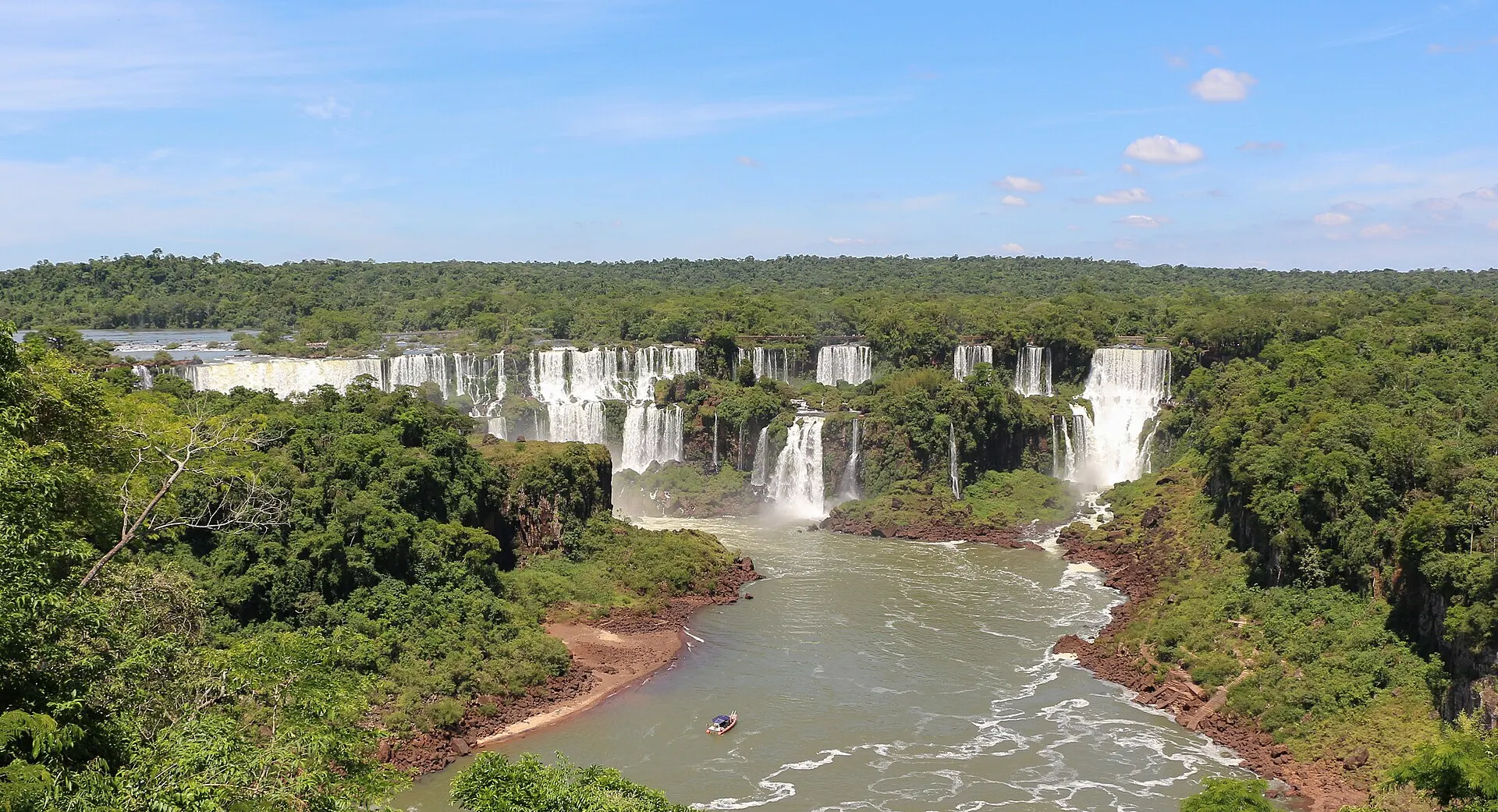
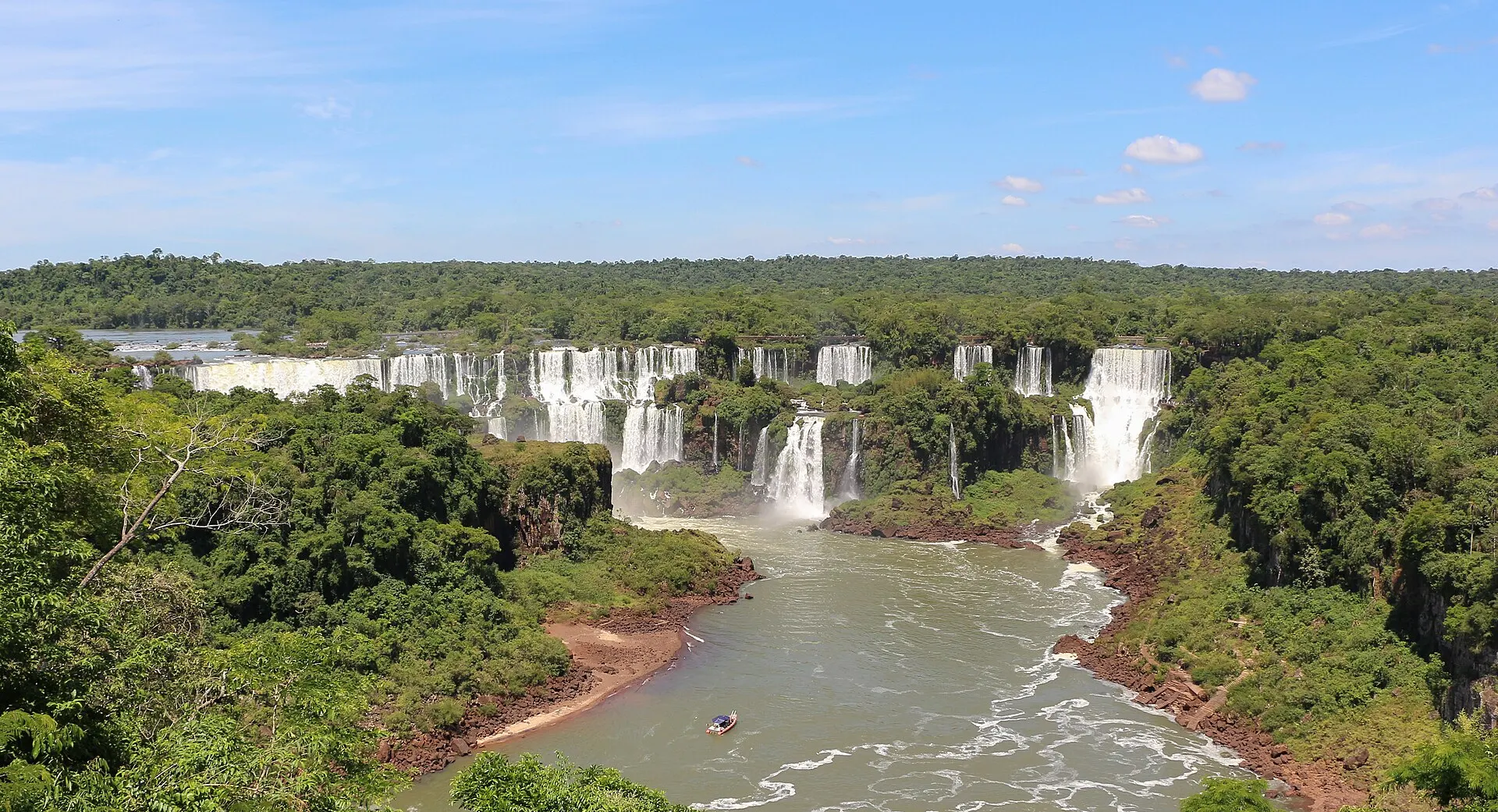
Panoramic view of the Iguaçu Falls cascading through rainforest

Iguazu Falls, Private Tours of Both Sides

Not one waterfall. Two hundred and seventy-five.

The Iguaçu Falls are wider than Niagara and taller too, a horseshoe of hundreds of cascades thundering through rainforest right on the border of Brazil and Argentina. The catch nobody tells you until you arrive: the falls have two completely different sides, in two different countries, and seeing only one means missing half the wonder. Here is how to do it properly.

Plan My Trip See both sides

Where

Paraná, Brazil-Argentina border

Getting there

IGU airport, short flight from Rio / SP

The falls

275 cascades, ~3 km wide

How long

3 to 4 days, both sides and the forest

The one waterfall that humbles everyone.

People arrive at Iguaçu thinking they know what a waterfall looks like, and then they hear it before they see it. This is not a single drop but a system of around 275 separate falls curved in a horseshoe nearly three kilometres wide, pouring the entire Iguaçu River off a shelf of rock in the middle of a subtropical rainforest. It is taller than Niagara and more than twice as wide, and the scale simply does not photograph. You have to stand in the spray.

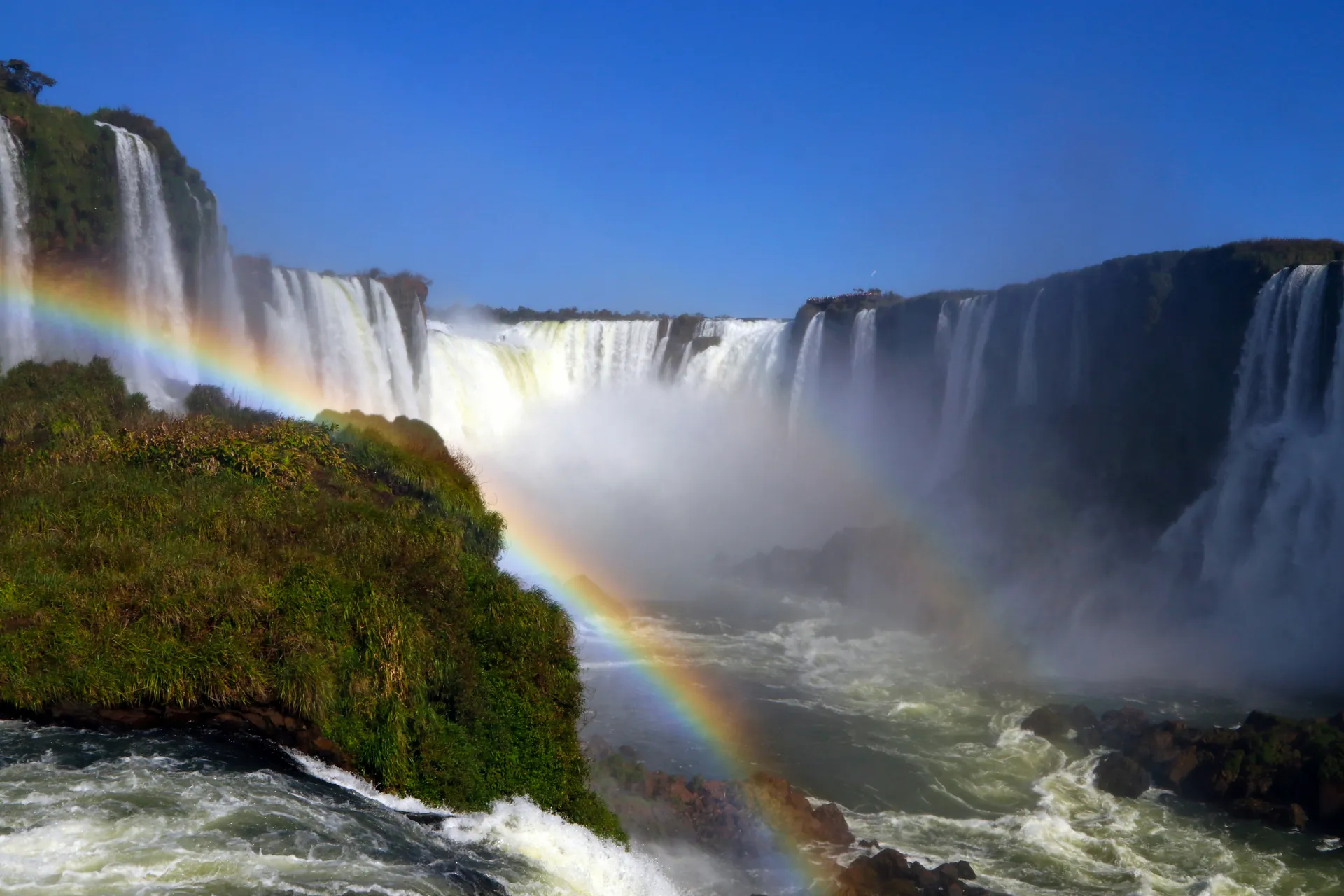
The centrepiece has one of the great names in nature: the Garganta do Diabo, the Devil’s Throat, an 80-metre-high horseshoe where half the river disappears into a permanent cloud of mist and noise. Coatis patrol the walkways, toucans cross overhead, and butterflies land on you between viewpoints. It is a national park on both sides of the border, which is the single most important thing to understand before you go.

Because the river is the border, the falls belong to two countries at once. Brazil owns the wide-angle view. Argentina owns the up-close one. They are not the same visit, and choosing only one is the mistake almost everyone comes to regret.

275 individual waterfalls spread across nearly 3 km of the Iguaçu River
The Devil’s Throat at Iguaçu, half the river vanishing into a cloud of mist
A coati on a walkway at Iguaçu with a rainbow over the falls behind

One waterfall, two countries, two experiences.

The most useful thing anyone can tell you about Iguaçu is that the Brazilian and Argentine sides do completely different jobs. Do both, ideally on separate days, and in the right order.

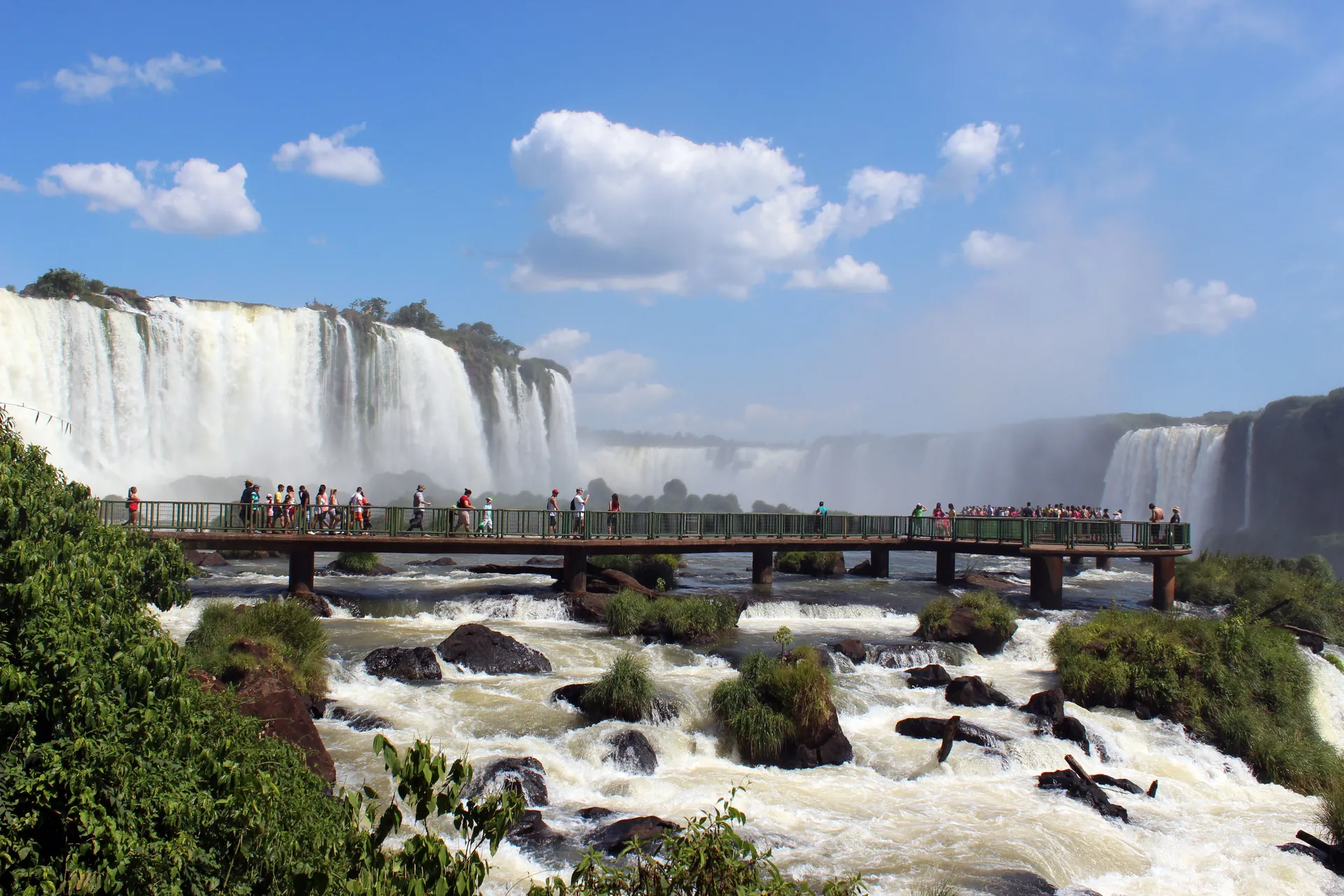
The wide panorama of the Iguaçu Falls seen from the Brazilian side trail

The Brazilian side

The panorama

Brazil gives you the postcard. A single cliff-edge trail hands you the entire horseshoe in one sweeping frame, the whole system of falls laid out across the gorge in front of you, and finishes on a walkway that juts straight into the spray beneath the Devil’s Throat. You will be soaked and grinning. It is shorter and more compact than the Argentine side, which makes it ideal for late afternoon, when the buses thin out and the light turns gold. Half a day is enough, and it is the better side to see first.

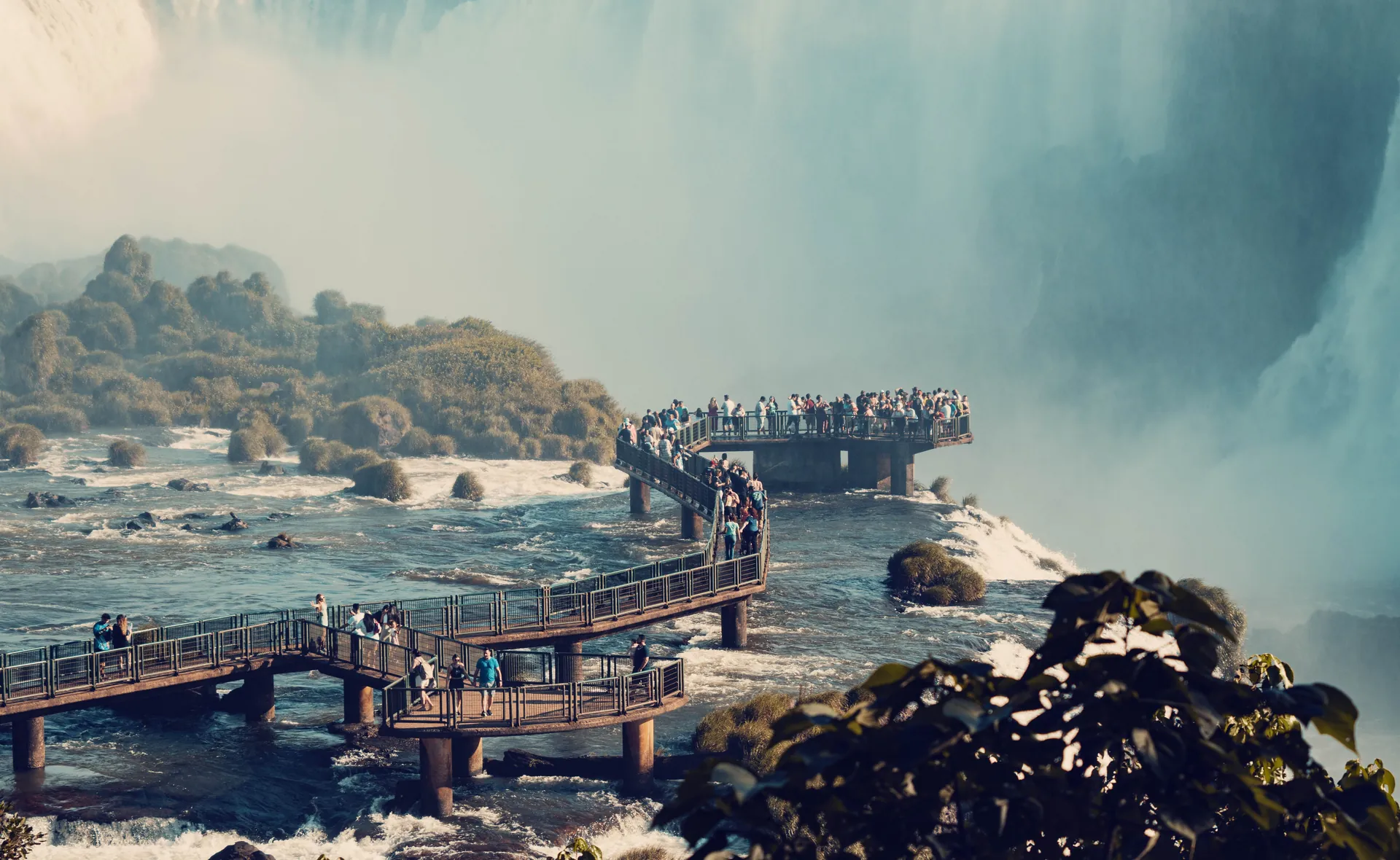
The catwalk over the river leading to the edge of the Garganta del Diablo on the Argentine side

The Argentine side

The up-close immersion

Argentina puts you inside the falls. A much larger park of catwalks and trails threads you over and between the cascades for hours, and a long walkway across the river delivers you to the very lip of the Garganta del Diablo, where the water drops away at your feet with a force you feel in your chest. It is a full day, it involves crossing the border, and it is the reason people say one side is never enough. Save it for last. Nothing tops standing over the Throat.

The clock is the trick

The falls at first light, and again at last.

Most visitors walk the same catwalks at the same hour, which is why the photographs all look crowded. Only a handful of people are inside the park before it opens to the public or after it closes, and those two windows are a different national park altogether: animals still out, walkways nearly empty, and the light doing what the midday sun never does.

  1. 06:00

    First light

    Limited places. Coatis and toucans still active, mist rising off the gorge, the railings yours.

  2. 09:30

    Peak crowds

    The coaches arrive. Same viewpoints, three deep at the railing, hard overhead light.

  3. 16:00

    Last light

    The buses leave, the gorge turns gold, and the spray fills with low sun and rainbows.

Neither window is simply for sale. Our guides do charitable work inside the national park, and it is that standing which opens the gates for our travellers before the park receives the public and again once it has closed. To have one of the most extraordinary places on earth almost entirely to yourself, without the crowds that fill the middle of every day, is a rare thing anywhere. Here it is the difference between seeing the falls and having them.

The Iguaçu Falls in soft early morning light, mist rising off the empty gorge
Sunrise at the falls

Inside the park before the gates open

About 3 hours · limited places per day

A small number of visitors are let in before general opening, and for the first hour the falls belong to them. It is the best window of the whole day for wildlife, the mist still hanging in the gorge, and it buys you a head start on everything else you planned. The catch is the alarm clock and the fact that the places are few and go early, which is exactly why it is worth locking in as soon as your dates are set.

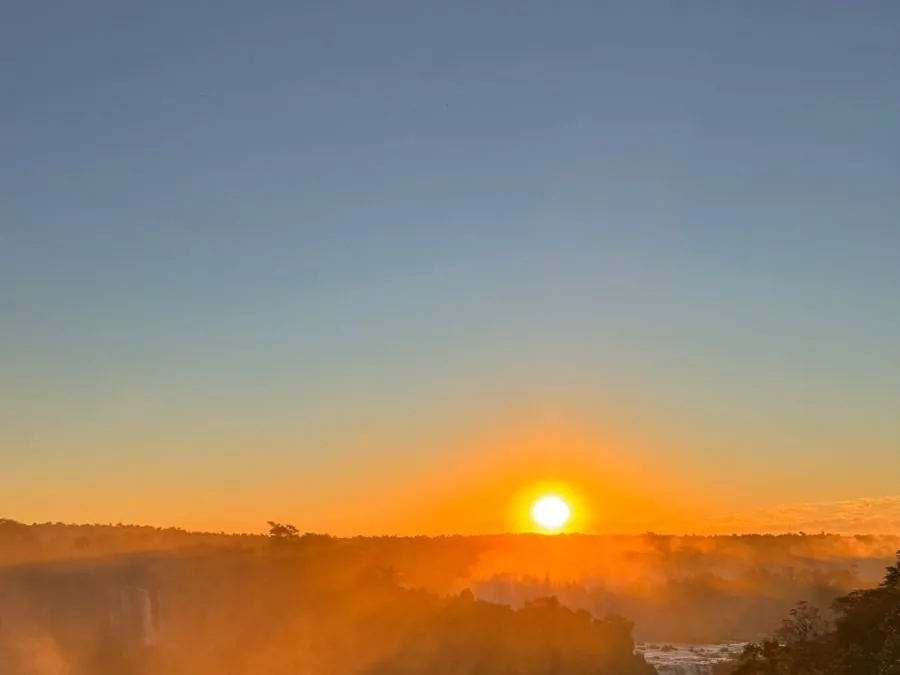
The sun setting over the Iguaçu gorge, mist glowing orange above the rainforest
Sunset at the falls

The last entry, when the buses have gone

About 3 hours · the best light in town

Late entry does the same trick from the other end of the day, and it is the easier of the two to enjoy. The day groups thin out from about four, the sun drops behind the Argentine bank, and the whole gorge turns amber with rainbows standing in the spray. It is the finest sunset anywhere in the region, and the reason we so often put the Brazilian side at the end of a day rather than the start.

The falls from the water, the air, and the inside.

The catwalks are only the start. These are the experiences that turn a good visit into the trip people talk about for years.

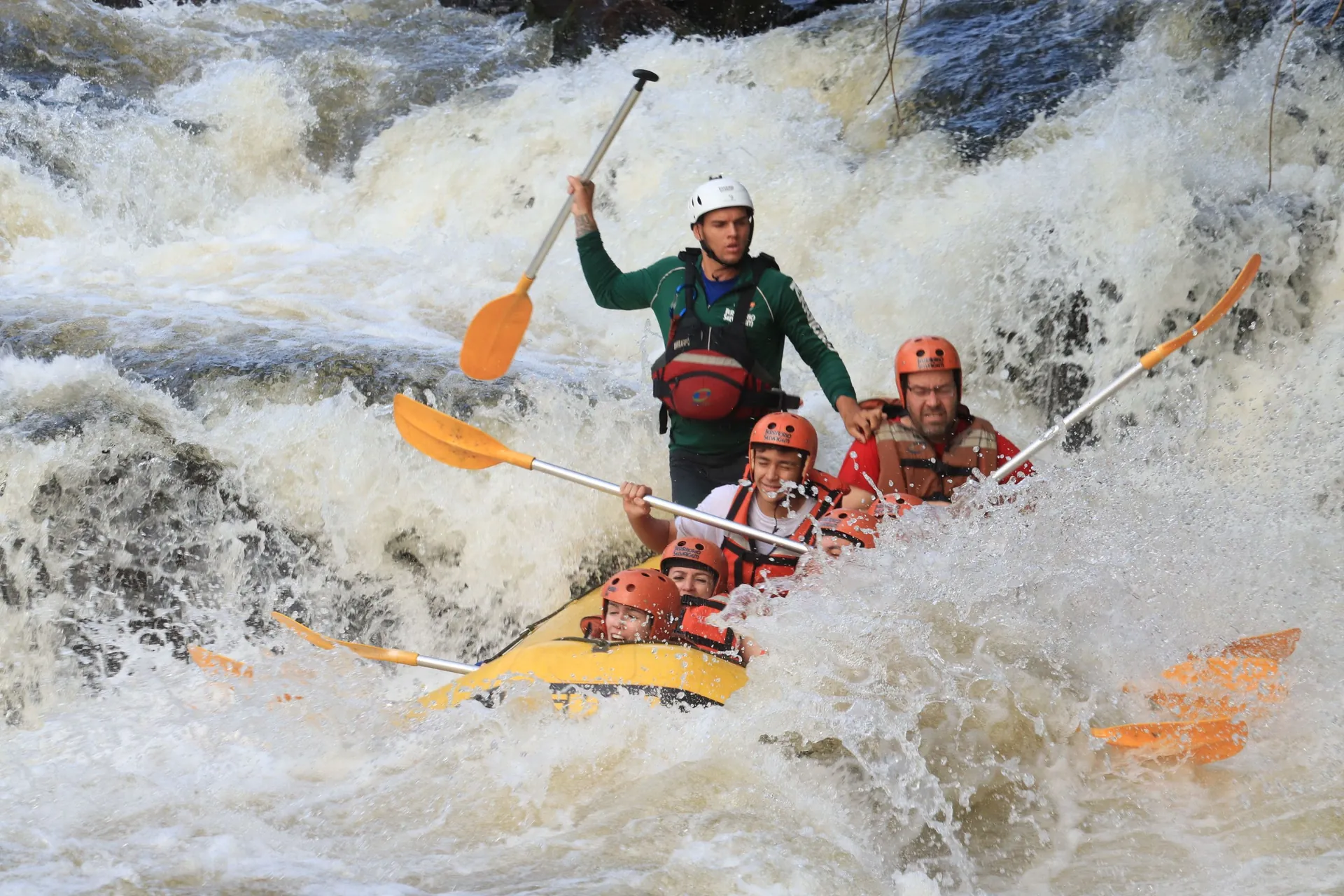
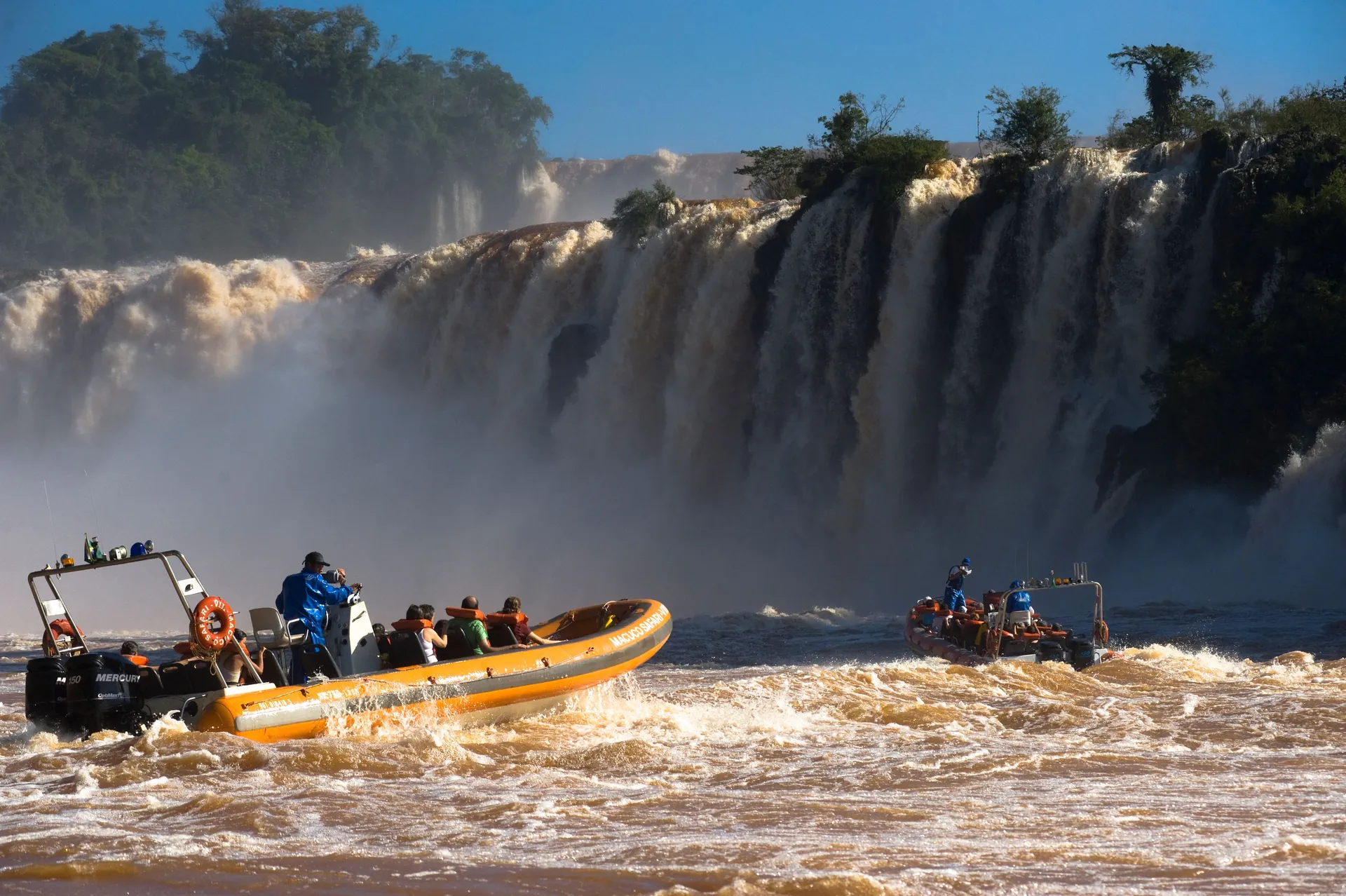
An inflatable boat full of drenched, laughing passengers driving under the Iguaçu cascades
Into the cascades

The boat that gets you soaked

This is the one that gets the biggest reaction. An open, powered inflatable runs up the river and straight into the base of the falls, nosing under the cascades until the water is coming down on you like a warm fire hose and everyone on board is soaked to the skin and laughing. It is the closest, wildest, most physical way to meet the falls, and worth every second of being wet afterwards.

Bring a dry change of clothes and use the waterproof bag they hand out for your things. This is not a place to keep your camera out.

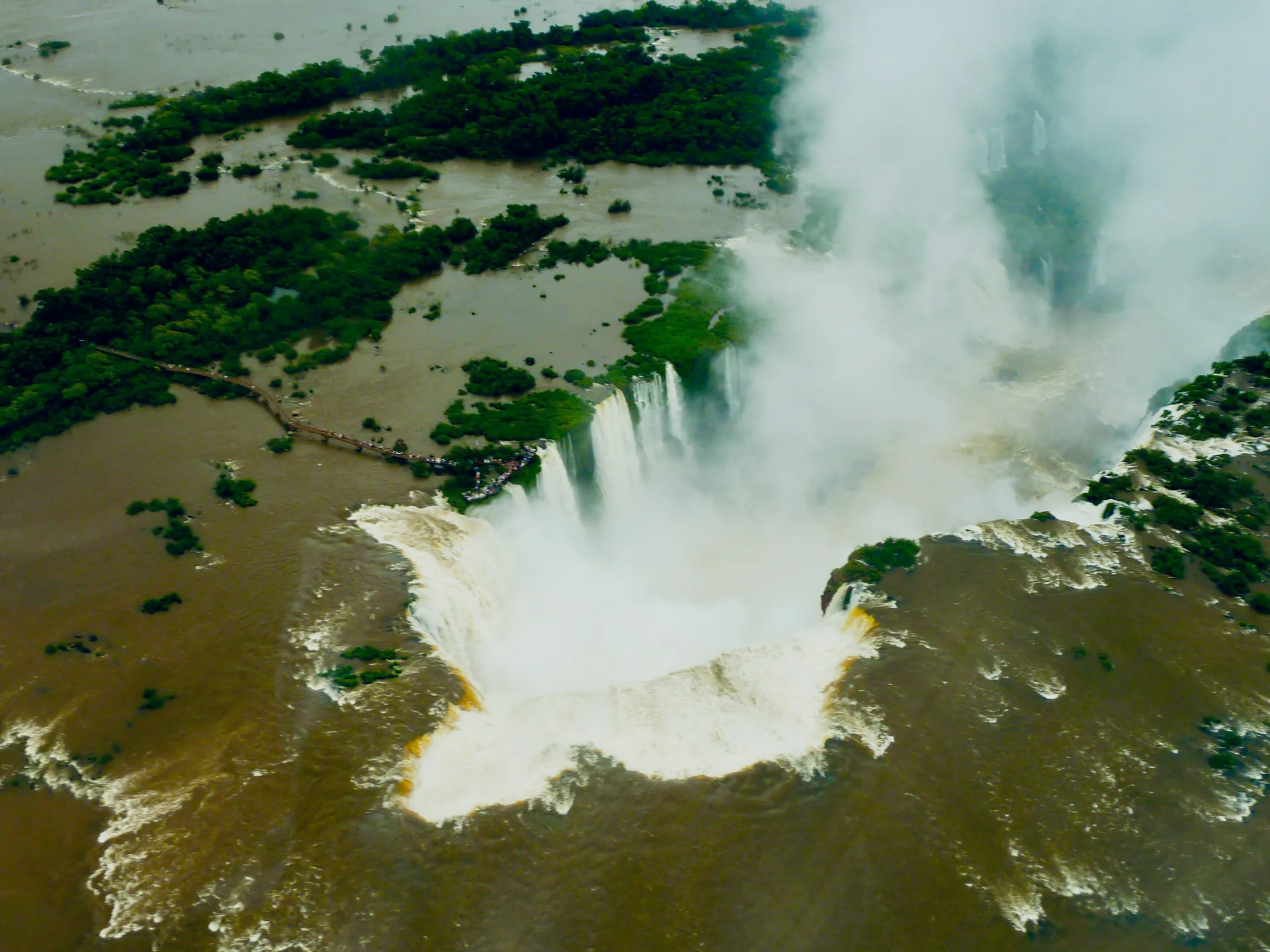
Helicopter aerial showing the entire horseshoe of the Iguaçu Falls at once
The view no one else gets

The helicopter over the Devil’s Throat

The falls are so vast that even the Brazilian panorama shows you only a slice. The one way to grasp the entire horseshoe at once is from the air. A helicopter lifts off from the Brazilian side and banks out over the park, and suddenly the whole system snaps into view: the full curve of the falls, the Devil’s Throat smoking white at the centre, and unbroken rainforest running to the horizon in every direction.

It is short, it is unforgettable, and it is very likely the single best photograph you will take on the entire trip.

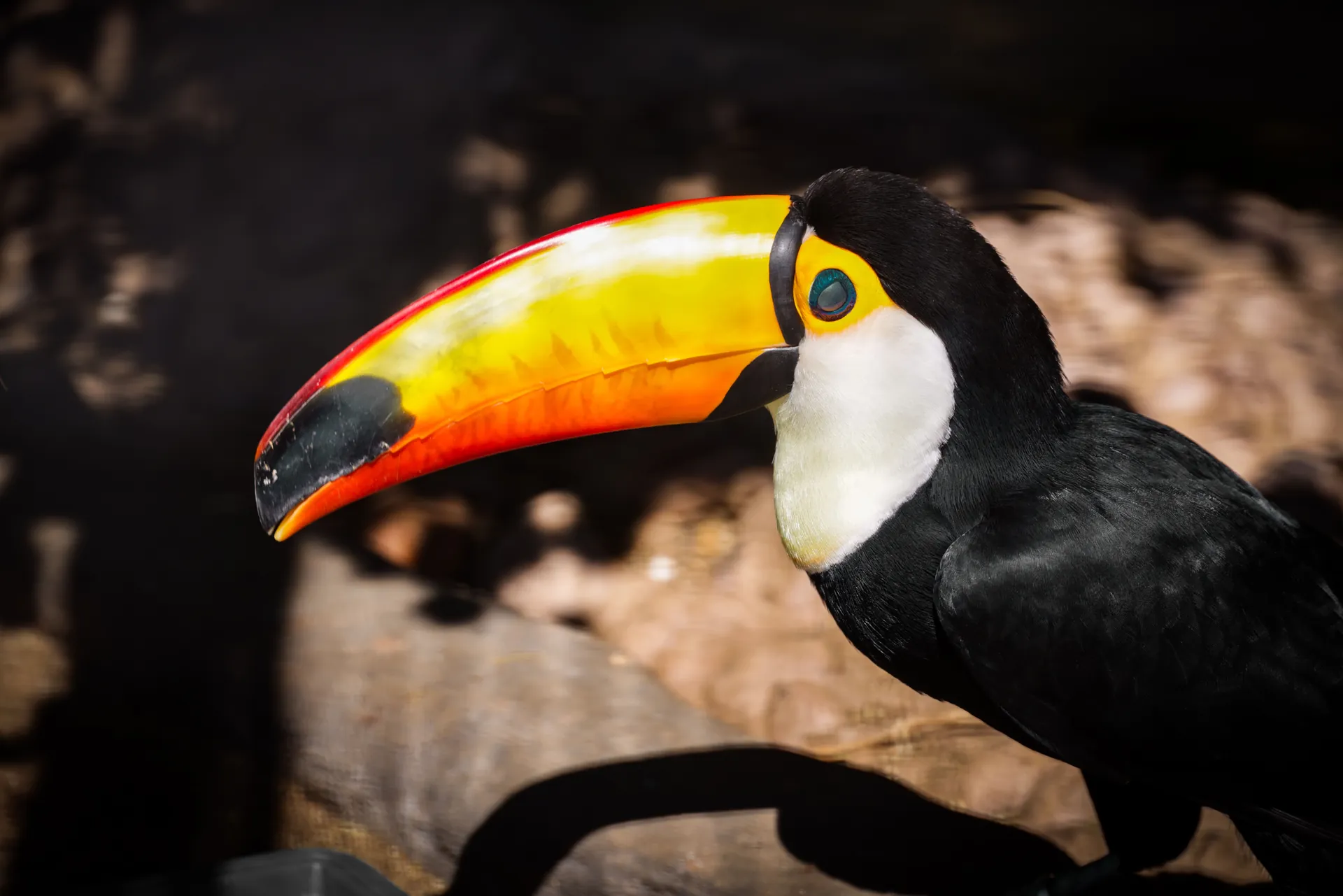
A toucan at close range inside a walk-in aviary at Parque das Aves
Face to face with the wildlife

Parque das Aves bird sanctuary

Right beside the Brazilian park gates is a sanctuary you experience from the inside. Instead of looking at birds in cages, you walk through huge walk-in aviaries with the birds all around you: rescued toucans an arm’s length away, scarlet ibis, flamingos, and free-flying macaws crossing overhead. The stars are the harpy eagles, among the most powerful birds of prey on earth and rarely seen this close anywhere.

It is the perfect pairing with the Brazilian side, a calm hour or two among the animals of the same rainforest you have been walking through. Families with kids love it most of all.

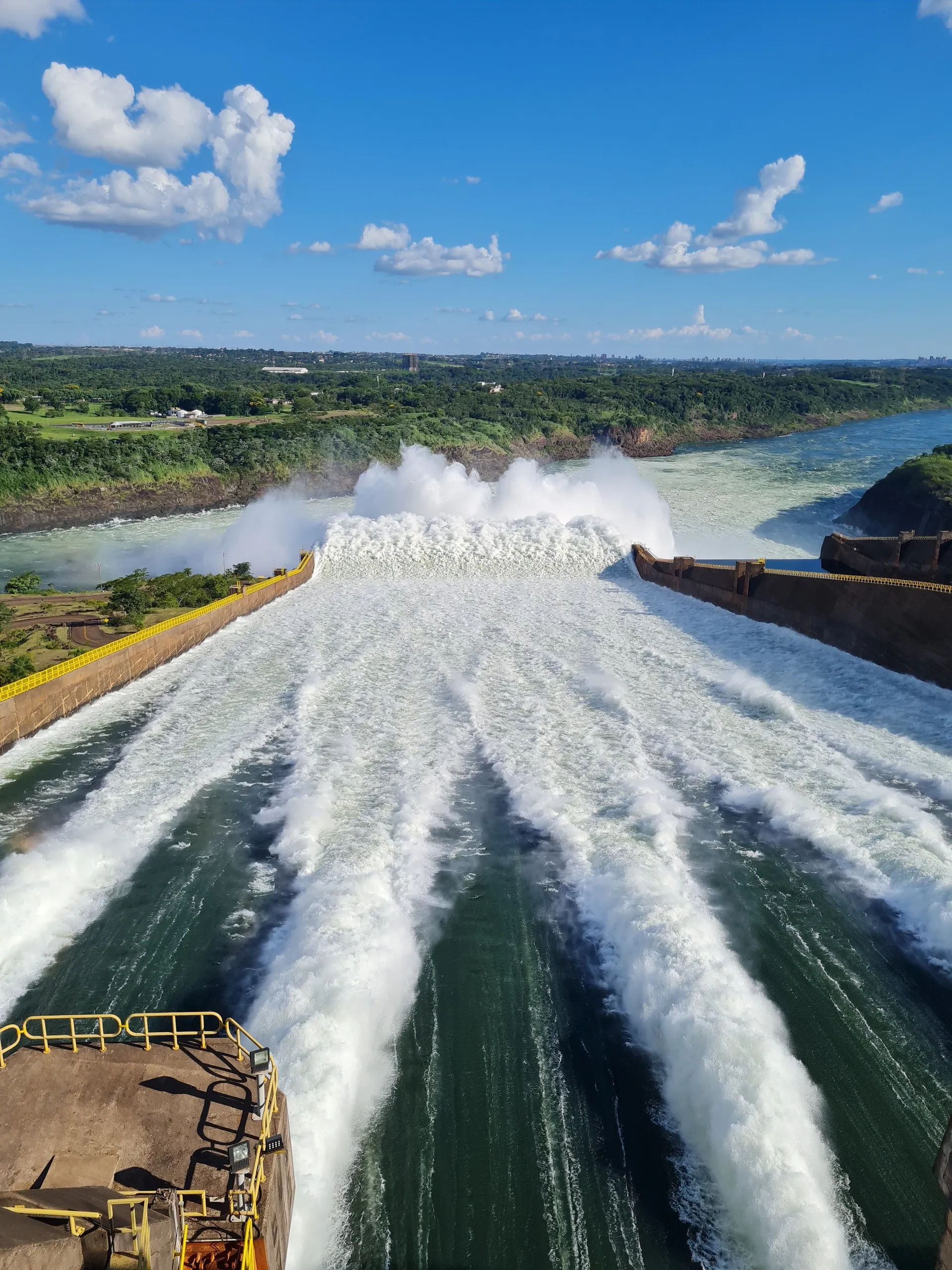
The vast Itaipu Dam lit up with coloured lights after dark, water rushing down the spillway
A different kind of wonder

Itaipu Dam

A short drive from the falls sits a man-made wonder on the same colossal scale. Itaipu is one of the largest hydroelectric dams on the planet, straddling the Brazil-Paraguay border and for years the single biggest producer of clean energy anywhere on earth. Seeing the two back to back, the greatest waterfall in the Americas and one of the greatest feats of engineering, is a strange and memorable contrast.

Tours run by day, but the one to catch is the after-dark lighting show, when the whole dam is lit up against the night. That is what earns Itaipu a firm place on the itinerary rather than a maybe.

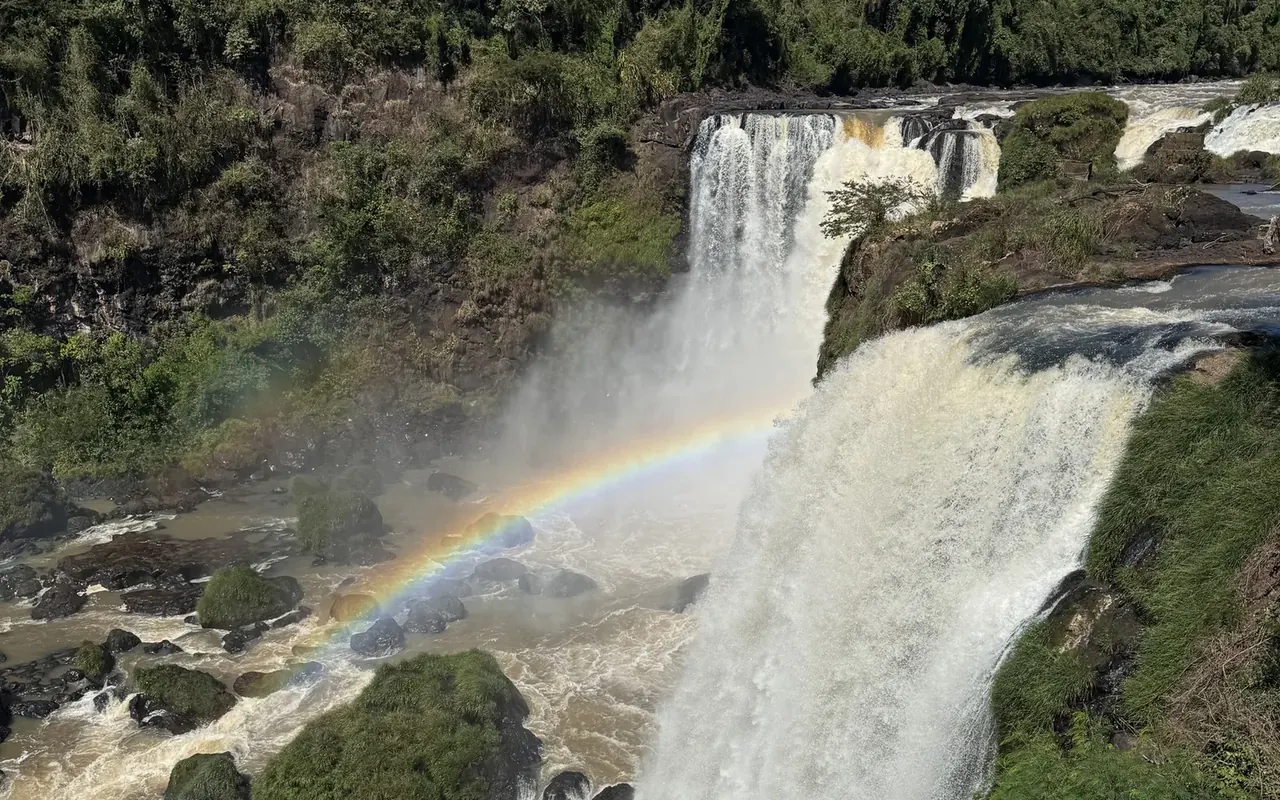
The Saltos del Monday in Paraguay, a wide waterfall with a rainbow standing in its spray
The third country

A day across into Paraguay

Almost nobody plans for Paraguay, and it is the easiest day the region gives you. Across the bridge from Foz sit the Saltos del Monday, a broad three-part waterfall dropping into a green gorge with a rainbow in the spray and, on most mornings, nobody in it. Add the biological refuge on the Paraguayan flank of Itaipu, where rescued jaguars, tapirs and giant anteaters live in the forest the dam displaced, and the day already stands on its own.

The rest is pure border theatre: the crowded shopping streets of Ciudad del Este, terere passed around in the shade, and the strange pleasure of eating lunch in a third country and being back at your hotel in Brazil by dinner. Passports go in the day bag.

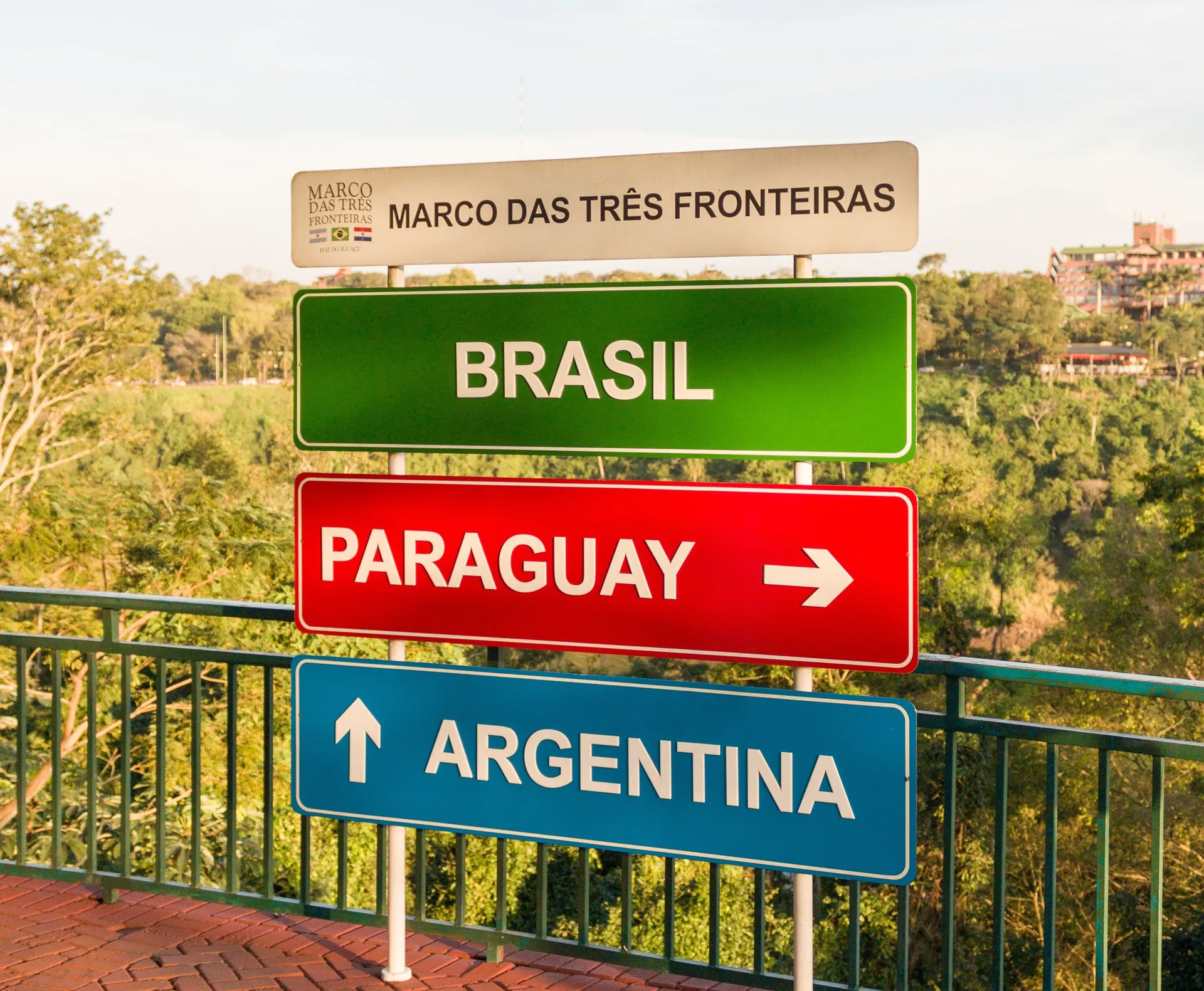
The Marco das Três Fronteiras obelisk at sunset where Brazil, Argentina and Paraguay meet
Three countries in one glance

The triple frontier

At the edge of town, the Iguaçu River meets the Paraná, and across the water three countries look at one another: Brazil where you stand, Argentina on one bank, Paraguay on the other. Each nation has planted an obelisk in its own colours at the meeting point, so you can quite literally take in three countries in a single glance. It is a small, quiet stop with an outsized novelty to it.

Come toward sunset, when the light is best and an after-dark sound-and-light show tells the story of the region. It makes an easy, atmospheric end to a day.

Day three and beyond

The Iguaçu almost nobody stays for.

The national park is around 185,000 hectares of Atlantic rainforest, and the famous walkways touch a sliver of it. Step off them and the region opens up: forest tracks on two wheels, trails to waterfalls with nobody at them, a river quiet enough to paddle, and a border town with its own appetite. This is what a third and a fourth day are actually for.

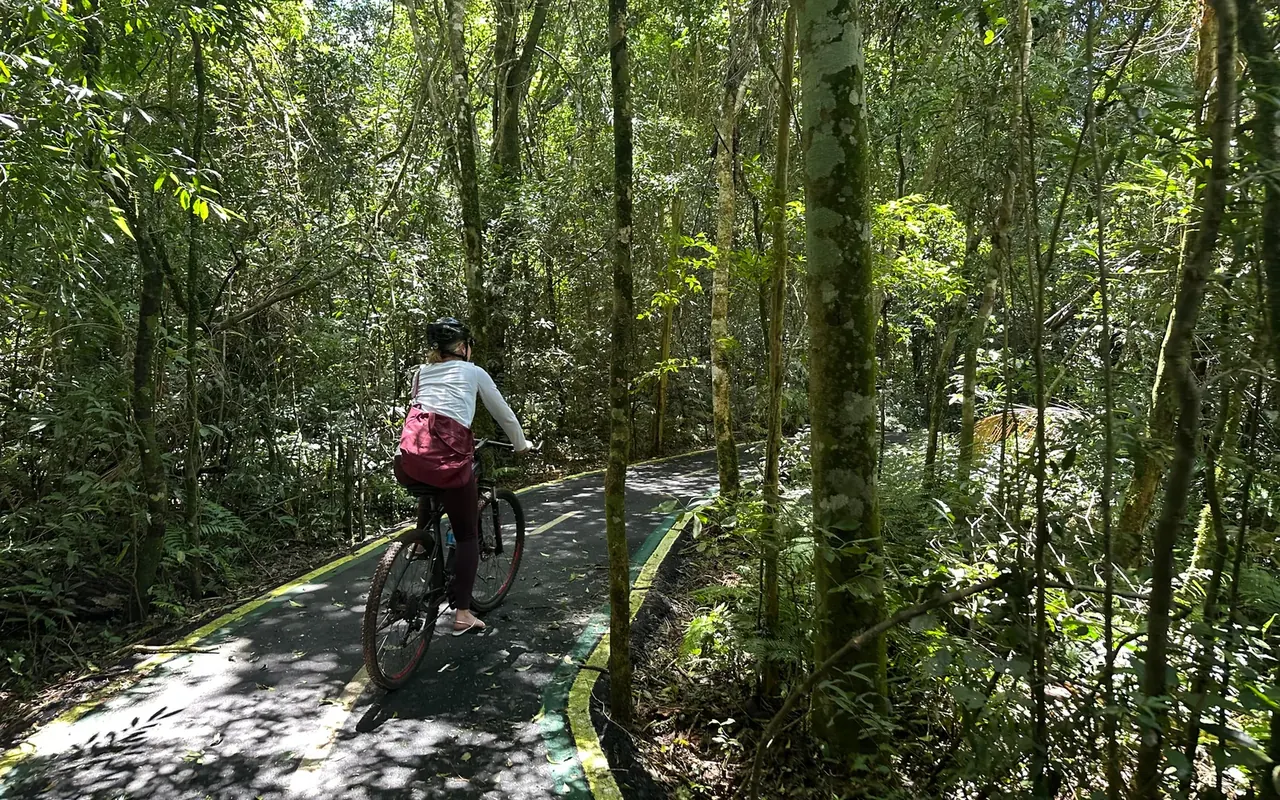
A cyclist riding a paved forest road through dense rainforest in the Iguaçu National Park
On two wheels

Riding the park road at forest level

The road from the visitor centre to the start of the walking trails is 13 km of closed rainforest, and on a bicycle it stops being transit and becomes the point. You hear the forest instead of a coach engine, stop wherever the guide sees something, and arrive at the falls already inside the park rather than tipped out at a car park.

  • 13 km
  • About 3.5 hours
  • Certified guide
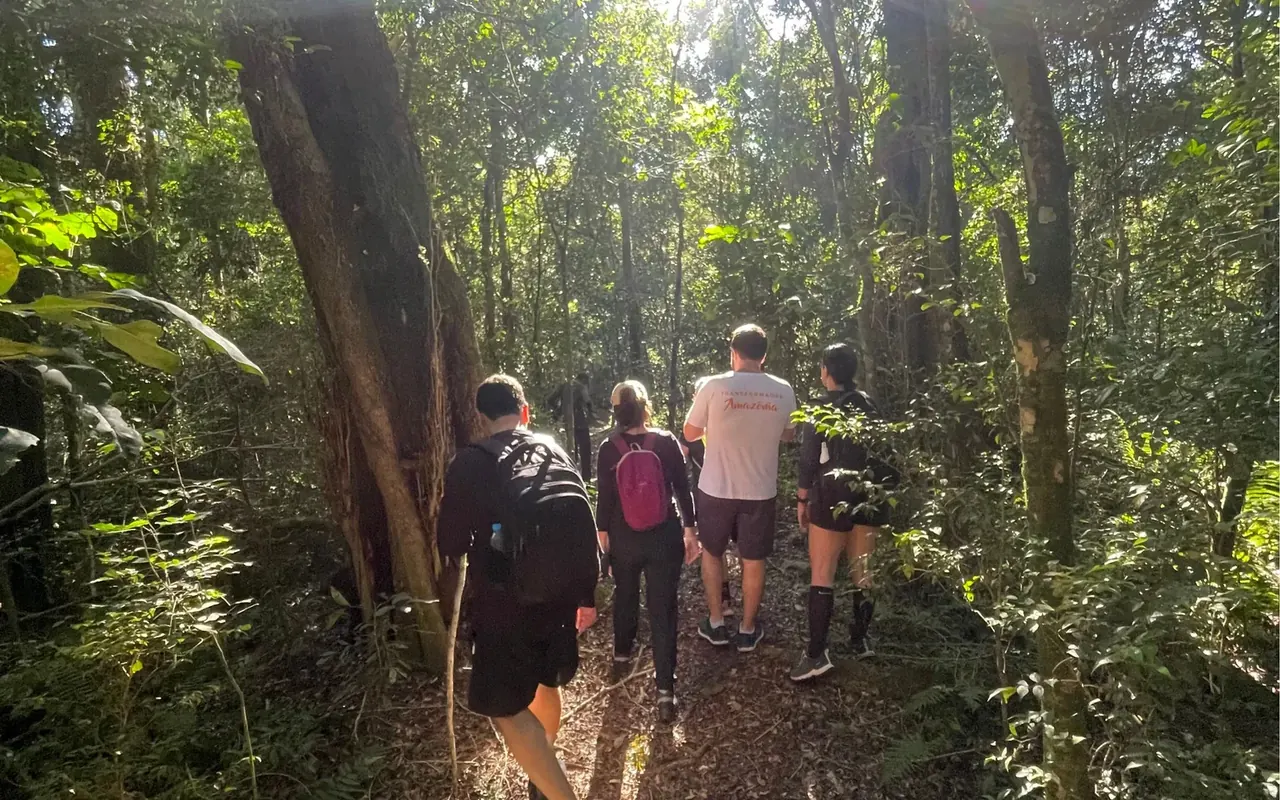
Hikers on a sunlit forest trail through tall Atlantic rainforest near the Iguaçu Falls
Into the trees

The São João forest trail

A five kilometre walk from the visitor centre straight into the Atlantic forest, and the fastest way to understand that Iguaçu is a rainforest with a waterfall in it rather than the other way round. Half a morning of butterflies, birdsong, capuchin monkeys overhead and light coming down in shafts, with the roar of the falls somewhere behind you.

  • 5 km
  • About 3.5 hours
  • Inside the park
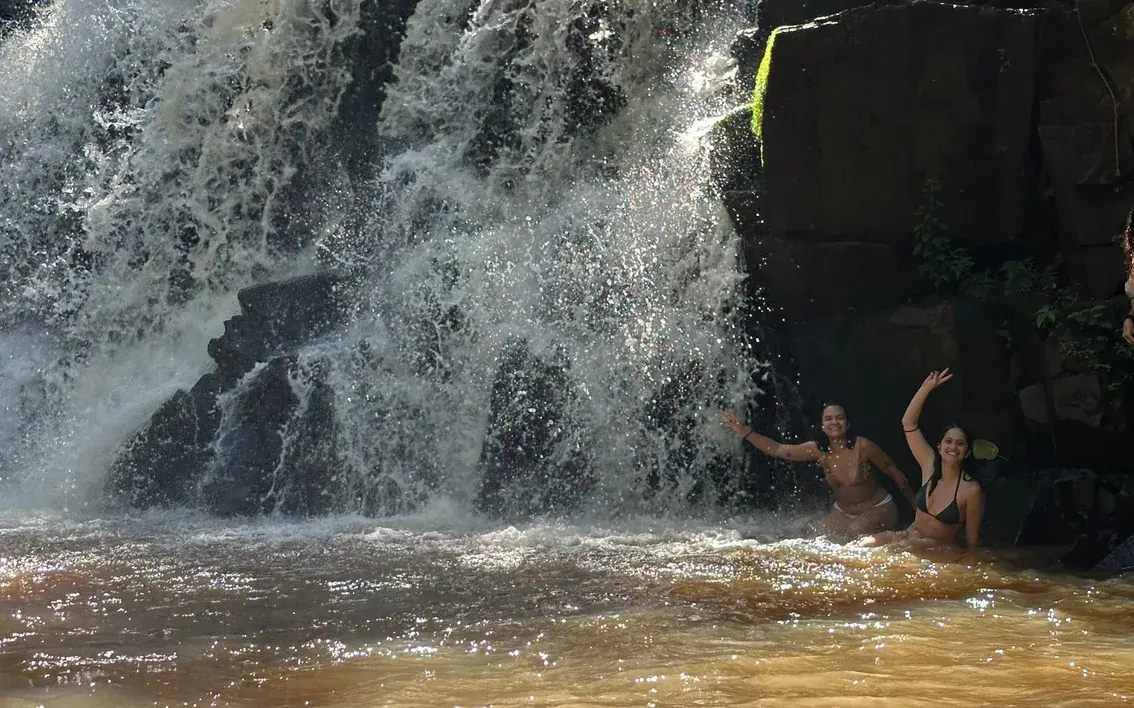
Swimmers in the pool beneath a small forest waterfall in the countryside around Foz do Iguaçu
Beyond the town

Waterfalls you can swim in

Paraná keeps a set of small trails within a couple of hours of Foz, each ending at a waterfall with a pool under it. Perobas near Céu Azul is a six kilometre walk through a different forest formation. Apepu, close to São Miguel do Iguaçu, runs seven kilometres along a bluff above the river and is led by guides from the community that lives there. Saltão near Capanema starts with a boat across the river. Nobody queues at any of them.

  • 5 to 7 km
  • 40 min to 3.5 h away
  • Swimming pools
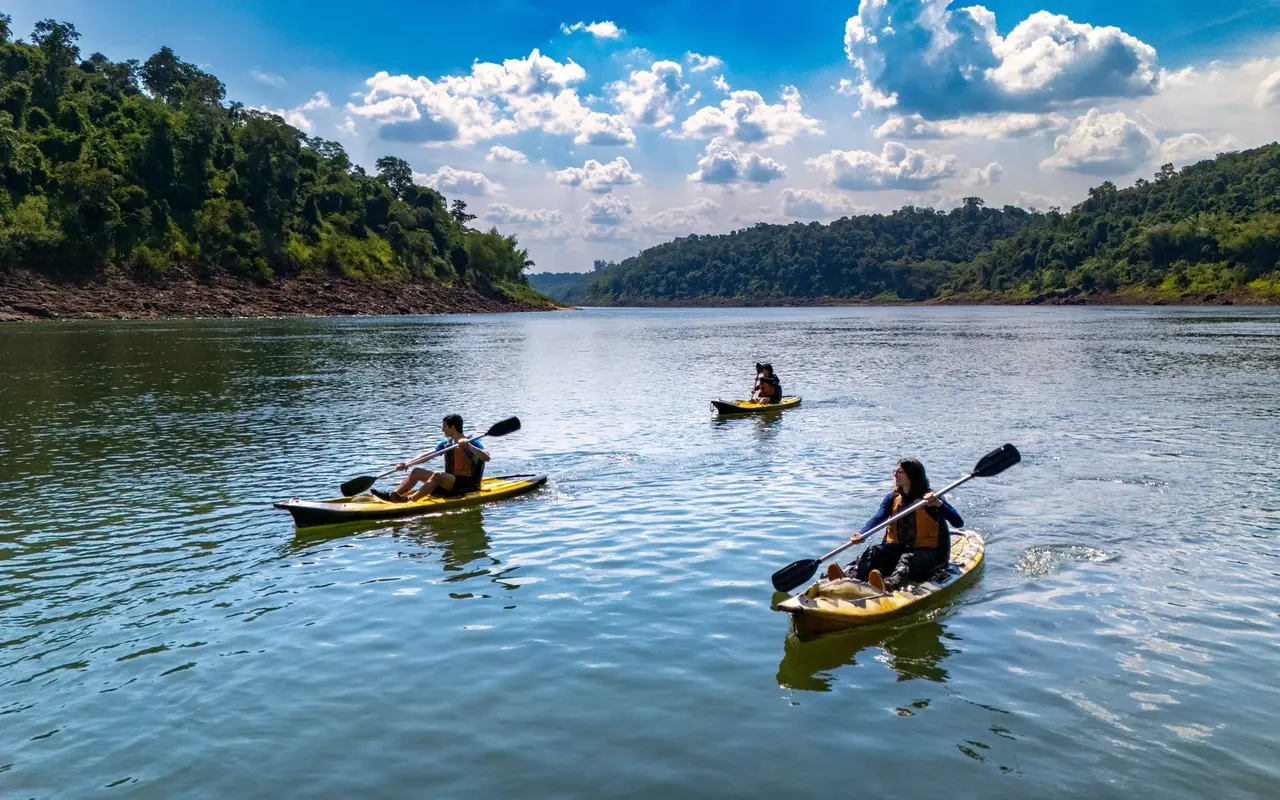
Kayakers paddling the wide calm Iguaçu River between forested banks under a blue sky
On the water

Paddling the river above the falls

Upstream of everything, the Iguaçu River goes wide and slow, and a kayak is the quietest seat in the region. A half day pairs the paddle with a short forest walk and a swim under a waterfall, which is about as neatly as a morning can be arranged. No experience needed and no rapids involved, just water, forest and herons lifting off ahead of the bow.

  • Half day
  • No experience needed
  • Waterfall swim
A bakery and buffet frontage on a tree-lined street in the centre of Foz do Iguaçu
After the park

A food walk through the border city

Foz is a city built by people from everywhere, and it eats accordingly: Lebanese pastries next to a Paraguayan chipa counter next to a churrasco grill, all within a few blocks of the centre. A late afternoon on foot with someone who knows which door to open turns the place from a base for the falls into somewhere you were glad to have dinner.

  • Starts around 16:30
  • About 3 hours
  • On foot
Guarani beadwork and carved bamboo laid out on a table at a community visit near Iguazú
Whose land this is

A Guarani community across the river

The Guarani were here long before the border was, and the name Iguaçu is theirs: y guasu, big water. On the Argentine side a community receives visitors with its own guides, walking you through the forest they use, the craft they make from it and a reading of this landscape that predates every park gate on it. It is a quiet hour or two, and it changes how the falls read for the rest of the trip.

  • Argentine side
  • Guarani guides
  • 1 to 2 hours

None of this replaces the falls. It is what turns the falls into the beginning of a trip instead of the whole of it.

Do it right

How to see Iguaçu without the regrets.

Almost every mistake at Iguaçu comes down to not giving it enough time. People fly in for a single day, see one side, and leave sensing they missed something, because they did. Two full days is the honest minimum for both sides of the falls. Three adds the boat, the helicopter, the birds and Itaipu without rushing any of it, and a fourth is what buys you the forest, the quieter waterfalls and a day across a border.

The other half is timing. The parks are busiest in the middle of the day, so the trick is to be on the walkways early or late and hand the noon hours to the crowds. Done well, you get the falls close to empty at exactly the moment the light is at its best.

Give it three to four days

One day and one side is the classic regret. Two covers both sides, three adds the boat, helicopter, birds and Itaipu, four opens up the forest.

Beat the crowds by the clock

Walk the parks before 9:30 or after 16:00, never at midday. Sunrise entry has limited places and is worth booking well ahead.

Expect to get wet

Between the spray and the boat, you will get soaked. Bring a poncho, quick-dry clothes and a waterproof phone pouch.

Pair it with Rio or the south

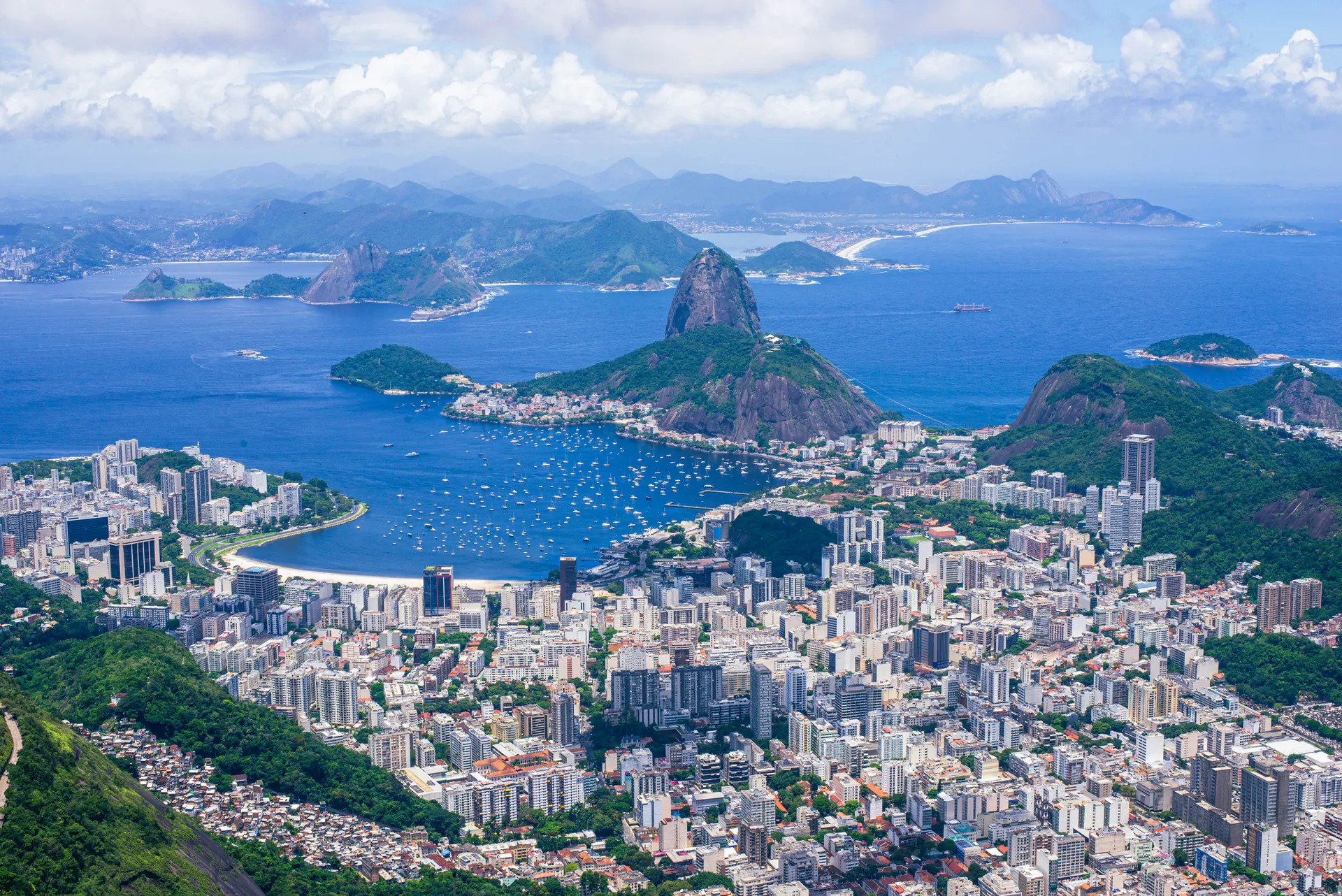
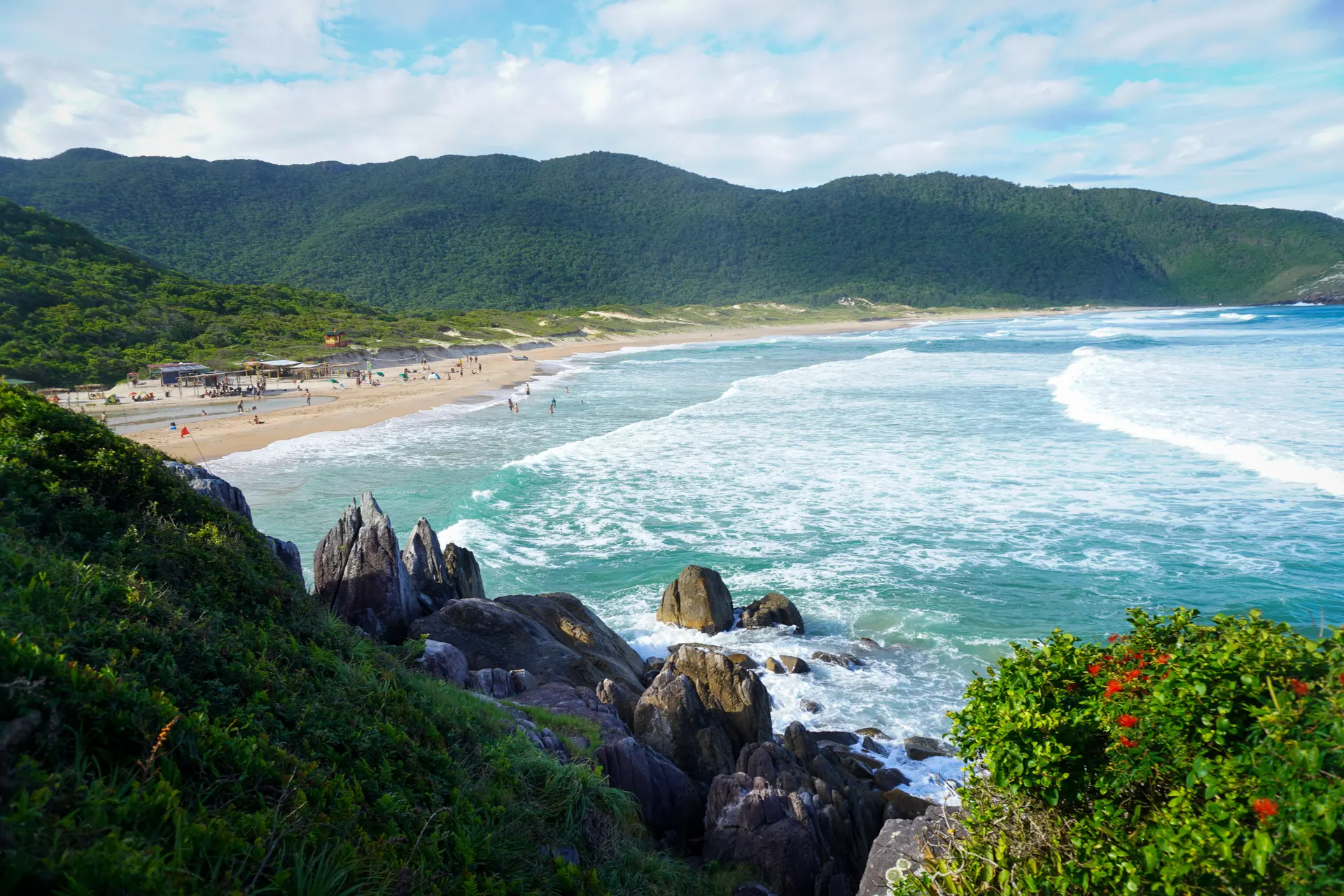
Iguaçu is a short flight from most of Brazil, an easy two or three day chapter alongside Rio de Janeiro or Florianópolis.

Visitors on a spray-soaked walkway close to the base of the Iguaçu Falls

Foz do Iguaçu on the map

Foz do Iguaçu sits in Brazil’s far south-west, in the state of Paraná, where Brazil, Argentina and Paraguay meet. It is a short internal flight from Rio de Janeiro or São Paulo.

Region
Paraná, Brazil
Best season
Year-round; highest water December to February, mildest May to September
Both sides
Brazil · Argentina
Ideal for
Nature lovers, photographers, families
Plan My Trip
Foz do Iguaçu Lençóis Maranhenses Amazônia Chapada Diamantina Bonito Praia do Forte Fernando de Noronha Salvador Pantanal Norte Pantanal Sul Ilha Grande Paraty São Paulo Minas Gerais Rio de Janeiro Florianópolis

Before you go

Do I really need to see both sides of the falls? +

Yes, and it is the single most common piece of advice from anyone who has been. The Brazilian side gives you the wide panorama in about half a day; the Argentine side puts you among and above the falls for a full day, ending at the Devil’s Throat. They are genuinely different experiences, not two versions of the same one. If you can only manage one, the Brazilian side is the more efficient, but two days for both is what people remember.

How many days do you need in Foz do Iguaçu? +

Two full days is the minimum that covers both sides of the falls without rushing. Three is the number we recommend most often, because it makes room for the boat ride, the helicopter, Parque das Aves and Itaipu. Four turns the trip into something different again: the forest trails inside the national park, the smaller waterfalls out in the countryside where nobody queues, a paddle on the river and a day across the border into Paraguay. Most visitors give Iguaçu a single night, and it is the most common regret we hear.

What is the best time of day to visit the Iguaçu Falls? +

Early morning and late afternoon, and it makes more difference than the season does. Coach groups fill the walkways from roughly 9:30 to 16:00, so those hours give you the same viewpoints three deep at the railing under hard overhead light. Only a handful of people are inside the park before general opening, which is the best window of the day for wildlife and mist, and the late slot does the same trick from the other end, with the gorge turning gold and rainbows standing in the spray. Because our guides do charitable work inside the national park, we can take travellers in for both, which is a rare thing at a site this busy. We build itineraries around those two windows on purpose.

Can I have a German speaking guide in Foz do Iguaçu? +

Yes, almost always. Foz do Iguaçu is one of four regions, with Rio de Janeiro, Salvador and the Pantanal, where we can provide a German-speaking guide nearly every time, and English-speaking guides are always available. Every tour is private, so you choose the language, and we confirm it in your proposal.

Do I need a visa or a border crossing to see the Argentine side? +

The Argentine side is in Argentina, so yes, you cross an international border and back, usually as a straightforward day trip. Citizens of the US, UK, Canada, most of the EU and many other countries do not need a tourist visa for short visits to either country, but rules can change, so check your own passport before you travel and always carry it on crossing day. The formalities themselves are routine when your day is set up for them.

When is the best time to visit the Iguaçu Falls? +

The falls are spectacular all year. Water is highest and most thunderous from around December to February, in the hot, humid summer. The cooler, drier months from about May to September bring more comfortable walking weather and clearer skies for photos, with still-powerful flow. There is no bad time, only the trade-off between maximum volume and maximum comfort.

What is there to do in Foz do Iguaçu besides the falls? +

More than the two days most people allow for. Inside the national park there is a 13 km bicycle route through closed rainforest and the five kilometre São João forest trail, both of which show you the Atlantic forest the walkways only skirt. Out in the countryside, trails at Perobas, Apepu and Saltão end at waterfalls with swimming pools under them and almost nobody at the railing. On the water there is kayaking on the calm stretch of the river above the falls. In town, a late afternoon food walk works through the Lebanese, Paraguayan and Brazilian kitchens that share the centre. And across the borders sit the Saltos del Monday and Itaipu biological refuge in Paraguay, and a Guarani community on the Argentine side.

Is Foz do Iguaçu safe? +

The national parks and the main visitor areas are well run and easy to enjoy. Foz is a border city, so ordinary big-city and border-town common sense applies: keep valuables out of sight, use trusted transport rather than wandering unfamiliar areas after dark, and stay a little more alert around the busy crossing points. Handled sensibly, it is a rewarding and very manageable place to visit.

Is Foz do Iguaçu good with kids? +

It is one of the most family-friendly places in Brazil. Children are captivated by the walk-in aviaries of the Parque das Aves, with toucans and macaws at arm’s length, and the boat that drives right under the falls and soaks everyone is pure joy for older kids. The walkways on both sides are paved and manageable, and visits are short enough to suit little legs. We arrange family rooms, gentle timing and the right mix of thrills and downtime. It is a favourite stop on our Family and Multi-Generational journey.

What does Foz do Iguaçu cost? +

Privately guided stays at the falls start from US$800 per person for three days on the ground, with accommodation, transfers and guiding included, and both sides of the falls in the plan. Flights, international and domestic, are not part of that. The hotel category, the season and the optional extras, the helicopter and the boat under the cataracts, move the figure. Your written proposal states the exact total before anything is confirmed.

The Iguaçu Falls glowing in warm evening light with a rainbow in the mist

See the falls the way they deserve to be seen.

Tell us your dates and how long you have. We will build a private Iguaçu itinerary across both sides of the falls, with the boat, the helicopter and the rest woven in around the light and the crowds.

Plan My Trip

What travelling with us was actually like

  • My wife and I have always been thrilled by Brazil, but we had never dared to organise the trip ourselves. Authentic Brazil Travel planned the whole journey for us, including some destinations we did not know. The trip was superbly organised, the guides were great, the accommodations lovely and the transfers punctual. Thanks to the wonderful guides and their tips we felt safe the entire time and got to discover a lot of new things. Gladly again!

    Ali Siblani Germany

    Google review · · translated

A little Brazilian sunshine

Your Brazil starts here.

A few ideas are all we need to start planning something personal.

  • 24h response
  • Completely non-binding
  • Personal consultation

Rather compose it yourself, stop by stop? Design your own journey

Add trip details (optional)

Useful if you already know, but nothing here is required. We can just as well go through it together.

OR

Free, no obligation, in English or German

Plan My Trip