
Most people arrive at the Pantanal sideways. They come looking for the Amazon, read somewhere that the wildlife is easier to see in a place they have never heard of, and end up booking it slightly nervously. Then they spend the flight home telling anyone who will listen that it was the best part of the trip.
Quick answer: The Pantanal is the largest tropical wetland on earth, roughly 140,000 square kilometres of seasonally flooded plain in western Brazil, spread across the states of Mato Grosso and Mato Grosso do Sul and continuing over the borders into Bolivia and Paraguay. Half the year it floods, half the year it drains, and that cycle concentrates animals into the open in a way rainforest never does. It is the best place in South America to actually see large wildlife, jaguars included. You reach it from Cuiabá in the north or Campo Grande in the south.
Where is the Pantanal?
Western Brazil, well inland, roughly at the continent's centre. On a map of South America, put a finger halfway between Rio de Janeiro and the Bolivian border and you are close.
Administratively it sits in two Brazilian states, Mato Grosso in the north and Mato Grosso do Sul in the south, and it does not stop at the national border: parts of the same wetland continue into Bolivia and Paraguay. Brazil holds the large majority of it and effectively all of the tourism.
It is not in the Amazon, and it is not near it. The two are different biomes with a long stretch of dry cerrado savannah between them. Flying from Manaus to the northern Pantanal is a three hour affair via a hub, not a hop.
How big is it, and how much is protected?
The wetland covers around 14 million hectares, about 140,000 square kilometres. That is larger than England, and larger than Greece.
Here is the number worth knowing, because almost nobody states it. The Pantanal Conservation Area, the UNESCO World Heritage site, is a cluster of four contiguous protected areas totalling 187,818 hectares: the Pantanal Matogrossense National Park plus the special reserves of Acurizal, Penha and Doroche. That is 1.3 percent of the Brazilian Pantanal.
Which means the other 98.7 percent is not a national park. It is private land, overwhelmingly cattle ranches, and it has been for two centuries. The fazendas you stay on are working ranches that added guest rooms, and the wildlife lives alongside the cattle. This is a landscape that is protected mostly by being useful to the people who own it, which is a stranger and more fragile arrangement than a park, and worth understanding before you arrive expecting a reserve.
Why the flood is the whole story
Everything about the Pantanal follows the water.
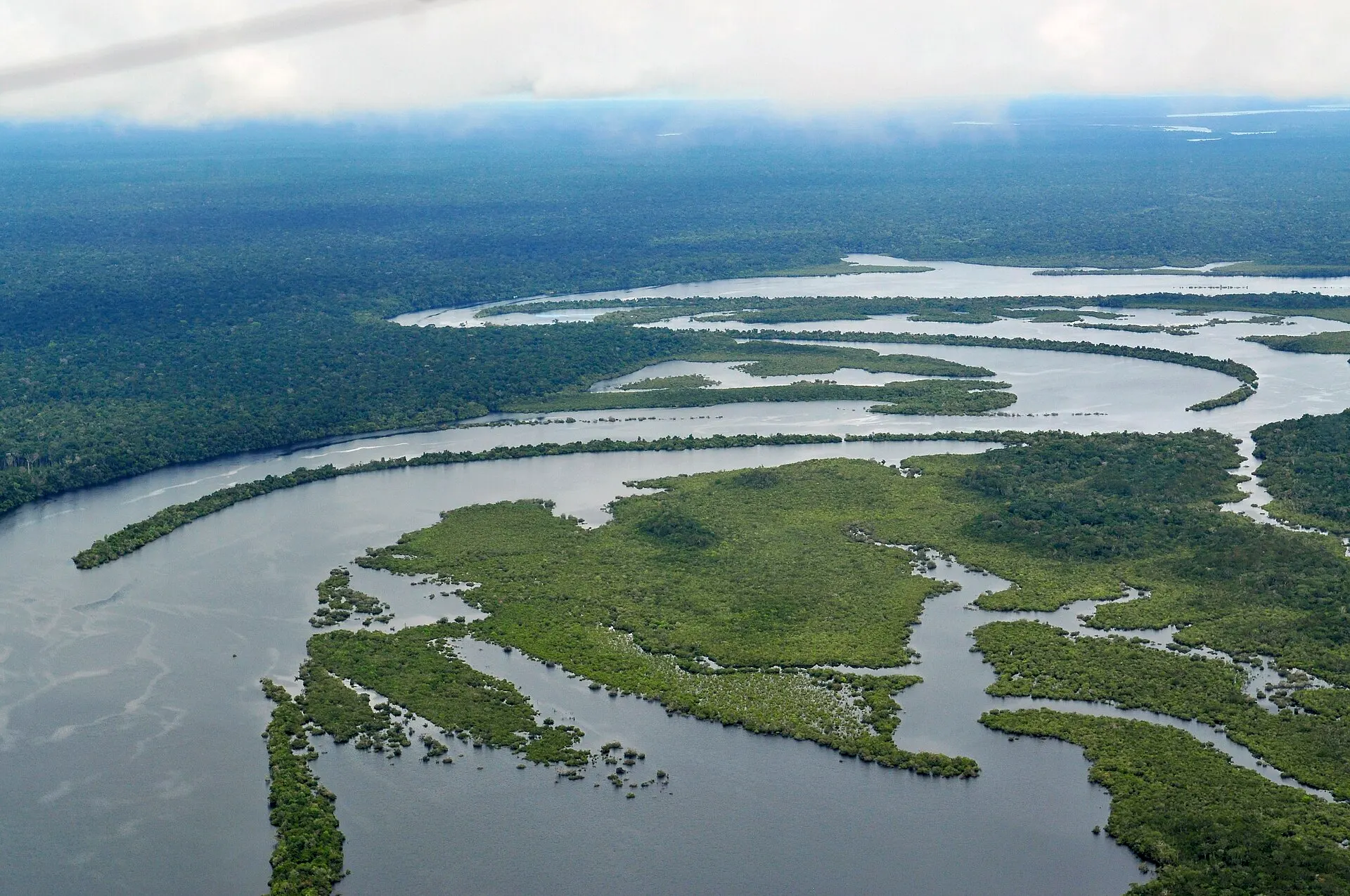
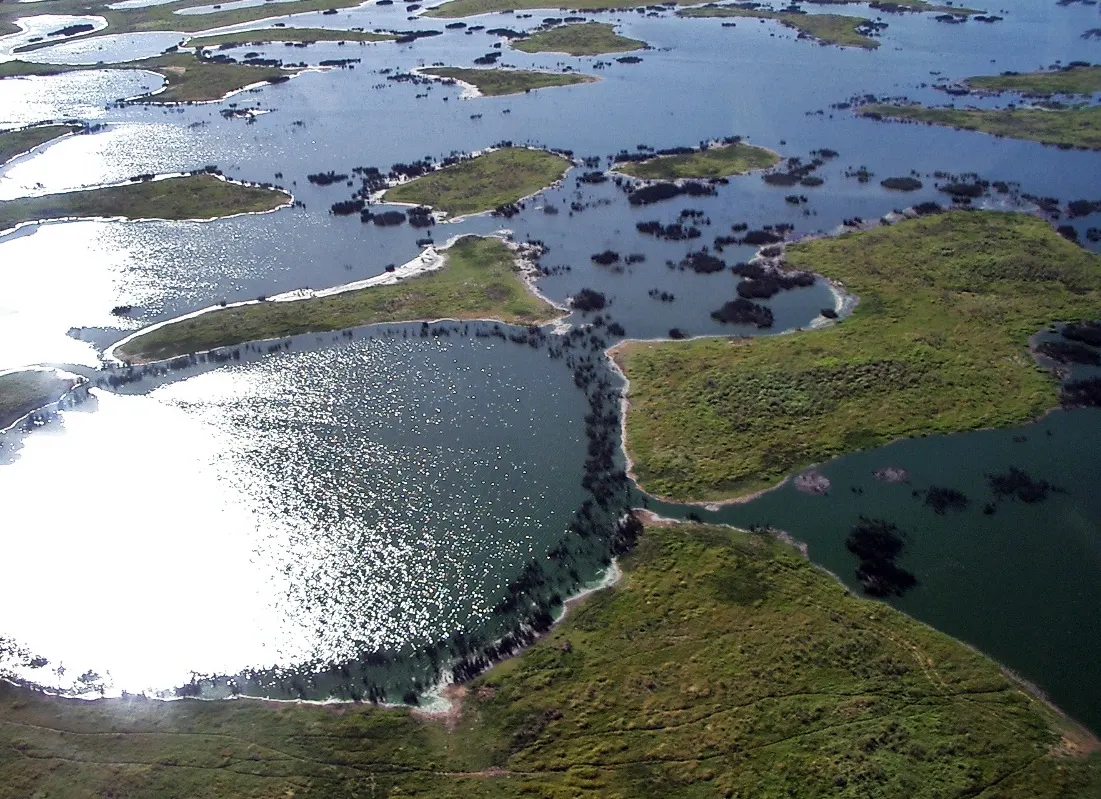
From roughly November to March the rains come and the rivers spill, until a large share of the plain is under shallow water. Fish spread out across the flooded grassland to spawn, and so do the animals that eat them. Roads become impassable, and much of the region simply closes to visitors.
From roughly April the water starts to fall, and by the dry months, June to October, it has retreated into rivers, ponds and shrinking pools. Everything that needs water has to come to the water. Caiman stack up in the channels, capybara graze the exposed banks, and jaguars patrol the riverbanks in daylight because that is where the food is.
That is the entire reason the Pantanal works for wildlife watching and the Amazon does not, in one paragraph: the forest hides animals in three dimensions of dense canopy, the wetland pushes them out into the open and puts them at the edge of a river you can drive or boat along.
We go through the months properly in when to visit the Pantanal.
The Pantanal or the Amazon
This is the real question behind most searches, so here it is plainly.
Go to the Amazon for the forest itself: the scale of it, the sound at night, canoeing between treetops in high water, the river villages, the sheer green weight of the place. Go for the experience of being inside the largest rainforest on earth. Do not go primarily to see mammals, because you mostly will not, and any operator promising otherwise is selling you something.
Go to the Pantanal to see animals. Jaguar, giant otter, tapir, giant anteater, hyacinth macaw, caiman by the thousand, capybara everywhere. In the dry season on the northern rivers, jaguar sightings are not a lottery ticket, they are the reason the boats go out.
Many trips do both, and they work well in that order or the reverse, because they are genuinely different experiences rather than two versions of the same one. Our Amazon pages set out what that half looks like.
North or south, and which airport
Two gateways, two characters.
North, from Cuiabá. You drive the Transpantaneira, a raised dirt road with something like a hundred and twenty wooden bridges, south to Porto Jofre on the Cuiabá river. This is jaguar country, the best of it, and the wildlife boats work the river channels around the meeting of the waters. Most serious jaguar trips run here.
South, from Campo Grande. Quieter, greener, more ranch-focused, with the Estrada Parque and the Rio Negro region. Excellent for birds, capybara, anteaters and horseback, weaker for reliable jaguars. It also pairs naturally with Bonito and its spring-fed rivers, two and a half hours away by road, which is one of the better combinations in Brazil.
If jaguars are the point, go north. If you want the wetland at a slower pace with fewer boats, go south, which is also the cheaper half: privately guided, five days start from US$1,800 per person in the north and from US$1,350 in the south, accommodation and transfers included. The private jaguar safari in the north and the southern Pantanal pages lay out how we build each.
What you actually do there
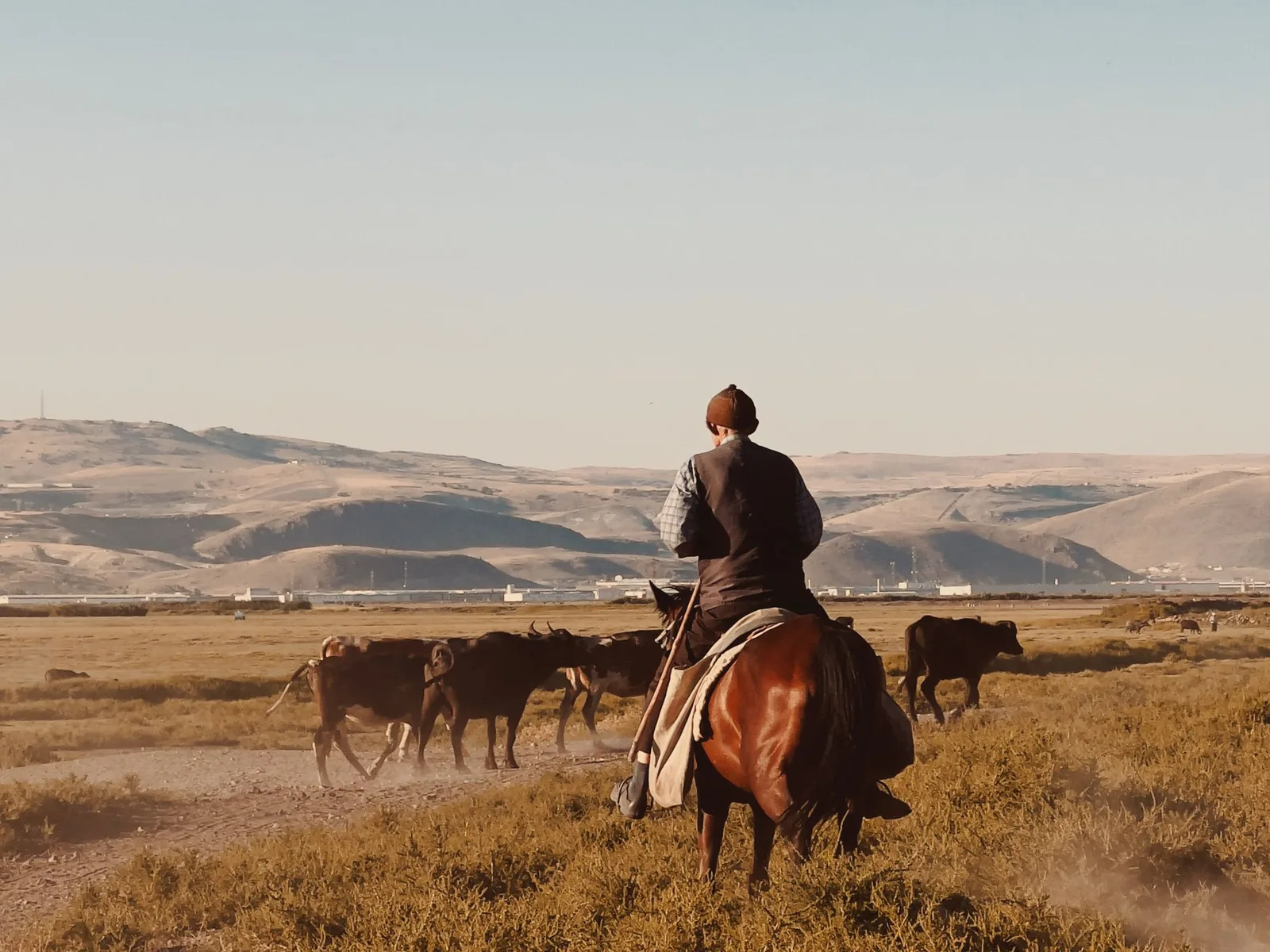
Not much walking, which surprises people. The Pantanal is mostly watched from a boat, an open safari vehicle or a horse.
A day looks like this: out on the river at first light while it is cool and the animals are moving, back to the fazenda for a late breakfast and several hours of doing nothing in a hammock while the heat peaks, then out again in the afternoon until dark, often with a spotlight on the way home for crab-eating foxes, tapirs and the occasional ocelot. It is comfortable, it is not strenuous, and it works for a wide age range.
For what turns up beyond the headline cat, we wrote a whole post on the other Pantanal wildlife, and for the jaguar trip itself, what a jaguar safari actually looks like.
Summary FAQ
Where is the Pantanal? In western Brazil, across the states of Mato Grosso and Mato Grosso do Sul, continuing over the borders into Bolivia and Paraguay. It is not in or near the Amazon; a long belt of dry savannah separates the two.
How big is the Pantanal? Around 140,000 square kilometres, larger than England or Greece, and the largest tropical wetland in the world.
Is the Pantanal a national park? Mostly not. The UNESCO-listed Pantanal Conservation Area covers 187,818 hectares, which is 1.3 percent of the Brazilian Pantanal. The rest is largely private cattle ranches, and the lodges you stay in are working fazendas.
Is the Pantanal better than the Amazon for wildlife? For seeing animals, clearly yes. The flood cycle pushes wildlife into the open beside water you can travel along, while rainforest hides it in the canopy. For the experience of the forest itself, the Amazon is the one.
When should I go? The dry season, roughly June to October, when the water retreats and the animals concentrate. July to October is the strongest window for jaguars.
How do I get there? Fly to Cuiabá for the northern Pantanal and the jaguar rivers, or Campo Grande for the south. Both connect through São Paulo or Brasília, and the drive in from either takes a good part of a day.
Tell us which half of the animal list matters most to you and how many days you have, and we will tell you north or south, honestly, even when the answer is the cheaper one. You will have a personal, non-binding proposal within 24 hours. Our western Pantanal safari is the northern answer, and Springs of the Pantanal the quieter one.
Official sources
The rules and figures in this article come from the official bodies below. They change, so check them for your own dates.
- Pantanal Conservation Area, World Heritage List · UNESCO
- ICMBio, the federal agency for Brazil’s national parks · Governo Federal do Brasil
- INMET, the national meteorological institute · Governo Federal do Brasil
- Pantanal
- Wildlife
- Planning
Turn it into your own Brazil trip
Tell Robin your dates and what caught your eye, or pick the destinations and experiences you love and send us your own route to plan.
Non-binding, a personal reply within 24 hours, in English or German.