
The Pantanal is sold as a jaguar lottery, and that is a strange way to sell the best wildlife density in the Americas. The jaguar is the one animal here you might not see. Almost everything else, you will. A trip built only around the cat is a trip that can fail; a trip built around the wetland cannot.
Quick answer: In the dry season, roughly June to October, the water recedes and the wildlife gathers along the rivers and roads in numbers that do not look real. You can reasonably expect capybaras, caimans by the hundred, giant otters, hyacinth macaws, toco toucans and the jabiru stork, plus tapirs and night monkeys after dark. It is watched from open safari vehicles and calm boats rather than on long treks, which is why it suits people who do not consider themselves hikers, and children who love animals.
What will you actually see in the Pantanal besides jaguars?
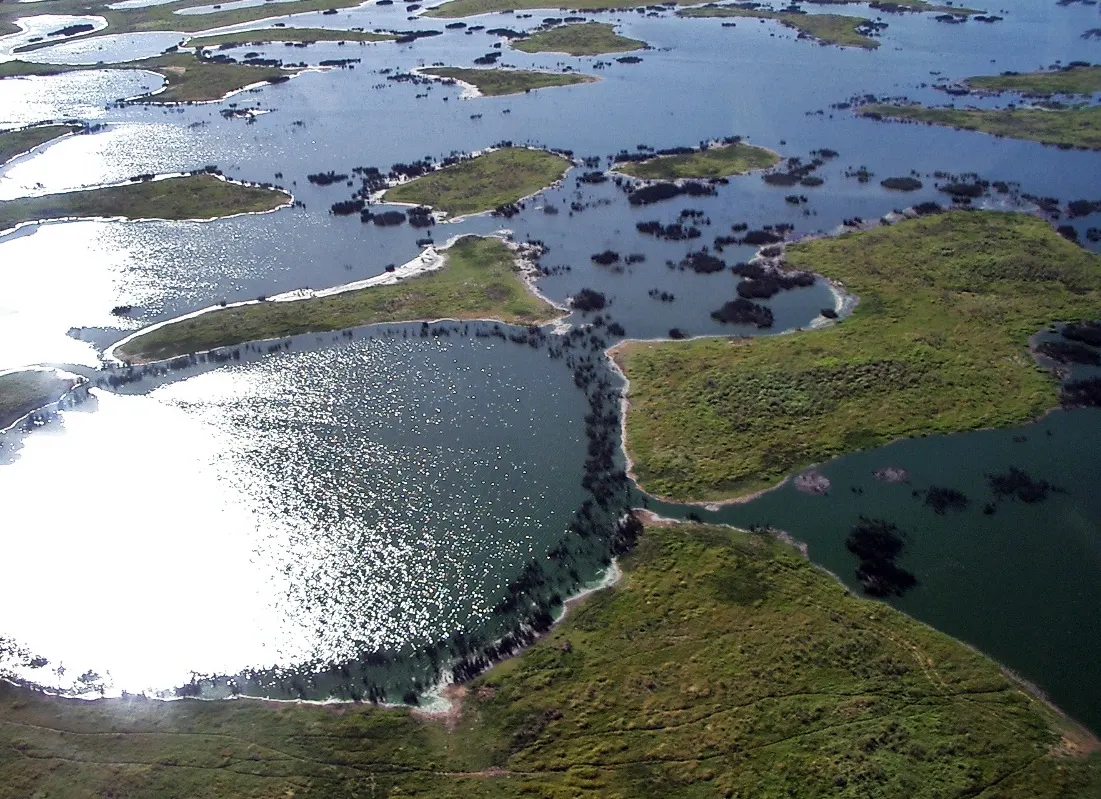
This is the largest tropical wetland on Earth, a flooded plain the size of a country, and the mechanism that makes it work is simple: when the water recedes, everything that needs water comes to the same shrinking places, and you sit near those places.
- Capybaras. The world's largest rodent, in family groups, entirely unbothered. They are the first animal everybody photographs and the last one anybody expects to like as much as they do.
- Caimans. By the hundred. Not a sighting, a landscape feature. You stop counting on the first afternoon.
- Giant otters. The animal we would nominate as the real star of the Pantanal, and the one nobody arrives asking for. They are enormous, loud, sociable and permanently busy, and a family group fishing a channel is better television than most jaguars.
- The birds, and there are hundreds of species. Hyacinth macaws, toco toucans, and above all the jabiru stork, which is the wetland's emblem and stands tall enough to make the point on its own.
- Tapirs and night monkeys. These belong to the evening. A spotlight sweeps the banks after dark for the wetland's nocturnal life, the glowing eyes of caimans first, then the things that only move once the heat has gone.
Why the giant otter deserves more attention than it gets
Because it is the sighting people describe when they get home, and almost nobody books the trip for it.
A group of giant otters working a side channel is loud, coordinated and completely indifferent to a boat sitting quietly nearby, which makes it the opposite of the jaguar experience: not a glimpse, but half an hour of watching a family go about its day.
If you are choosing where to spend your patience, spend it on the water. The quiet side channels and the strictly protected reserves in the west, Taiamã among them, are where the otters, the caimans and, yes, the jaguars are all watched from a boat.
When to go, and what the seasons actually change
The dry season, roughly June to October. Water recedes, wildlife concentrates, and the roads and rivers do the work for you. This is prime time for volume of sightings as well as for the cat, and it is what our Pantanal seasons guide recommends by default.
The green season, December to March. Lusher, dramatic skies, and superb for birds. The animals are more dispersed because water is everywhere rather than in a few places, so the density drops. It is a genuinely good trip for a birder and the wrong trip for somebody whose one goal is a jaguar.
Bear in mind that February falls inside this and inside the Carnival window, which our Carnival planning guide explains is the most expensive week of the Brazilian year even out here where nothing is happening.
North or south, and why it changes the animals
The two halves of the Pantanal are different trips and the choice is usually made for you by what you want to see.
The north, reached from Cuiabá along the Transpantaneira, is where the jaguar boat safaris happen, both on the famous Porto Jofre side and in the quieter western reserves. If a jaguar is the point, this is where we send you, and our Pantanal jaguar safari covers that trip specifically.
The south, reached from Campo Grande, leans towards fazenda stays, horseback riding and birdlife, and it pairs naturally with Bonito two and a half hours away. For everything in this article other than the jaguar, the south is often the better and calmer half, and it is also the cheaper one, as the starting prices below show.
Is it hard work?
No, and this is the part that surprises people. Pantanal wildlife is watched from open safari vehicles and from calm boats, not on long treks through anything. There is no fitness requirement worth naming.
What it does ask for is early starts, because the animals move at dawn and dusk and the middle of the day is hot and quiet. That makes it a good destination for a family with children who love animals and can manage getting up, and a poor one for anybody who wants a lie-in. We keep the days flexible around heat and naps, and the sightings come thick and fast enough that nobody is bored between them.
How many days, and what does it cost?
Five days is the shape we build, and it is what our published rate is based on. That gives you enough mornings and evenings for the wetland to deliver rather than for one bad weather day to define the trip.
- The northern Pantanal, 5 days: from US$1,800 per person, privately guided, with accommodation and transfers included.
- The southern Pantanal, 5 days: from US$1,350 per person, privately guided, with accommodation and transfers included.
It is the most expensive per day of anywhere we send people in Brazil, and the reason is honest: the lodges are remote, the boats and guides are dedicated, and getting there is a real journey. If that number is the problem, the south is generally the gentler half on cost, and it is where most of the animals in this article are anyway.
Summary FAQ
What animals can you see in the Pantanal apart from jaguars? Capybaras, caimans in the hundreds, giant otters, tapirs, night monkeys and hundreds of bird species including hyacinth macaws, toco toucans and the jabiru stork. In the dry season the density is the highest of anywhere we travel in Brazil.
When is the best time for Pantanal wildlife? The dry season, roughly June to October, when the water recedes and animals gather along the rivers and roads. The green season, December to March, is superb for birds and dramatic skies but the wildlife disperses.
Is the Pantanal better than the Amazon for seeing animals? For seeing them, yes, and it is not close. The Pantanal is open wetland where animals come to water you can sit beside; the Amazon is dense forest that hides things at arm's length. Our Amazon wildlife guide is honest about that difference.
Do you need to be fit for a Pantanal safari? No. Wildlife is watched from open safari vehicles and calm boats rather than on hikes. What it asks for is early starts, because dawn and dusk are when the animals move.
Is the Pantanal good for children? Very. The sightings are frequent, the watching happens from vehicles and boats, and lodges have family rooms. It works best for children who can manage an early morning.
North or south Pantanal? North, from Cuiabá, for jaguars and the boat safaris. South, from Campo Grande, for fazenda stays, horseback riding and birdlife, and it pairs with Bonito. For everything except the jaguar, the south is often the calmer choice.
Tell us your month and whether the jaguar is the point of the trip or a bonus on top of it, and we will send you to the half of the wetland that matches the answer. You will have a personal, non-binding proposal within 24 hours. Our private jaguar safari in the northern Pantanal lays out the days themselves. Our Springs of the Pantanal is the trip built for exactly this list, the otters, the birds and the clear water, with no jaguar quota attached.
Official sources
The rules and figures in this article come from the official bodies below. They change, so check them for your own dates.
- Pantanal Conservation Area, World Heritage List · UNESCO
- ICMBio, the federal agency for Brazil’s national parks · Governo Federal do Brasil
- INMET, the national meteorological institute · Governo Federal do Brasil
- Pantanal
- Wildlife
- Seasons
Turn it into your own Brazil trip
Tell Robin your dates and what caught your eye, or pick the destinations and experiences you love and send us your own route to plan.
Non-binding, a personal reply within 24 hours, in English or German.