Duration
14 days / 13 nights, and it works from 11
Rather do than watch
Fourteen days of doing rather than watching: a dawn hike onto the twin peaks above Ipanema, an inflatable straight under the Iguaçu falls, surf and forest trails on our home island, and a three-day crossing of the Lençóis dunes on foot.
Book a callDuration
14 days / 13 nights, and it works from 11
Start / End
Rio de Janeiro → Lençóis Maranhenses
Accommodation
Boutique hotels, a surf pousada, oasis huts
Highlights
Dois Irmãos · Macuco Safari · Surf · Dune crossing
Most Brazil itineraries are built around viewpoints you drive to. This one is built around the days you earn. It is for people whose idea of a good holiday involves sore legs, salt in your hair and at least one moment where you are not entirely sure you can do the next bit.
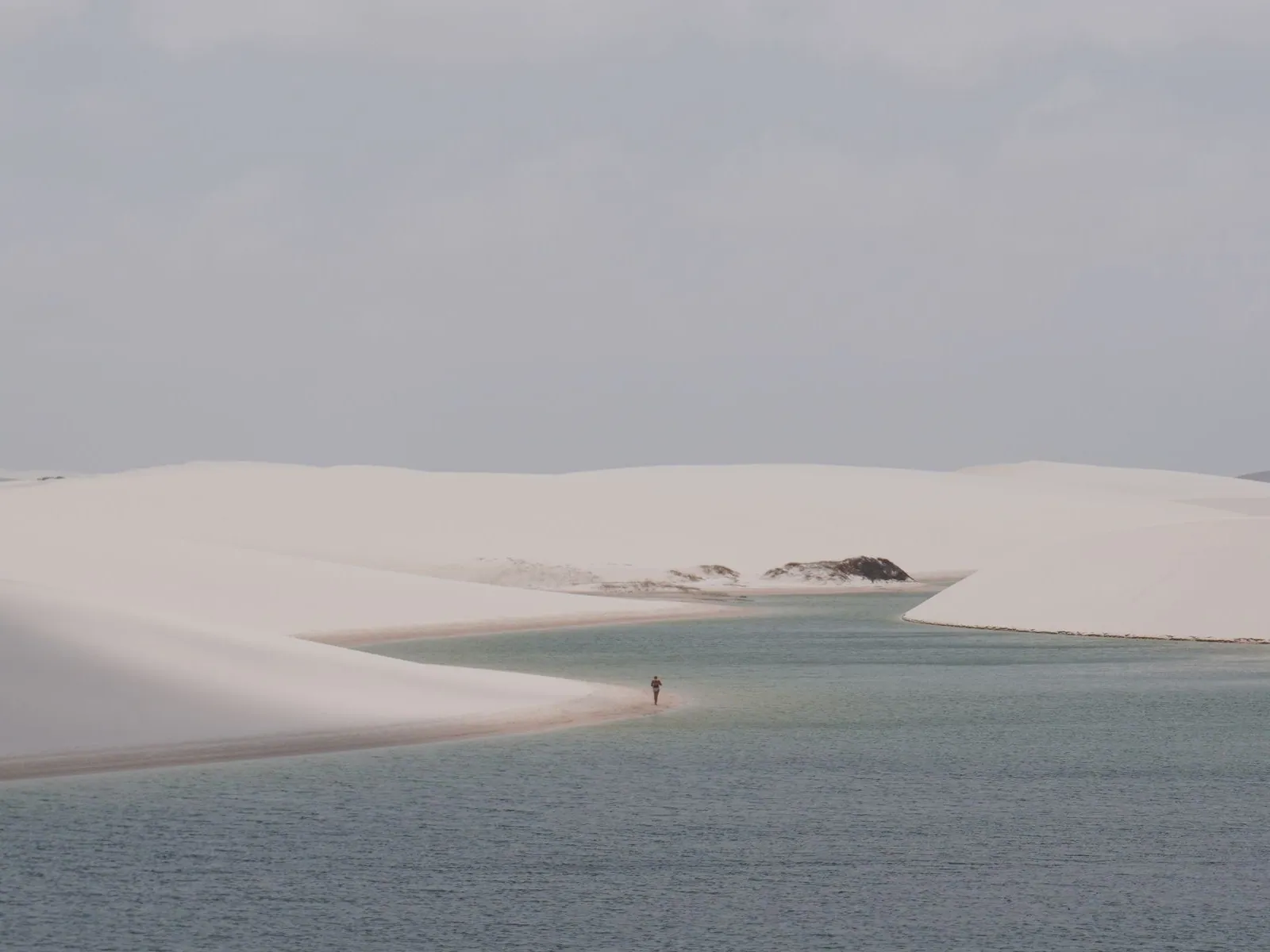
The route runs the length of the country and gets harder as it goes. Rio first, where the Atlantic forest starts inside the city and the best views in town are the ones you walk up to. Then Iguaçu, where you take an inflatable straight into the spray under the cataracts. Then Florianópolis, our home island, where the surf and the forest trails are the whole point. And finally the Lençóis Maranhenses, where you walk for three days across a desert full of rainwater lagoons and sleep in oasis villages that have no road to them.
Nothing here is a fixed departure and nothing is graded for the average of a group. Every day is private and matched to what you actually want: your guide will happily add a second summit in Rio, or keep the walking short and spend the day in the forest instead. The dune crossing is the one part with a real fitness threshold, and there is an honest answer about that in the questions below.
Fourteen days as written. It works at eleven if you drop a region, and we would drop one rather than shorten all of them.
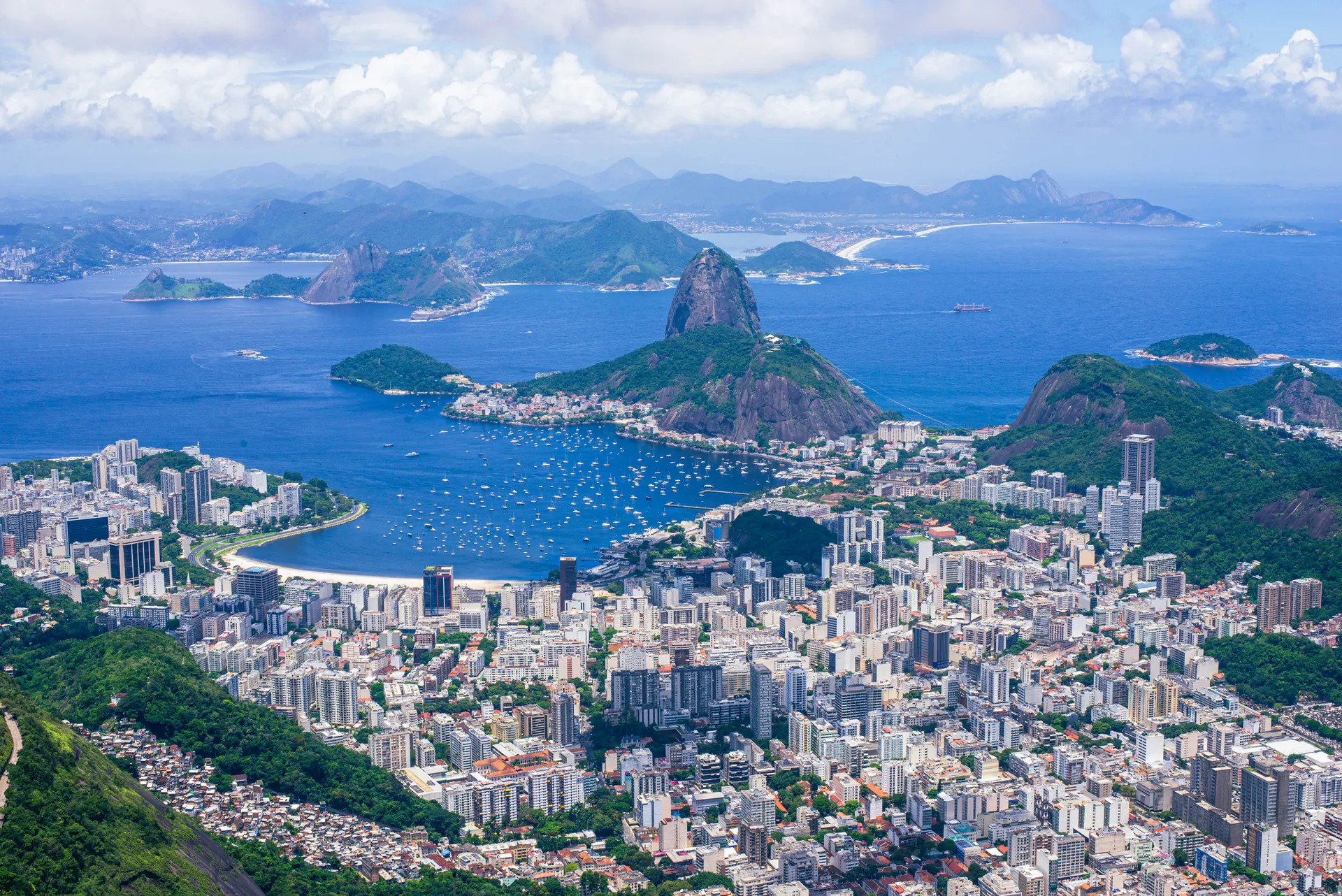
Morro Dois Irmãos at dawn, an hour up through the forest for the view down the whole length of Ipanema
A full day in the Tijuca rainforest, waterfall trails and the Vista Chinesa, finishing at Cristo Redentor
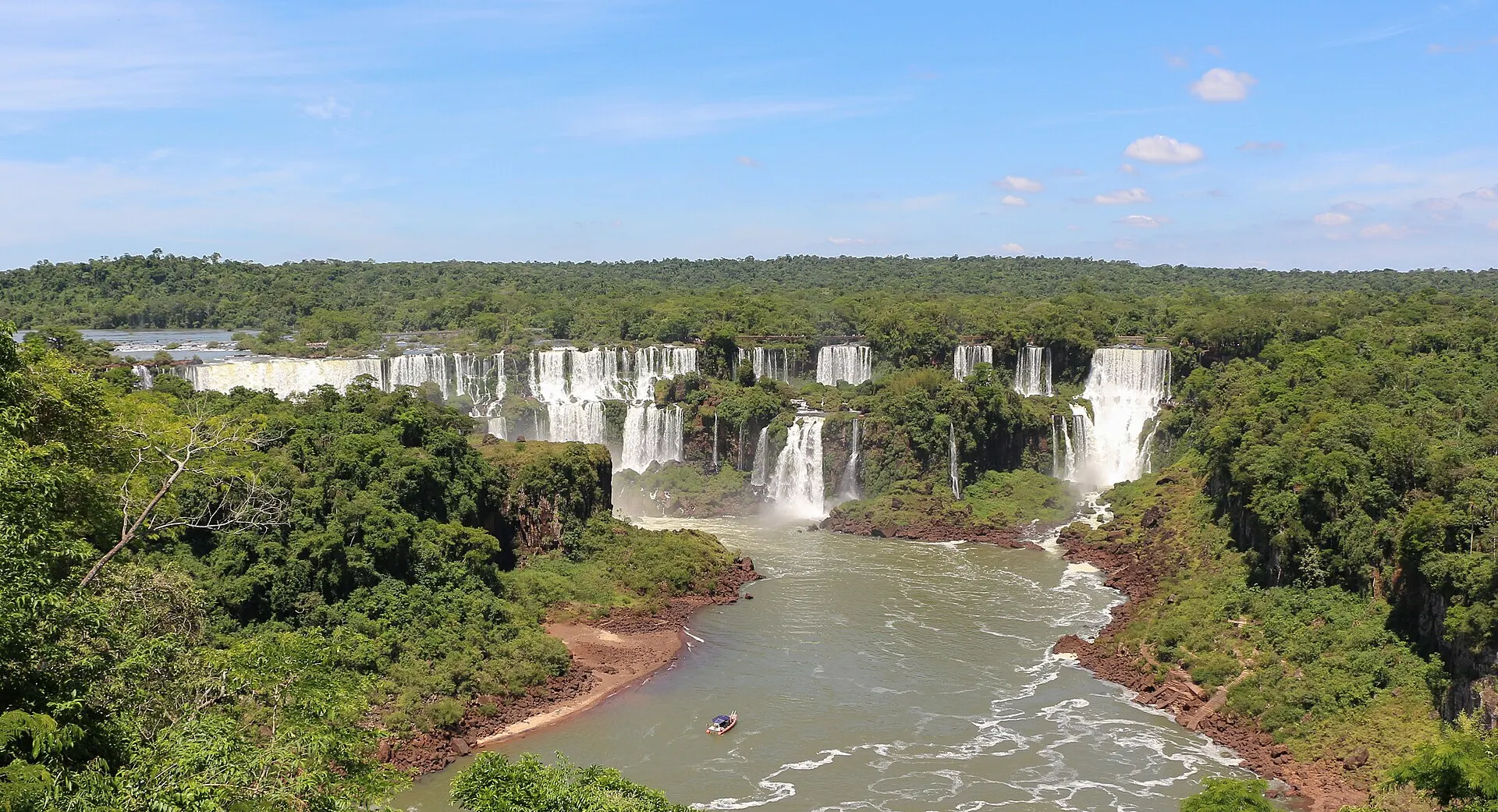
The Macuco Safari, an inflatable driven straight into the spray beneath the Iguaçu falls
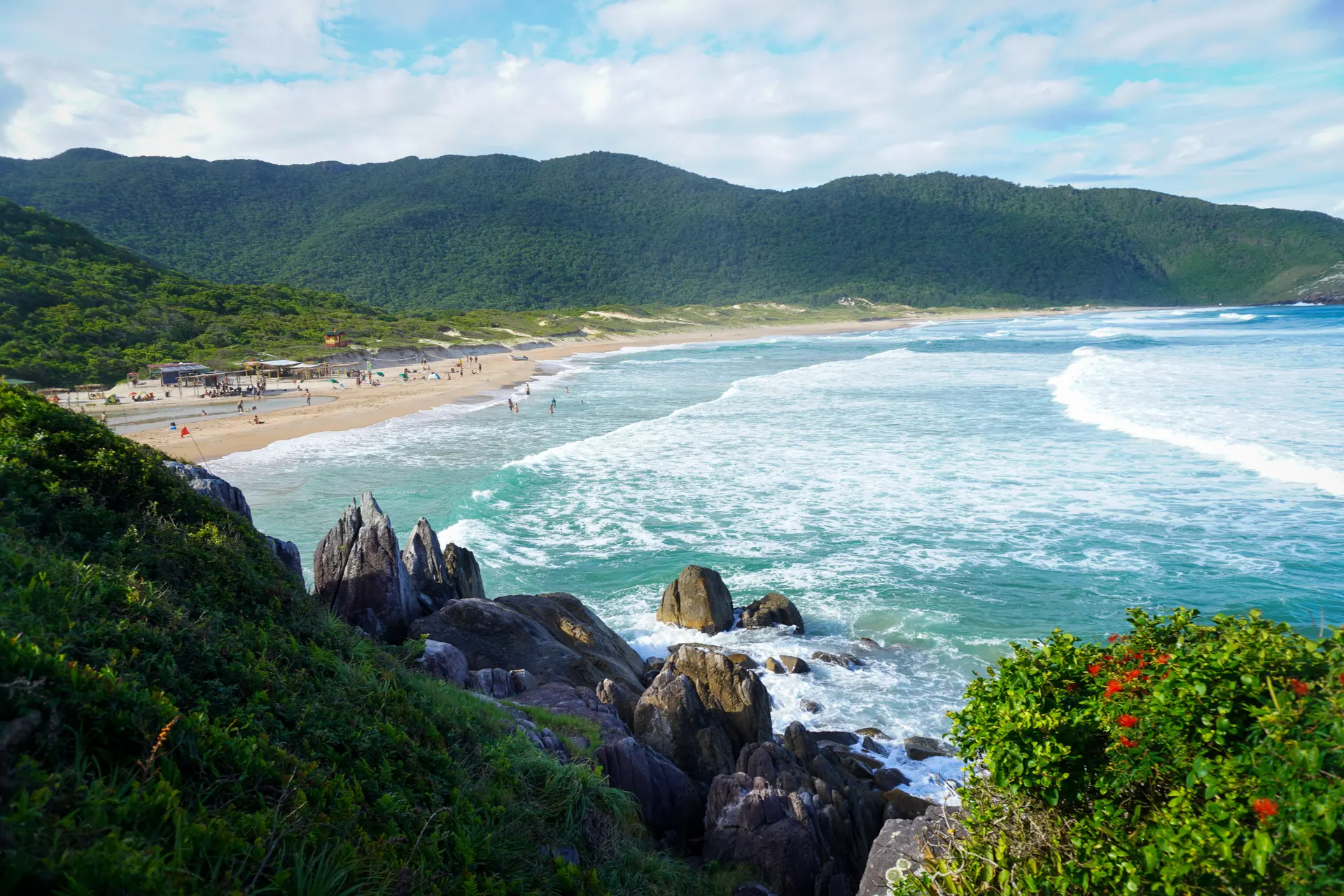
Surf, sandboard and Atlantic-forest trails on Florianópolis, where we live
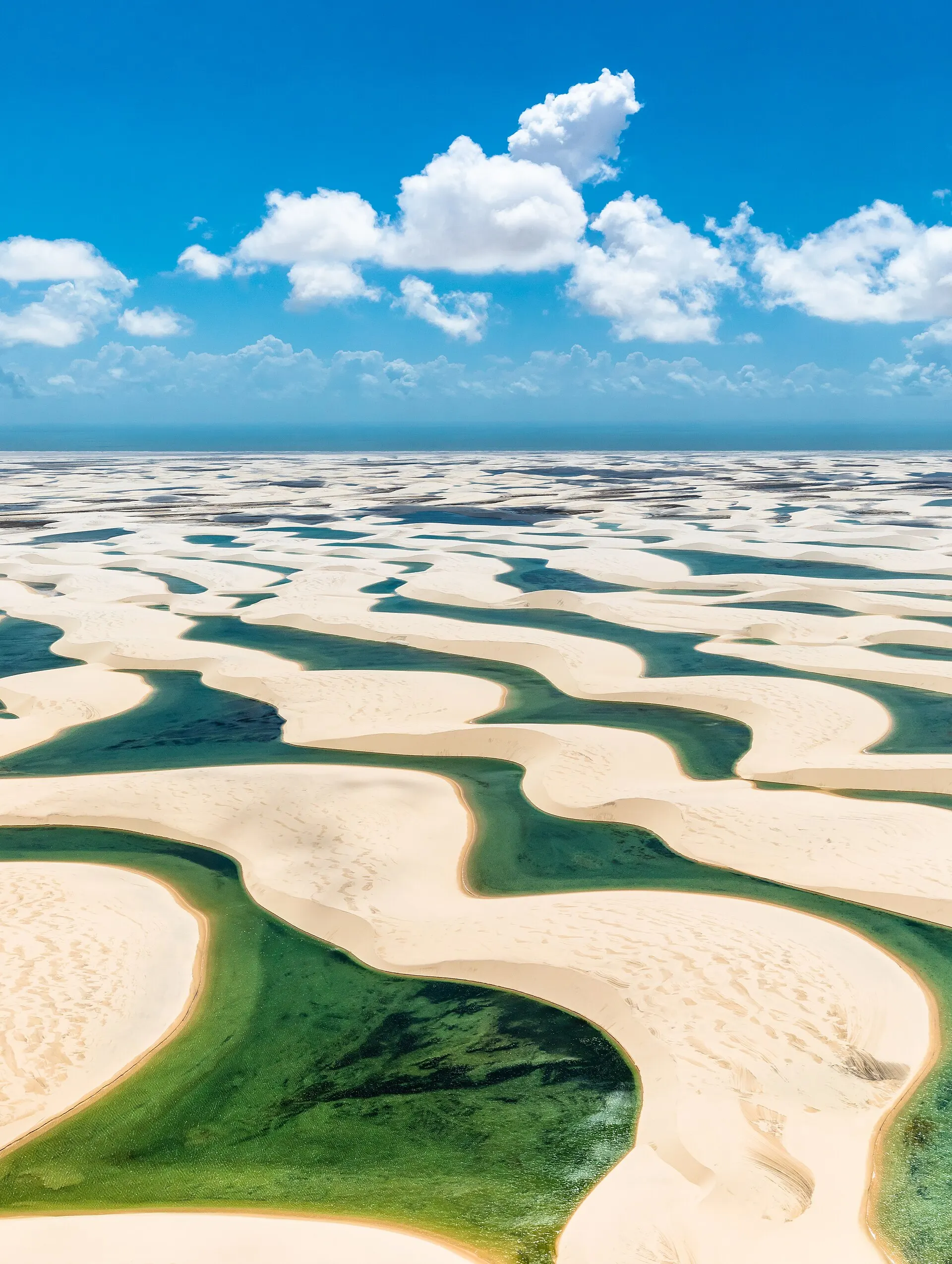
Three days on foot across the Lençóis dunes, sleeping in oasis villages with no road in
Every day privately guided and graded to you, not to a group average
The order is deliberate. Rio gets your legs under you, Iguaçu is the adrenaline day, Florianópolis is where you find your rhythm in the water, and the Lençóis crossing is the thing you came for. By the time you start walking into the dunes you have had eleven days of build-up.
This is just one example of how your days could unfold, every itinerary is private and fully tailored, so we gladly reshape it around your pace, interests and travel dates.
Day 1-3
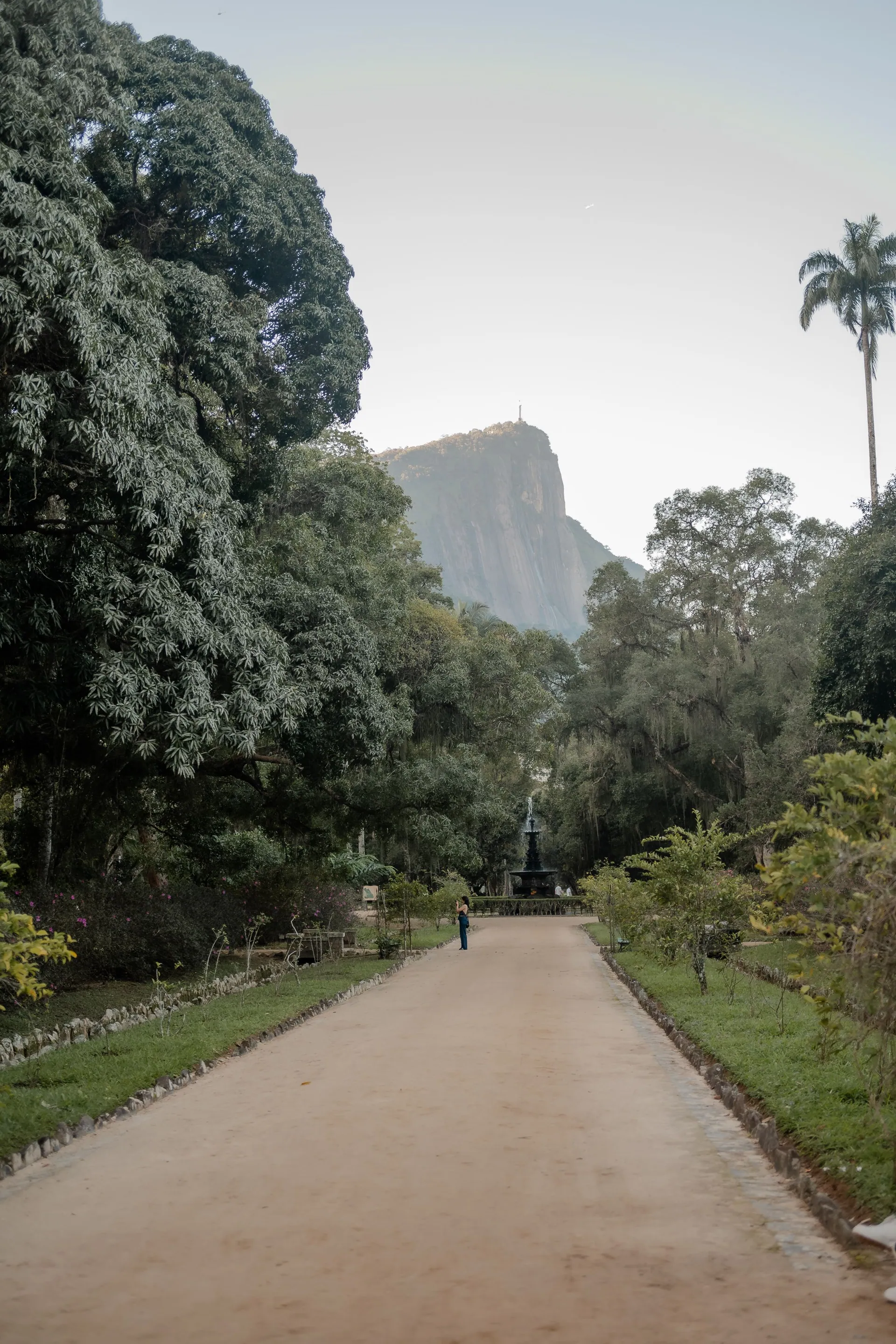
Rio is the only city in the world where the rainforest starts in the middle of it, which makes it the right place to start a trip like this. Three nights, and the viewpoints here are the ones you walk up to rather than queue for.
Met inside the terminal and driven to a hotel a block from Ipanema. Nothing is scheduled, but if the flight has not flattened you there is a run or a swim to be had before dark, and your guide will point out the two peaks that close off the far end of the beach, which you are walking up in the morning.
Up through Vidigal before the heat, then a forest path onto the lower of the two peaks that close off Ipanema. Around an hour of steep walking, no rope and no scrambling, and at the top the view most visitors never get: the full length of Ipanema and Leblon on one side, Rocinha directly below, forest running away to the west. Back down by mid morning for a swim. Late afternoon we walk the Cláudio Coutinho path around the foot of Urca and take the forest trail up the first hill, then the cable car for the last stage of Pão de Açúcar, and stay up there for the sunset.
A whole day in the largest urban rainforest there is. In by jeep to the Floresta da Tijuca, then out on foot: the trails around the Cascatinha waterfall, and the climb to the Vista Chinesa pavilion, which looks down over the lagoon and both beaches at once. In the afternoon we carry on up through the same forest to Cristo Redentor, and finish on the paths of the Botanical Garden below it, in the shade of the palm avenue. If it rains hard, and in Rio it can, the day turns into the old centre on foot, with the metro between the squares.
Day 4-5
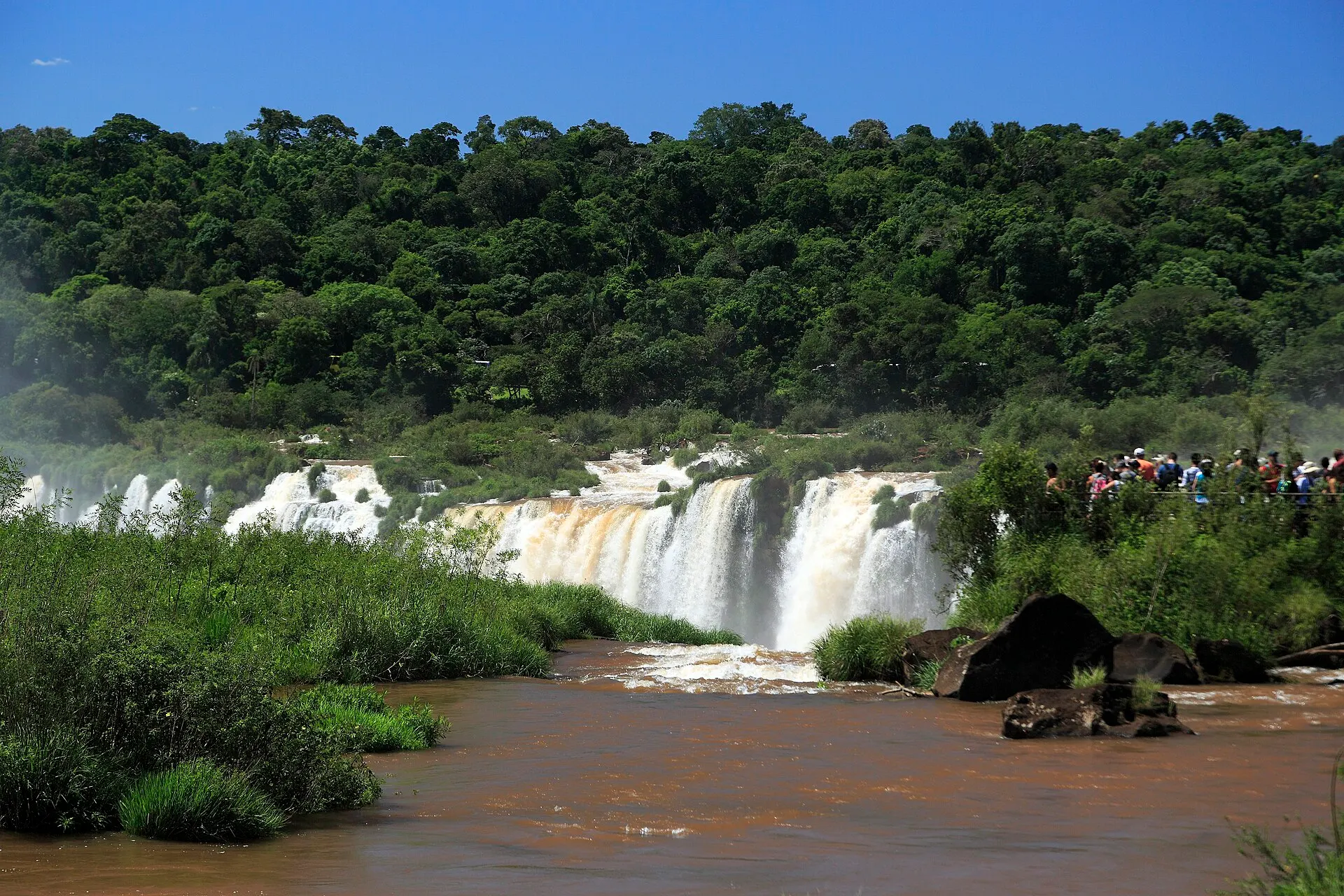
275 waterfalls over a cliff nearly three kilometres wide. Most visitors look at them from a walkway. You will do that too, on both sides, because the Argentine walkways over the Devil's Throat are genuinely one of the great things to stand on. But the reason we come here on this trip is the boat.
The Brazilian side first, the panorama trail that gives you the whole sweep in one look. Then the Macuco Safari: a jeep track down through the forest, into an inflatable, and the driver takes you upriver and straight into the base of the falls, twice, because the first time nobody manages to keep their eyes open. Dry bag for everything. You will be soaked to the skin and it is worth it.
Across the border early, before the day groups, for the walkways that carry you out over the lip of the Devil's Throat, where the falls stop being in front of you and start being all around you. If there is appetite for more, the Poço Preto trail can be ridden by bike and finished by boat. Evening flight south to the island.
Day 6-9
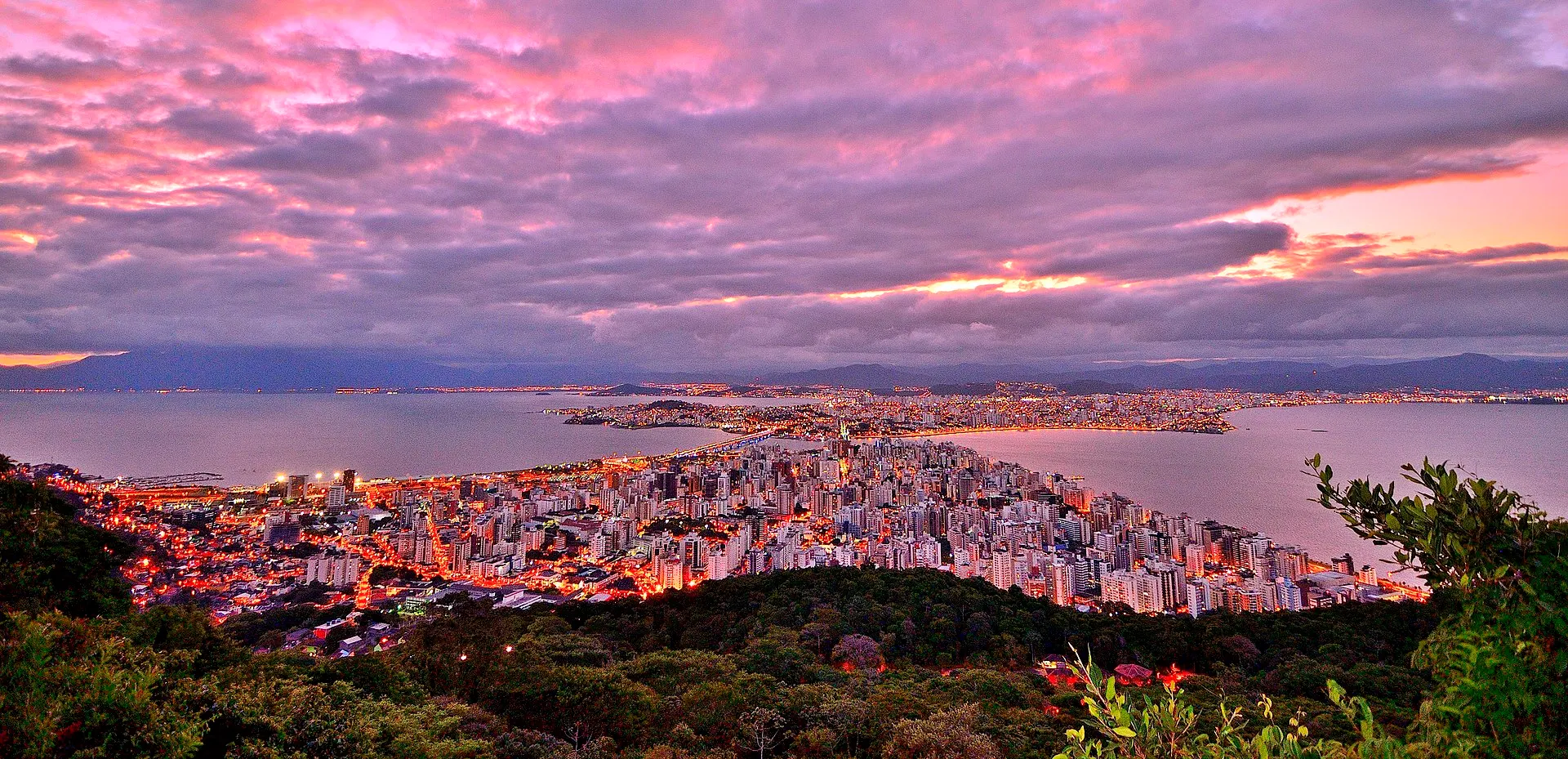
This is where we live, so this section is not researched, it is just what we do at the weekend. Forty-two beaches on one island, an Atlantic forest running down to the sand in the south, and a surf culture that is the real thing rather than a photo opportunity. Four nights, because the island is the part of this route people always wish they had given another day.
You can drive the island end to end in about ninety minutes, and doing exactly that on the first day is the fastest way to understand it: the developed, sociable north with its flat water, and the raw south with dirt access roads and beaches you can only walk to. We finish in the south, which is where you will want to be for the next three days.
A morning in the water at Praia Mole or Joaquina with an instructor who will have you standing up, whatever you claim about your coordination. Joaquina also has a wall of sand behind it that people have been sandboarding down since the seventies, and it is exactly as ridiculous and as fun as it sounds. Late afternoon, oysters at Ribeirão da Ilha, which are farmed in the channel in front of the table.
The best beach on the island has no road to it, which is the whole reason it is the best beach on the island. About an hour and a half over a forested ridge from Pântano do Sul, dropping onto a wide arc of sand with a lagoon behind it and usually a couple of dozen people on it. Swim, eat what you carried in, walk back over the other trail, or take a boat if your legs have opinions.
A gentler last morning on the Costa da Lagoa trail: an hour or so on foot along the water to a village with no road to it, a plate of fish at a table over the lagoon, and a boat back across. Then the airport, and the one genuinely long travel leg of this trip, up to São Luís in the far northeast. We time it so you arrive with an evening to sleep before the dunes.
Day 10-14
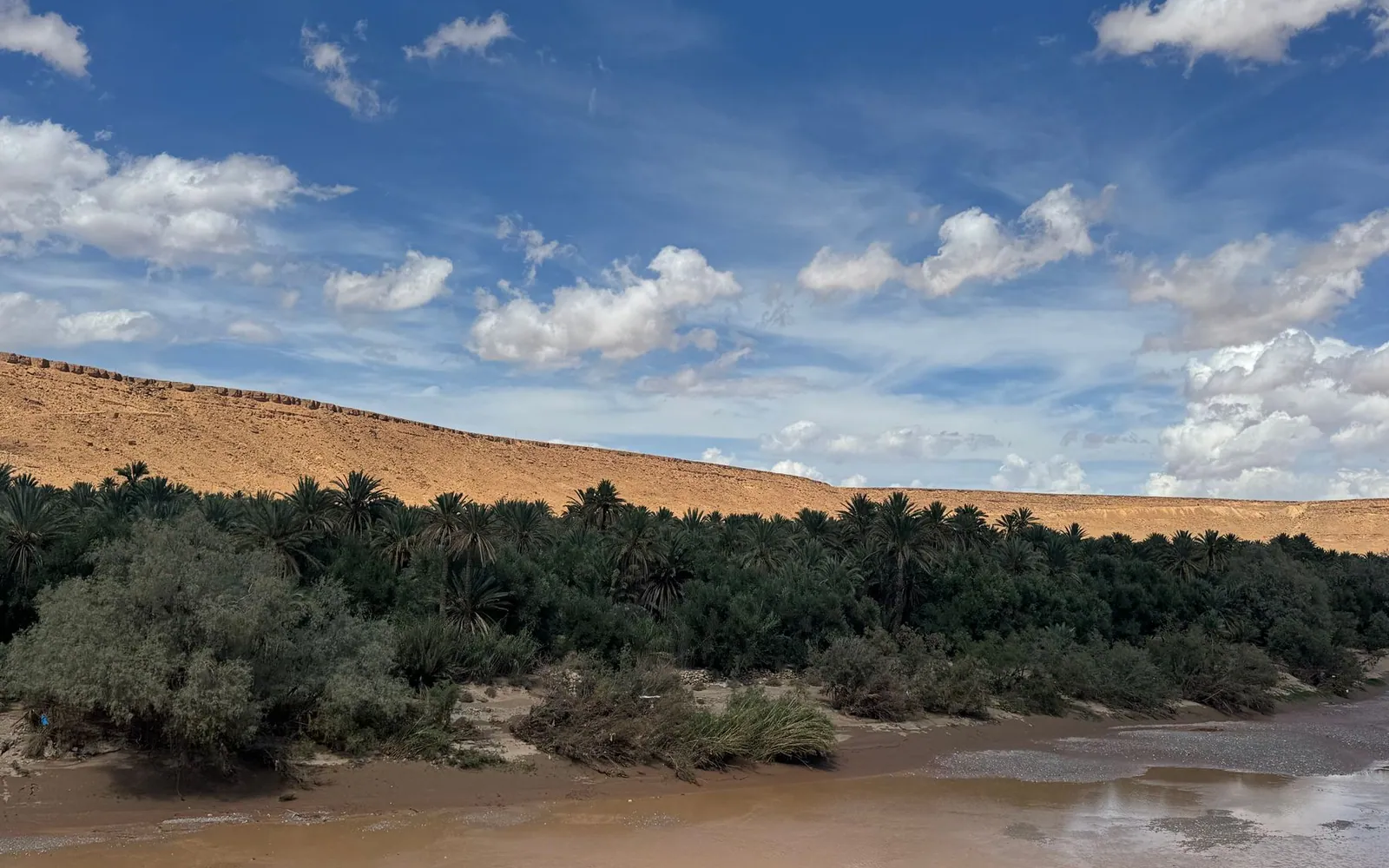
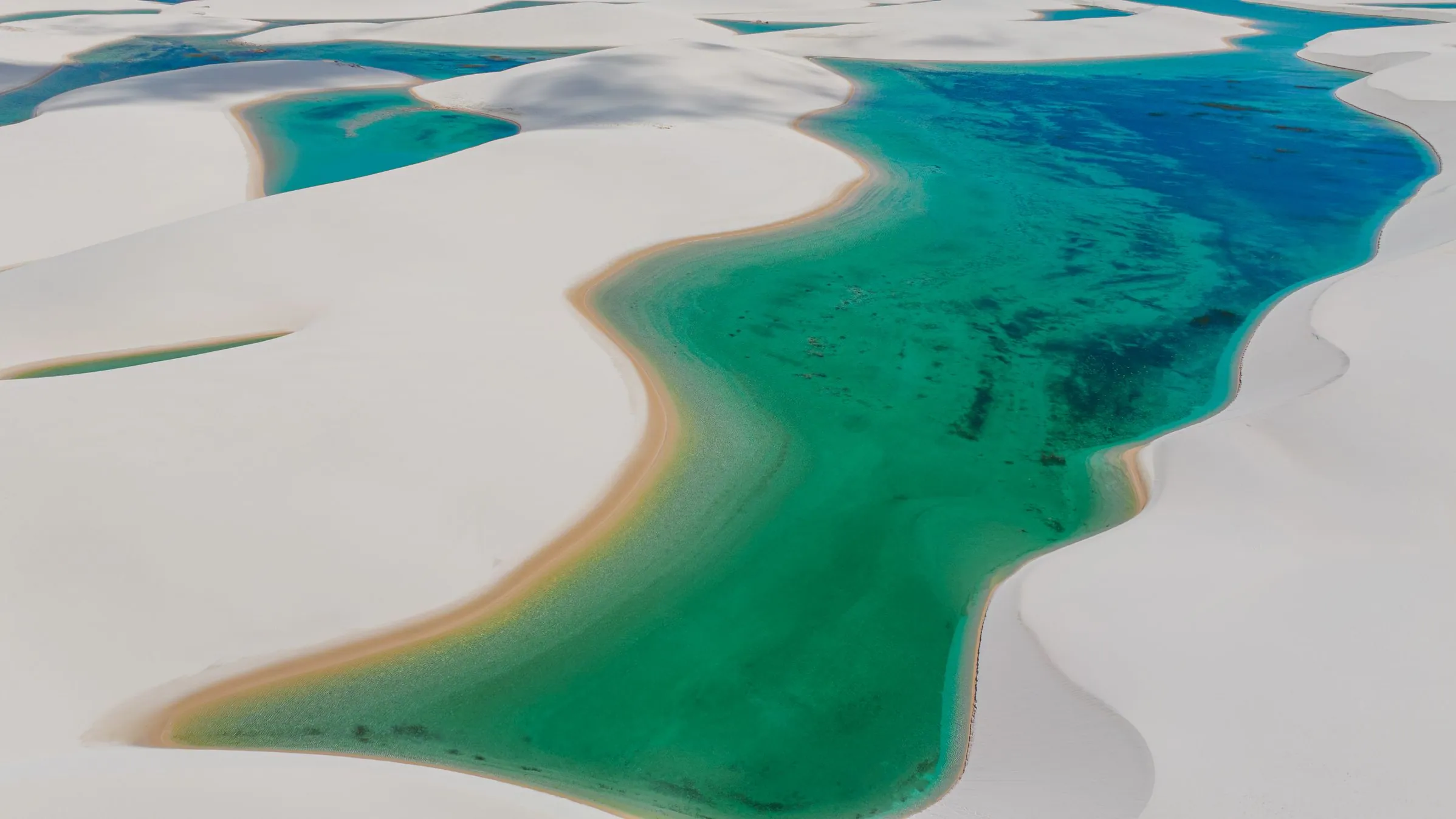
A thousand square kilometres of white dunes that fill with rainwater every year and turn into thousands of freshwater lagoons. It is not a desert, it rains too much for that, and that contradiction is the whole point of the place. Almost everyone sees it on a half-day jeep tour from Barreirinhas. You are going to walk across it, which is a completely different thing.
Overland from São Luís to the gateway village, an afternoon to check the pack, and an early night. Your guide goes through what you carry and what stays behind, which is more than you think: everything you need for three days has to go on your back or on the mule, and water is the heavy part.
You start before the sun is properly up, because by eleven the sand is too hot to be pleasant. The first crest is the moment the trip makes sense: white sand to the horizon in every direction with turquoise water sitting in every hollow, and no structure of any kind in sight. Swim in whichever lagoon you like. You sleep at Baixa Grande, an oasis of a few families and a lot of palm trees, in a hammock, and the Milky Way is genuinely the brightest thing you have ever seen.
The longest day, and the one furthest from anything. You cross to Queimada dos Britos, a settlement of a handful of families who have lived inside the park for generations and who cook you dinner. There is no electricity, no phone signal and no road, and the quiet in the middle of the afternoon is a thing people remember longer than the view.
A shorter day that ends the way the whole thing was always going to end: you come over a final dune and the Atlantic is in front of you. Down into Atins, a fishing village of sand streets that has only recently stopped being entirely off the map, a shower, and a plate of prawns you will think about for a while.
Out by boat down the Rio Preguiças rather than by road, past the Mandacaru lighthouse and the sandbanks, which is both the nicest way to leave and the fastest. Then São Luís and the flight home. If you have days left, this is the natural place to add them: Jericoacoara is along the coast from here, and it is where a lot of people wish they had gone next.
Tell us your dates and roughly how hard you want this to be, and you will have a personal, non-binding version of the route within 24 hours.
Plan My TripA hiking guide who walks Rio's trails every week, a surf instructor on the island, and a Lençóis guide who grew up walking these dunes. English or German speaking, and none of them is reading from a script.
Dois Irmãos and the Urca trail with Pão de Açúcar, the Tijuca forest day with Cristo Redentor, both sides of Iguaçu, the Macuco Safari, surf and sandboard sessions, the Lagoinha and Costa da Lagoa trails, and the full three-day dune crossing with permits and porterage.
Three domestic flights booked and timed around the activities, all airport pickups, and the overland and river legs at the Lençóis end. The long hop north is planned so you sleep before you walk.
Boutique hotels in Rio and Iguaçu, a surf pousada in the south of Florianópolis, and in the dunes a hammock under a palm roof, which is not a downgrade but the best night of the trip.
Certified operators for the boat under the falls, sensible footwear advice before you pack, water and electrolytes carried on the crossing, and an honest conversation beforehand about what each day actually demands.
Heavy rain closes the Rio trails, swell flattens, and the dune lagoons are seasonal. Every stop has a planned alternative that is not a consolation prize, and we tell you the fallback before you go, not on the morning.
This is the one part of the trip with a real threshold, so here is the honest version. You walk roughly six to eight hours a day for three days, on soft sand, which is meaningfully harder than the same distance on a path, in heat, with no shade and no way to bail out halfway through the middle day. There is no technical difficulty at all: no climbing, no exposure, nothing you need a head for. If you regularly do a full day in the hills and enjoy it, you will be fine. If your honest answer is that a long walk is not really your thing, say so and we will build the same route with the three-day crossing replaced by day walks from a comfortable base, which is a genuinely good trip and not a watered-down one. What we will not do is talk you into the crossing and hope for the best, because the middle of that park is the wrong place to discover the answer.
The Lençóis only works in a window, and anyone who tells you otherwise is selling you a trip to a sandpit. The rains fall roughly January to May, the lagoons fill behind them, and the sweet spot is June to September, with July and August the fullest and most reliable. By late October many lagoons have dried out and the walk loses the thing that makes it extraordinary. This is the single biggest constraint on the whole itinerary, and it drives the dates rather than the other way round: tell us when you can travel and we will tell you straight whether the crossing is worth doing in that month, or whether we should build the trip around a different finale.
Basic, and deliberately so. You sleep in a hammock under a palm-thatched roof in a family's yard, there is no electricity beyond a bit of solar, the shower is a bucket drawn from a well, and the toilet is what you would expect. The food is cooked by the family and is much better than that description suggests. Nobody has ever come back from this complaining about the accommodation, because after eight hours on sand a hammock and a plate of chicken and rice under that sky is not roughing it, it is the point. If you would rather not, the day-walk version uses a comfortable pousada every night.
Moderate, and there is nothing technical about it. Morro Dois Irmãos is roughly an hour to an hour and a half up a steep forest path, 533 metres above the sea, with a couple of rooty steps where you use your hands and no exposure that would bother anyone. Most reasonably fit people manage it comfortably at dawn, before the heat, and you are back at the beach by mid morning. If you want more, the Urca trail the same afternoon adds a second ascent, and there are longer circuits in the Tijuca park we can put in instead. If you want less, we drive the first section and walk the upper part only. Rio's genuinely hard summits with rope work are not part of this trip, because we would rather run the days we know inside out than sell you a rock climb.
It is a fair question and the answer is that three of the four legs are short and one is not. Rio to Iguaçu is under two hours in the air, Iguaçu to Florianópolis about the same, and both are evening flights that cost you no daylight. The leg from the island up to São Luís is the long one, usually with a connection, and we treat it as a travel day rather than pretending it is free. If you want less movement, the region we would cut is Iguaçu, which is the shortest stop and the one most likely to appear on another Brazil trip later. That gives you eleven days with more time on the island and no loss of intensity.
Yes, and there are three swaps worth knowing about. The Amazon adds dawn kayaking on the Rio Negro's side channels and a jungle trek from a lodge, and it slots in after Iguaçu at the cost of three or four days. Chapada Diamantina is the trekking region we would pick if you want more walking and fewer flights, with waterfalls, caves and a plateau you climb for sunrise. And if you want the coast rather than the city at the start, Ilha Grande has a dawn summit of Pico do Papagaio and sea kayaking, and works as a replacement for the Rio days rather than an addition to them.
This active fortnight starts from US$3,000 per person for the fourteen days on the ground, before international and domestic flights. Three of its segments have published starting prices of their own: four days in Rio from US$800, three at Iguaçu from US$800 and four days in the Lençóis Maranhenses from US$1,400 per person, privately guided with accommodation and transfers. Those are the prices for booking a region on its own, so they do not simply add up to the route: a continuous trip is planned and costed as one. The Lençóis crossing on foot, with its 4x4 and boat logistics, is the part that moves the total most. The written proposal states the exact amount before anything is confirmed.
It is right for travellers who would rather be tired at dinner than rested. You should be comfortable walking six to eight hours in heat and sand, and you should think of three nights in a hammock as part of the adventure rather than a hardship. It is not right for anyone with knee or heart trouble, for a first long-haul trip with small children, or for travellers who want the pool between excursions. If everything but the dune crossing appeals, we swap it for the vehicle route and the rest of the fortnight stands.
Individually bookable, fixed-departure experiences in the regions this journey passes through.
 Experience
 The Route of Emotions, São Luís to Jericoacoara
View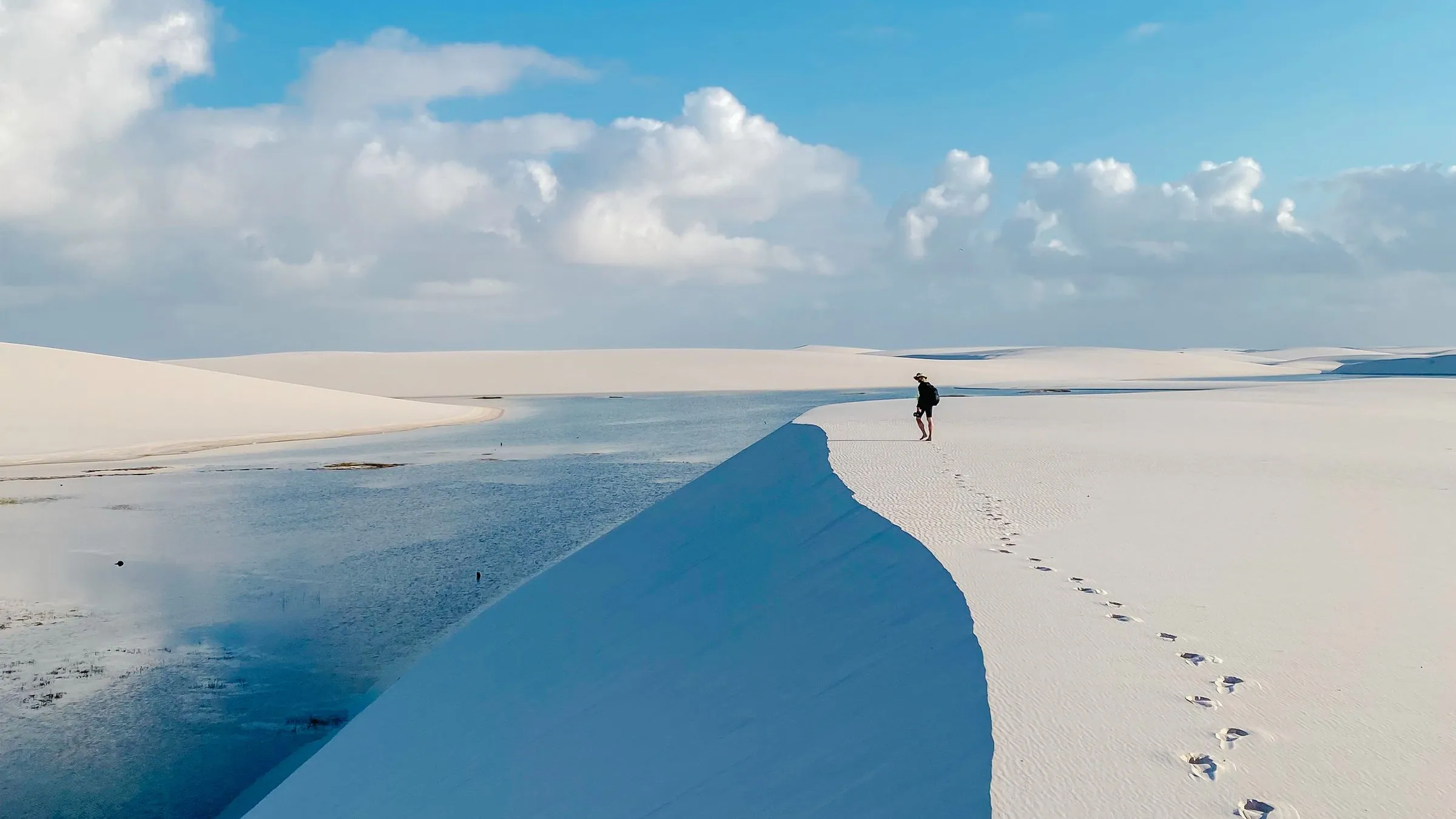 Experience
 Three days on foot across Brazil's white-sand sea
View Experience
 An expedition cruise through the land of the jaguar
View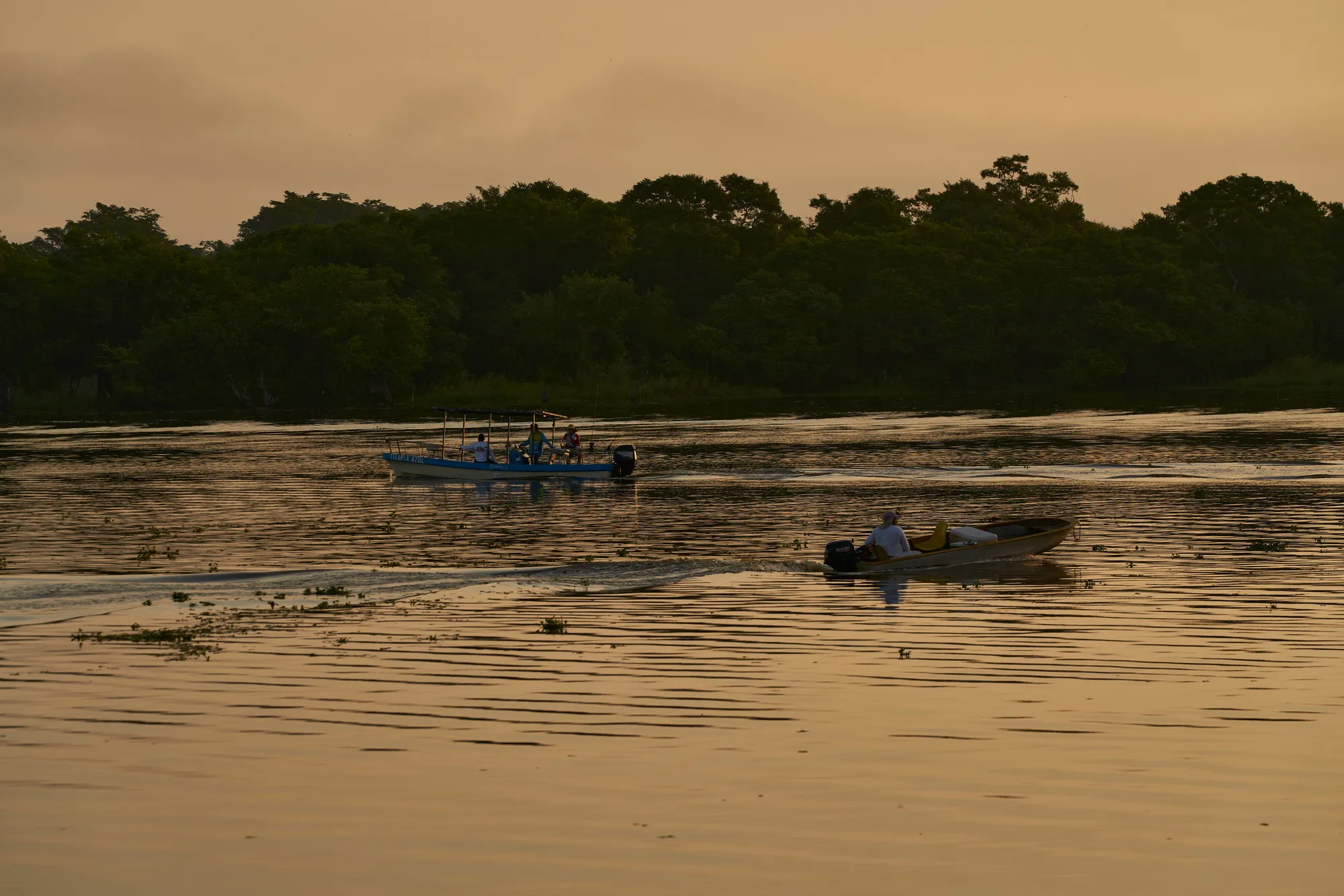 Experience
 Jaguars and cowboys along the Rio Paraguai
View My wife and I have always been thrilled by Brazil, but we had never dared to organise the trip ourselves. Authentic Brazil Travel planned the whole journey for us, including some destinations we did not know. The trip was superbly organised, the guides were great, the accommodations lovely and the transfers punctual. Thanks to the wonderful guides and their tips we felt safe the entire time and got to discover a lot of new things. Gladly again!
A little Brazilian sunshine
A few ideas are all we need to start planning something personal.
We'll be in touch within 24 hours to start planning. Want to talk sooner? Message us on WhatsApp.
Chat on WhatsApp